Episode Details
Back to Episodes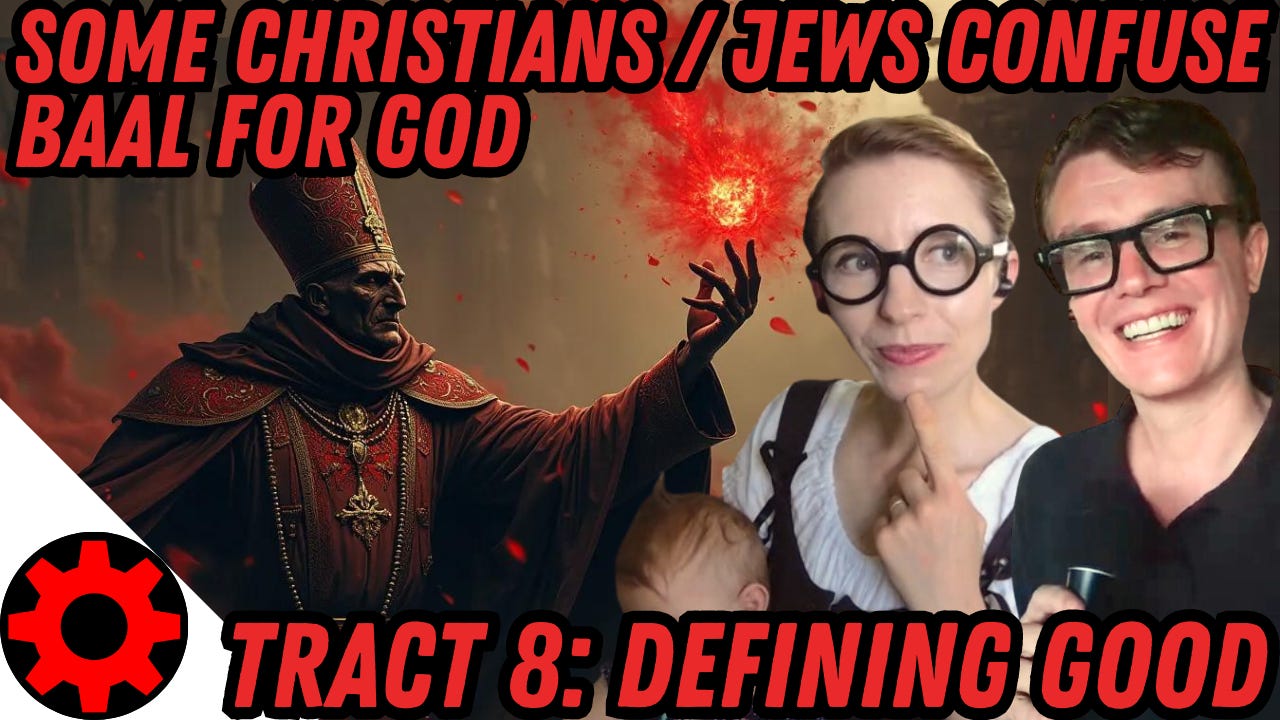
Tract 8: Is Baalite Worship Being Mistaken for Christianity? (How Techno-Puritans Define Good)
Description
In this compelling episode, we dive into the reinterpretation of Christian beliefs and ancient religious practices through a techno-puritan lens. Explore the redefined concepts of the kingdom of God, heaven, and sin, and understand the ethical debates between deontological and consequentialist systems. Our journey takes us through the intriguing intersections of polytheism and monotheism, revealing how rituals like sin transference and animal sacrifice have transitioned from their polytheistic origins to modern faith practices. Delve into the implications of Nebuchadnezzar’s dream, the shifts in spiritual and moral understandings, and uncover the critiques of figures like Maimonides and Ramban in interpreting sacrificial traditions. Join us as we rethink spirituality, individual responsibility, and the evolving role of technology in God's overarching plan.
[00:00:00] Of heaven will set up a kingdom that will never be destroyed, . What is the kingdom of God? That's heaven. That's what's being described here. Heaven is a time.
You don't become one flesh with someone by having sex with them. Is that two people having a child together does literally make two people one spirit. That makes a lot more sense. Yeah. What is being talked about here isn't Sex. It's the creation of a new person, . That just, like, when I read it with the techno puritan framing, it makes so much sense to me.
When I read it with the traditional Christian framing, it makes so much sense to me. It makes a bunch of weird claims where you need to like get all metaphorical and everything and yeah, it feels like you're bending over backward to make it work. And this is just correct. It just seems correct. Of course.
Real worship is not done through [00:01:00] masturbating emotional states. Even if they include feelings of grandeur and awe, they are still basal emotions.
Of course they feel good. That is what masturbation does. It makes you feel good. That is not a sign that it is good. As a side note here, people will use the story of the gold used in the tabernacle from Exodus as an excuse to worship in luridly decorated buildings.
However, it is important to remember that we believe , some polytheistic stories and tales worked their way into the religious texts like the Bible. especially when you're talking about older texts like Exodus, but that God loudly and explicitly marks where this has happened, so anyone paying even the littlest bit of attention will notice. what's being done in this tabernacle
Imagine you go up to a place of worship, and you saw this ceremony being carried out. Quote, He must kill the young bull and priests must bring its blood and sprinkle it on all sides of the altar It must be a dove or young pigeon. the priest will bring it to the altar and pull [00:02:00] off its head, which he will burn on the altar.
The bird's blood must be drained out of the altar. the side of the altar. Then he must tear the bird open by its wings
end quote. It is not like any of this is subtle , but it does mean that God expects you to actually be paying attention when you read it, and use the smallest amount of discretion when doing so. It's like someone saw that scene
Siva, Om Nam S to
and they walk away and they go, Yeah, that was definitely a bunch of good Christians . that's what this story is meant to teach us, is what ball light worship looks like
that this bull light sin transference, virtual doesn't work. It's also recorded for us in the Bible Eve. It did work both Moses and the other Israelites would have been able to go into the promised land. when I look at Christians who pray to a God of [00:03:00] precious metals and animal sacrifices, the God that gets off to humans ripping apart birds as an act of worship, I am reminded of
All will be well, and you will know the name of God. The one true God. Behemah Coital. Behemah what? Behemah Coital. He's here. He's everyw