Episode Details
Back to Episodes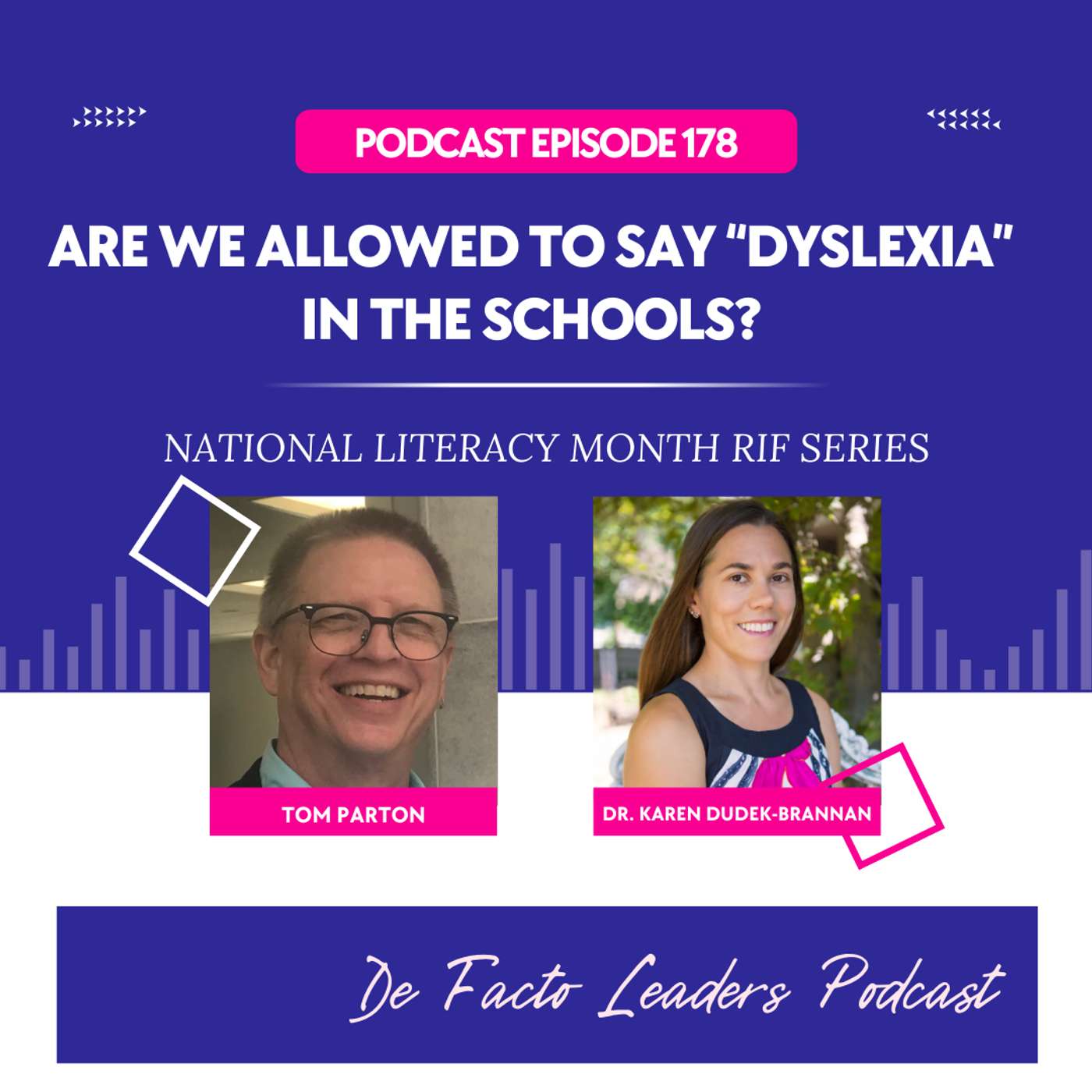
Are we allowed to say “dyslexia” in the schools? (with Tom Parton)
Description
In 2015, the Office of Special Education Programs published a letter stating that school teams were “not prohibited” from using the term “dyslexia”.
Unfortunately, this letter left many questions unanswered and is often misinterpreted.
Parents seeking out services for their children are still unsure how to advocate for appropriate services in their schools and communities.
School teams are still unsure about what they’re “permitted” vs. “required” to do.
Professionals are unsure who is qualified or responsible for identifying students with dyslexia and other learning disabilities.
That’s why I invited Tom Parton to episode 178 of De Facto Leaders to discuss legal mandates, ethical obligations, and factors school teams should consider when making decisions about curriculum and assistive technology.
Tom Parton is a private Speech Language Pathologist in Normal, Illinois. He retired after 35 years of public-school practice. Tom is President of Everyone Reading Illinois and is a member of ERI’s Legislative Committee. Tom has presented on autism and language/literacy topics at local, state, and national conferences. Tom participated in the ISBE Reading Instruction Advisory Group and Teachers of Reading Certification task forces. He is currently a member of the ISBE Dyslexia Handbook revision team. He is past-president of the Illinois Speech-Language-Hearing Association and is ISHA Honors Committee co-chair and a member of ISHA’s Leadership Development Committee. Tom is the 2024 chair of the American Speech Language Hearing Association Committee of Ambassadors.
This episode is part of the National Literacy Month series of podcasts, presented in partnership between the Be Podcast Network and Reading Is Fundamental (RIF).
In this conversation, we discuss:
✅What do federal guidelines require when it comes to identifying and serving students with reading/writing disabilities?
✅Picking the right battles to fight: Do we focus on the labels or the services and curriculum?
✅Who is qualified or responsible for diagnosing dyslexia?
✅The ethical problem with giving up on word-decoding in secondary school.
✅What skills do students need to effectively use assistive technology for reading, writing, and spelling?
Additional resources mentioned in this episode:
The Dyslexia Handbook from the Illinois State Board of Education (ISBE) (https://www.isbe.net/Documents/Dyslexia-Handbook.pdf)
ISBE Comprehensive Literacy Plan (https://www.isbe.net/literacyplan)
The International Dyslexia Association (IDA) (https://dyslexiaida.org)
The International Dyslexia Association (IDA) Dyslexia Handbook (https://dyslexiaida.org/ida-dyslexia-handbook/)
The Reading League of Illinois (https://il.thereadingleague.org)
The Illinois SLD Support Project (https://sldsupports.org)
Dyslegia: State Dyslexia Laws (https://www.dyslegia.com/sta