Episode Details
Back to Episodes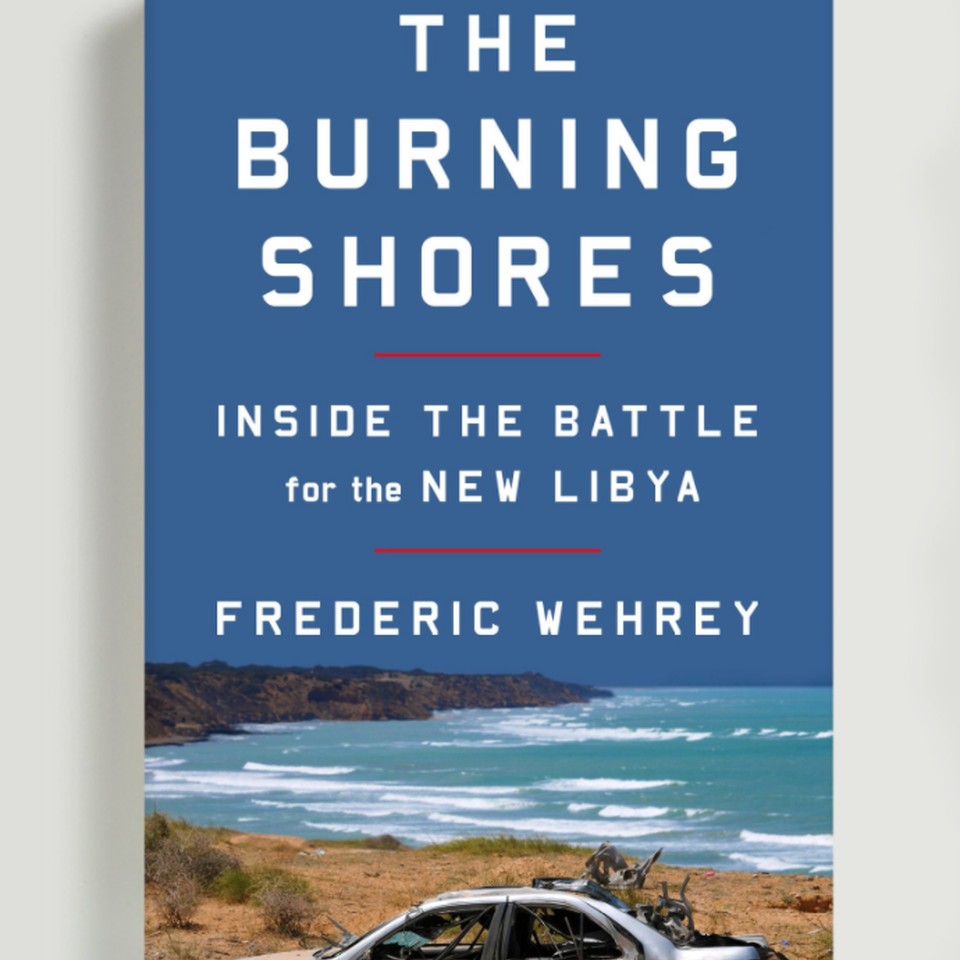
Is Libya Still A S**t Show? Frederick Wehrey 'Burning Shores' author answers
Description
I interviewed Fred Wehrey for this podcast and for my review of his book, Burning Shores, which I wrote on Forbes. I've copied the article below for those who are too lazy to go to Forbes.
Enjoy the podcast!
Review of The Burning Shores
Barack Obama called Libya a “s**t show” and that it was the “worst mistake” of his presidency.
This tidbit is just one of the many facts you'll read about in The Burning Shores: Inside the Battle for the New Libya, which hit the shores of bookstores last year.
The Burning Shores: Inside the Battle for the New Libya book cover. Disclosure: I received a complimentary advanced copy from the publisher.
FARRAR, STRAUS AND GIROUX
One of the few Americans who has an excellent grasp of this headache-producing country is Frederic Wehrey. He's a senior fellow at the Carnegie Endowment for International Peace focused on the Middle East and North Africa. He's testified before the Senate regarding Libya, he speaks Arabic and he's visited the troubled nation many times in the past few years. His book is solidly objective and nonpartisan.
Wehrey writes that the book “tries to find the turning points and missteps that caused the splintering of Libya—which I believe was not preordained after the death of its dictator. Ultimately, I want to understand what it was that caused revolutionaries . . . to turn against one another.”
If you want to understand those same issues, The Burning Shores is a must-read.
In 352 pages, Wehrey takes you from the death of both Colonel Muammar Qadhafi and US Ambassador Christopher Stevens to the present day. Wehrey doesn't dumb things down. Instead, he dives into the bewildering details in a bold effort to understand a seemingly incomprehensible conflict.
These soldiers who are loyal to Libyan strongman Khalifa Haftar discover that lying down sure beats fighting. The forces gather near the coastal city of Derna on April 14, 2018, as they await the start of military operations to recapture the city from jihadist group fighters. (Photo credit: ABDULLAH DOMA/AFP/Getty Images)
Although The Burning Shores is a blow-by-blow account of the last five years, Wehrey pulls back the camera to place the present day in context. For example, he observes that:
The histories and fates of Libya and America are more intertwined than many realize. Libya was once home to the largest overseas Americans military base in the world.
Frederick Wehrey, author of The Burning Shores and Libya expert.
CARNEGIE ENDOWMENT FOR INTERNATIONAL PEACE
America's first overseas intervention was in 1805 when the US marines unseated a troublesome Libya ruler. Just over 200 years later, the Americans repeated the action.
Another eerie parallelism happened in 1967 when Egyptian broadcasters claimed that the US was attacking Cairo during the six-day war. Armed Libyans stormed the US consulate, setting it on fire. The film Innocence of Muslims stirred a similar rage on September 11, 2012, and ignited another fire on US diplomatic property.
The difference is that in 1967, the US didn't lose an ambassador. Christopher Stevens was the eighth US Ambassador to die on the job and the sixth to die in a terrorist act.
6.3 million Libyans have a lot of real estate per capita. (Credit: Encyclopaedia Britannica/UIG via Getty Images)
The Burning Shores remains balanced. For example, it doesn't simply paint Qadhafi as a tyrant who sponsored terrorism, banned private land, and encouraged communism, even though he did a