Episode Details
Back to EpisodesWitches, Healers, and Hex Cats in Old Pennsylvania
Description
Stories of witchcraft and folk-healers in early Pennsylvania are surprisingly plentiful. In this episode, we examine the state’s German-American tradition of Braucherei that spawned these tales. The practice came over with immigrants from Germany’s southwestern Rhineland beginning in the late 1700s and established itself among the Pennsylvania “Dutch” (a misunderstanding of “Deutsch”) in the state’s southern “Dutch Country” region, eventually moving westward through Appalachia and all the way to Indiana and south into the Ozarks.
We begin with a chant supposedly chanted in the 1800s by witches gathered at Hexenkopf Rock (“witch’s head” rock), an actual site about 15-minutes outside the old steel town of Bethlehem. The locale is central to early Braucherei and to the other name by which it goes, namely “Pow-Wow.”
It was on land adjacent to the Hexenkopf that Johann Peter Seiler, who immigrated from Germany in 1738, eventually settled and set up shop as a folk-healer, or “Braucher” (one who practices Braucherei). As he also offered treatment to the native Algonquin, his work was equated by them to that of their medicine man or his rituals, and he was supposedly dubbed “The Great Pow-Wow.” This is one origin story for the odd nomenclature, though others believe the term “pow-wow” was applied by English settlers as a disparaging comparison to native rituals. The term is still used and carries no such disparaging connotation today. Nor does it imply a borrowing of Native American traditions into Braucherei, which is firmly rooted in Old World traditions.
While the Braucher has frequently been described by outsiders a “witch” or “witch doctor,” it’s certainly not a label accepted within the tradition, as there are no “good witches,” only bad witches, (Hexes) who practice Hexerei. Brauchers are often sought to remove curses placed by Hexes, though occasionally practitioners have been known to slip from one side to the other.
We next look at a sampling of the magical tools and techniques employed in Braucherei, the prominence of the color red, preponderance of written charms carried by clients, and the spoken charm, the famous “Blood Verse” used to stop bleeding.
A Braucher would always consider himself to be Christian, and much use is made of religious images and verbiage, especially from Catholic traditions. Though the Pennsylvania Dutch immigrated from Germany’s Protestant regions, Braucherei has served as a sort of underground continuation of medieval Catholic practice in a Post-Reformation world.
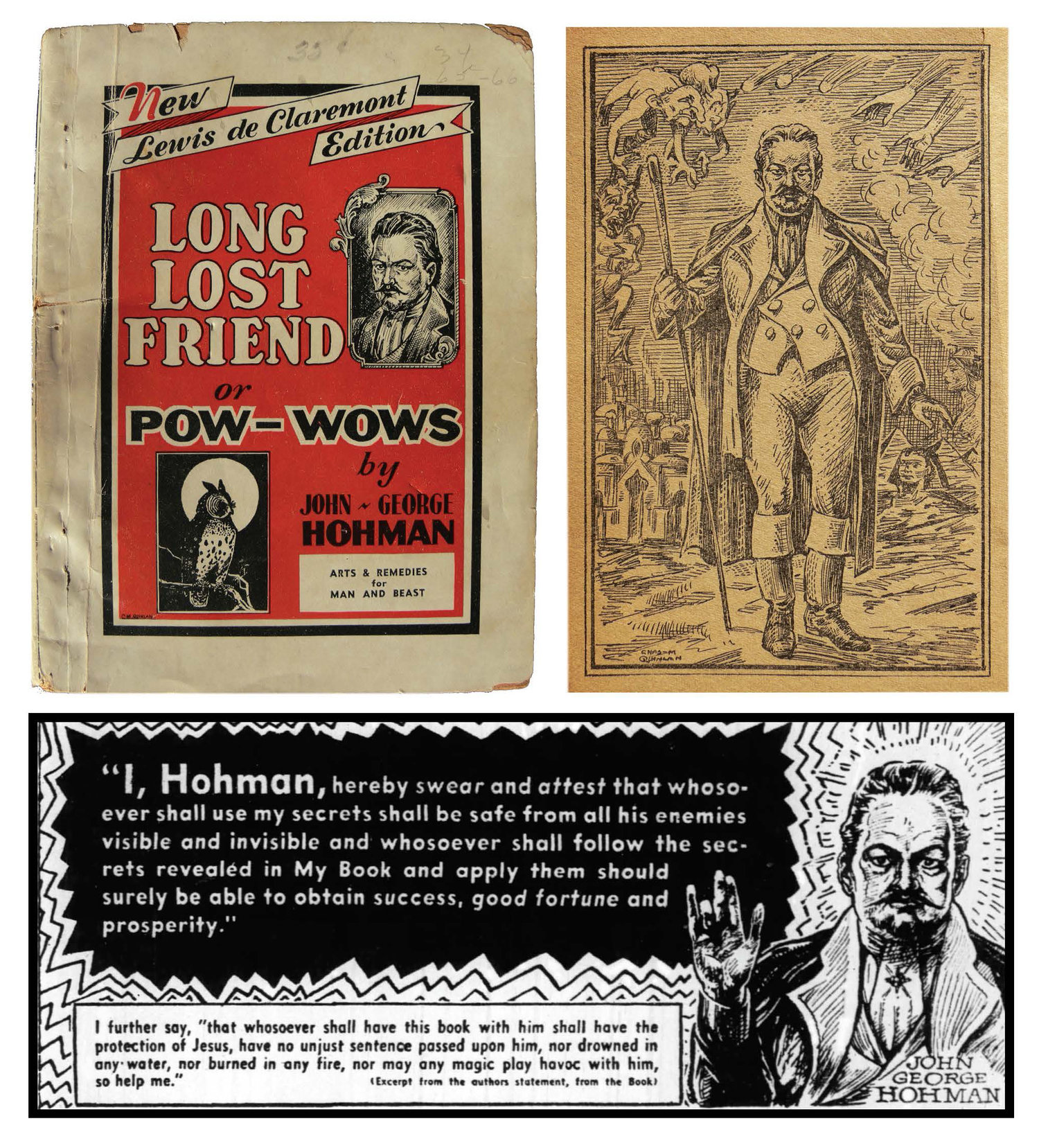
We then discuss the curiously titled volume The Long Lost Friend, a classic sourcebook for Braucherei, published by German immigrant, printer, and Braucher John George Hohman in Reading, Pennsylvania in 1820. Much of it, we learn, was borrowed (sometimes verbatim) from earlier Europe