Episode Details
Back to Episodes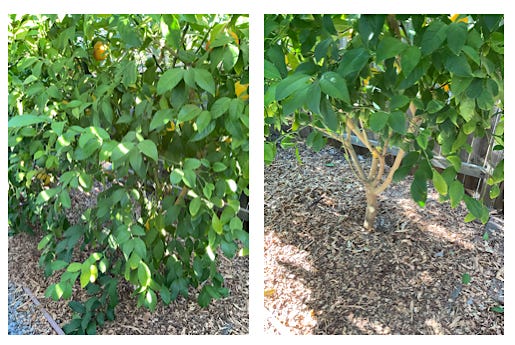
Dealing with Fruit Tree Varmints
Description
In today’s newsletter podcast, fruit tree expert Ed Laivo of Ed Able Solutions gives us tips for dealing with varmints that get to your tree fruit before you’ve had a chance to sample it. And, he has tips for growing fruit trees in containers. I mentioned in the podcast that we would have a video link to Ed’s Harvest Day 2024 presentation at the Fair Oaks Horticulture Center on August 3, which was about growing fruit trees in containers. That video is not yet available; but here, enjoy Ed talking about that topic on his YouTube page.
In the typed remarks below, we get into another way to thwart the crawling, walking, hopping, flying pests that get into your fruit trees, and that is to skirt prune those trees that have low hanging branches, that reach the ground.
For those of you who were hoping for stories of the high school girls at U.S. Grant High School in Van Nuys who would surreptitiously raise the hem of their mandatory skirts above the knee near the end of lunch period because the vice principal would leave the premises after one lap through the cafeteria area, sorry. And yes, it was a public school. And yes, skirts were mandatory for the female students. Except for one school day a year (Senior Day) in June, when the senior girls got to wear slacks (but not blue jeans!). How long ago was that? An up and coming band was the entertainment in the high school auditorium that Senior day, Three Dog Night.
When to Prune, When Not to Prune, Citrus Trees
If your citrus trees – the oranges, lemons, limes, mandarins, grapefruit, and more – are looking a bit overgrown and bushy, pruning can help reinvigorate them to produce more fruit. But don’t prune them now.
Cindy Fake is the Horticulture and Small Farms Advisor for the University of California Ag and Natural Resources in Placer County, who wrote their “Pruning Citrus” webpage. She agrees there are benefits to pruning citrus trees, but the timing is important.
“Citrus trees are evergreen trees, generally requiring less pruning than deciduous trees. However, they do need to be pruned regularly for optimal fruit quality and productivity. Pruning can improve fruit quality through increasing light in the canopy. In some cases, pruning out water sprouts (vertical shoots) may improve yields. Reducing tree height facilitates harvesting as well as risk of injury from ladders.”
However, Fake adds: “Pruning citrus trees is best accomplished in spring and early summer, after it sets flowers and then again when the small fruit appears.”
Retired citrus grower Lance Walheim, author of the book “Citrus”, seconds that motion. “Late summer and early fall citrus pruning is discouraged. Late pruning often stimulates vigorous tender growth, which doesn't have enough time to harden off before cold weather, increasing chances of frost damage. Pruning in late summer, especially here, where triple digit temperatures are common, can cause citrus bark and fruit to become exposed to too much intense sunlight. Citrus bark is highly sensitive to sunburn. The bark can be killed, which can girdle the tree, especially if the tree is in a south or west exposure. Whenever bark is newly exposed to intense sunlight, paint the exposed area with a whitewash, made of 50% water and 50% interior white latex paint.”
However, there are a few minor citrus pruning chores that can be done anytime of the year: removing the suckers that begin below the bud union just above ground level; and skirt pruning the citrus tree. “Skirt pruning” is exactly what it sounds like, removing any branches that reach the ground.
“Skirt pruning facilitates weeding, mulch laying, and other cultural practices, as well as reducing risk of soil borne pathogen