Episode Details
Back to Episodes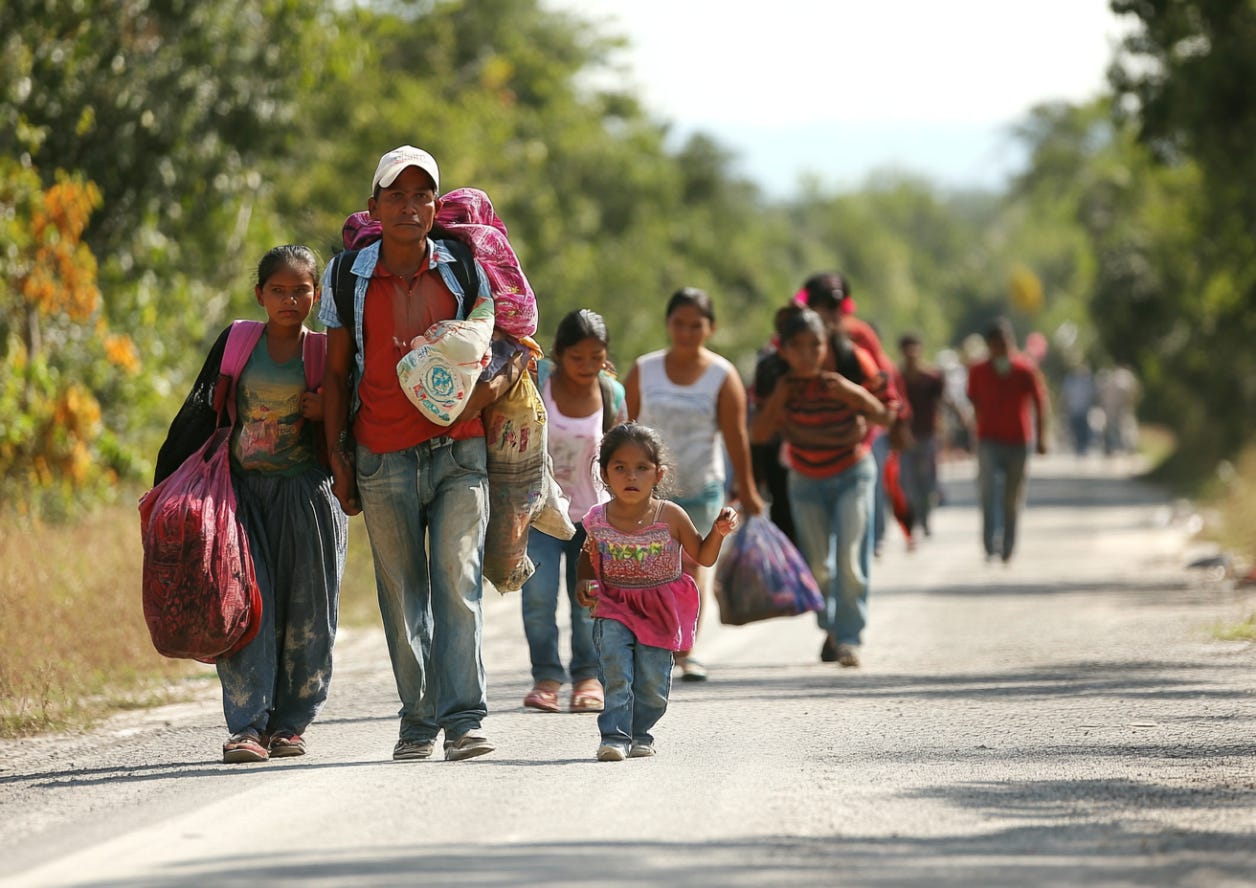
The Truth About Immigration - And Where It's Going
Description
To watch this piece, go to:
1. There are more people in the world than ever - and we all want better lives
There are some 8.2 billion people in the world - more than ever - and, whether it’s people displaced by war, famine, or lack of water, or (the big one) people seeking a better life with more opportunity, more us are on the move than ever.
Some stats:
4.6 billion live on less than $10/day.
7 billion live on less than $40/day. 7 billion!
While the number of people in extreme poverty (below $2.15/day) has capitulated in South Asia, East Asia, and the Pacific, it is rising in sub-Saharan Africa.
I was interested to know what the global population by ethnicity is (search engines do not make that easy to find out), but, broadly speaking, it looks something like this (obviously there are lots of mixed race people):
* Asian (Chinese, Japanese, Korean, etc.): ~3.2 billion / 43%
* Indian (India, Pakistan, Bangladesh, Nepal, Sri Lanka): ~1.5 billion / 20%
* Black African: ~1.4 billion / 19%
* White European: ~750 million / 10%
* Middle Eastern (Arab, Persian, Kurd, Turk, etc.): ~500 million / 7%
* Amerindian (North and South America): ~100 million / 1%
* Pacific Islander: ~12.5 million / 0.2%
Visualised:
Though this is rapidly changing with Asian growth, the majority of the world’s wealth lies in the predominantly white (for the time being) countries of Western Europe and North America.
There are a gazillion different reasons put forward as to why this might be, which differ according to worldview, ranging from slavery to IQ to system of rule. Regardless of what the reason is, Western Europe and North America have become the prime destinations for migrants. That is where the money is.
Language is a huge and overlooked factor too. Most people around the world speak some English. If the migrant speaks German, they might prefer Germany, but English is more widespread, and that means greater numbers will favour the Anglo-Saxon nations.
But the population of Western Europe is less than 200 million, 265 million if you include the UK. The population of the U.S. is 345 million. We are tiny in the global context.
The difference in the weight of numbers is staggering.
(Another good stat for you: more people are born in Nigeria each year than in all of Europe).
2. Modern transportation
Because of planes, trains, and automobiles, not to mention boats (fossil fuels and engines, basically), people are able to travel further and faster than ever before.
Forget Around the World in 80 Days, itself a miracle in 1872 when the Jules Verne story was published, now, it’s almost (not quite) possible to get around the world in 24 hours.
Meanwhile, the days of the medieval serf, who was tied to his land and not allowed to travel, are long gone (for the most part—there are bits of Africa and Asia where you are still tied).