Episode Details
Back to Episodes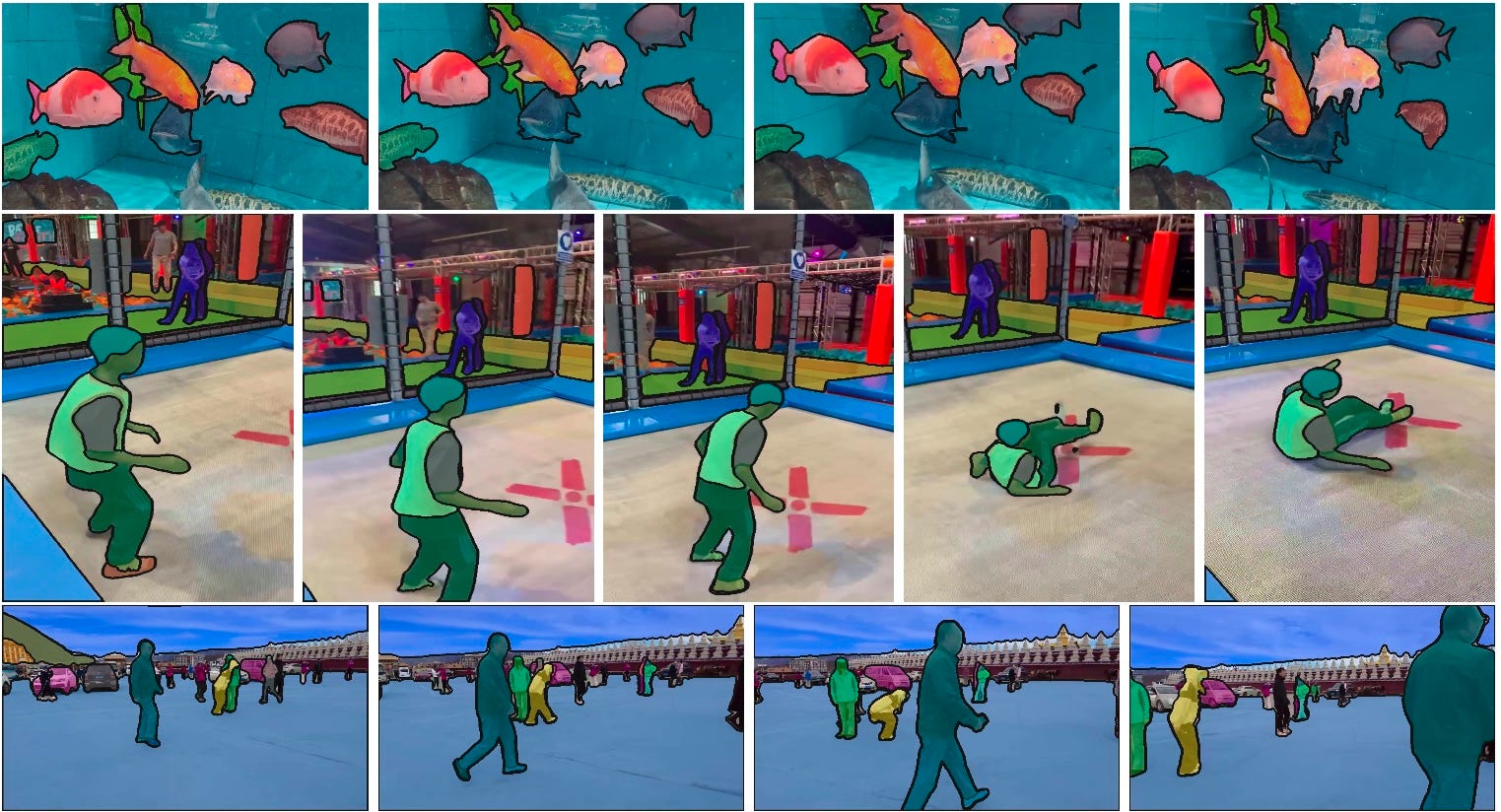
Segment Anything 2: Demo-first Model Development
Description
Because of the nature of SAM, this is more video heavy than usual. See our YouTube!
Because vision is first among equals in multimodality, and yet SOTA vision language models are closed, we’ve always had an interest in learning what’s next in vision.
Our first viral episode was Segment Anything 1, and we have since covered LLaVA, IDEFICS, Adept, and Reka. But just like with Llama 3, FAIR holds a special place in our hearts as the New Kings of Open Source AI.
The list of sequels better than the originals is usually very short, but SAM 2 delighted us by not only being a better image segmentation model than SAM 1, it also conclusively and inexpensively solved video segmentation in just an elegant a way as SAM 1 did for images, and releasing everything to the community as Apache 2/CC by 4.0.
“In video segmentation, we observe better accuracy, using 3x fewer interactions than prior approaches.
In image segmentation, our model is more accurate and 6x faster than the Segment Anything Model (SAM).”
Surprisingly Efficient
The paper reports that SAM 2 was trained on 256 A100 GPUs for 108 hours (59% more than SAM 1). Taking the upper end $2 A100 cost off gpulist.ai means SAM2 cost ~$50k to train if it had an external market-rate cost - surprisingly cheap for adding video understanding!
The newly released SA-V dataset is also the largest video segment dataset to date, with careful attention given to scene/object/geographical diversity, including that of annotators. In some ways, we are surprised that SOTA video segmentation can be done on only ~50,000 videos (and 640k masklet annotations).
Model-in-the-loop Data Engine for Annotations and Demo-first Development
Similar to SAM 1, a 3 Phase Data Engine helped greatly in bootstrapping this dataset. As Nikhila says in the episode, the demo you see wasn’t just for show, they actually used this same tool to do annotations for the model that is now demoed in the tool:
“With the original SAM, we put a lot of effort in building a high-quality demo. And the other piece here is that the demo is actually the annotation tool. So we actually use the demo as a way to improve our annotation tool. And so then it becomes very natural to invest in building a good demo because it speeds up your annotation. and improve the data quality, and that will improve the model quality. With this approach, we found it to be really successful.”
An incredible 90% speedup in annotation happened due to this virtuous cycle which helped SA-V reach this incredible scale.
Building the demo also helped the team live the context that their own downstream users, like Roboflow, would experience, and forced them to ma