Episode Details
Back to Episodes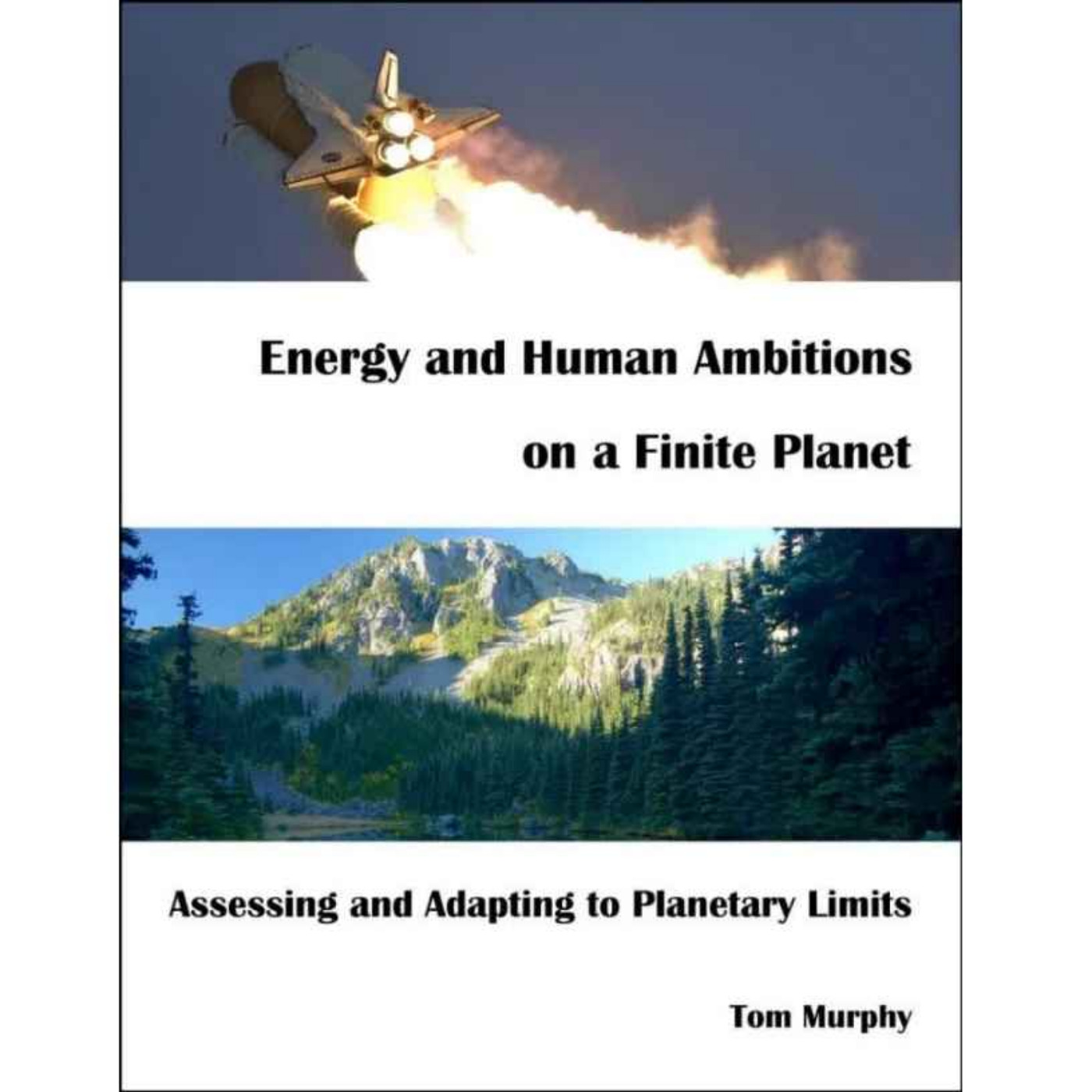
469: The Science Book of the Decade: Energy and Human Ambitions on a Finite Planet, by Tom Murphy
Description
I didn’t think of how small my building’s elevators were when I bought a sofa after moving into my current apartment. It didn’t fit. The deliverymen tried to bring it up the stairs too. They made the first landing, but couldn’t make the turn to go up the next flight.
They had to take it back. I ended up paying a $300 restocking fee plus big tips for the deliverymen’s extra efforts. Plus I lost weeks with no sofa. Now I know my home’s limits. Living within them is no problem when I know them, only when I didn’t. A few minutes of measurement and geometry could have saved me that trouble and improved my life.
Can homo sapiens’ elevator, also known as Earth, fit us all in? As with my sofa, maybe a bit of calculation is worth saving the trouble of finding out if our sofa can fit. We’re past the point of eyeballing it. Our sofa is civilization and billions of lives.
I doubt even those who study sustainability most can answer Important questions like
- Can fusion save us? Will it?
- What works between solar, wind, nuclear, geothermal, and other options? What doesn’t? Why not?
- What unintended side-effects are we missing?
- Do we risk losing civilization? If so, how great is the risk?
- If we take the gloves off, can geoengineering and other last-ditch efforts work?
- How hard will saving it be?
- What do we have to do to make it?
These questions have answers, whether we find them out or not. There are a lot of books on the environment. I’ve read a lot of them. Most just describe our situation and what will happen if we don’t fix it. Some talk about what we can do, but they don’t help us understand. They don’t describe the patterns, just the results or instruction. We have to trust the writer.
We’ve all heard to eat less meat. How much less? Will all the things they tell us to do solve the problems? How can I tell? What if I don’t eat less meat? Between eating meat or not, why can’t I see any difference in the world? Should I bother trying or just enjoy life to the max?
We’re just told the problems and what to do. Maybe school should have taught us but it didn’t. After decades of poor science education, few teachers know how to teach science. They spout facts and instruction. Most analysis and activism is done without context or knowing nature’s patterns, based on feelings. Some envision a world of 10 billion thriving, others a collapse well before.
Sustainability leadership is my life passion and frankly I don’t find most resources on the environment useful or readable. From the IPCC report Greta Thunberg gave to Congress to An Inconvenient Truth to articles suggesting “one little thing you can do for the environment,” they describe results and tell us what to do. They don’t help us understand beyond “coral reefs are bleaching” and oversimplifications like “CO2 acts like a blanket.” We have to take their word things like biodiversity is good and pollution is bad.
Even knowing all the data doesn’t tell us the patterns. Will buying an electric vehicle matter? Does flying matter? How much? Enough to save lives? How can I tell, or do I have to take your word for it? Most of all, what about when they clash with other values? What if someone else says jobs or energy security is more important? Is there conflict? If so, how do we resolve it? What if we don’t want to emit greenhouse gases but our mother is sick, flying distance away? Or we feel our job depends on it? What about someone else saying the economy depends on my buying more stuff?
Only knowing data but not patterns, we can’t think or decide for ourselves. We throw up our hands. For generations we’ve said we’d act and in fact we have, yet we keep lowering Earth’s capacity to sustain life and society. Could our ignorance be causing our attempts at solutions to augment the problems? Might our current attempts at solutions be exacerbating the problems