Episode Details
Back to Episodes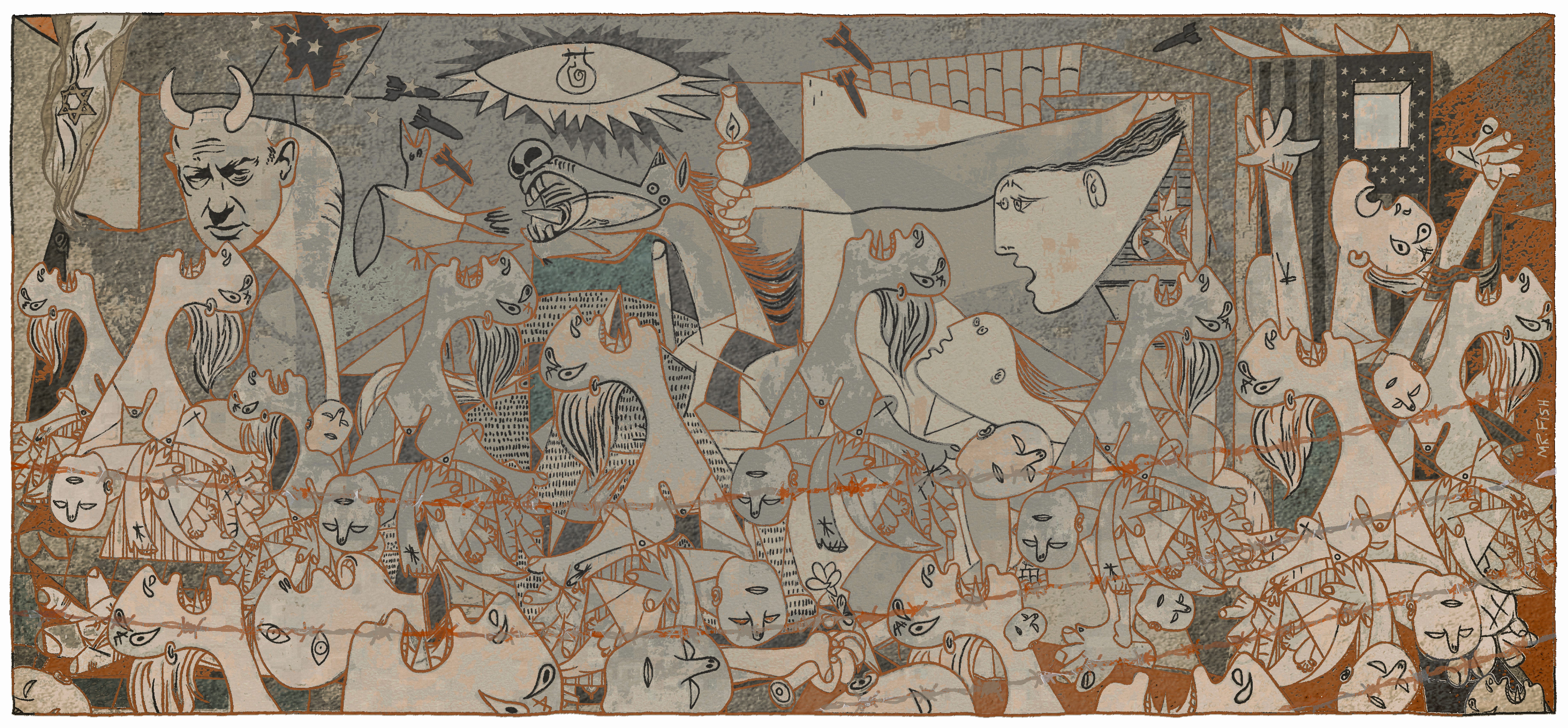
The Old Evil - Read by Eunice Wong
Description
Text Originally published July 12, 2024
Which Genocide Are You On? - by Mr. Fish
RAMALLAH, Occupied Palestine: It comes back in a rush, the stench of raw sewage, the groan of the diesel, sloth-like Israeli armored personnel carriers, the vans filled with broods of children, driven by chalky faced colonists, certainly not from here, probably from Brooklyn or somewhere in Russia or maybe Britain. Little has changed. The checkpoints with their blue and white Israeli flags dot the roads and intersections. The red-tiled roofs of the colonist settlements — illegal under international law — dominate hillsides above Palestinian villages and towns. They have grown in number and expanded in size. But they remain protected by blast barriers, concertina wire and watchtowers surrounded by the obscenity of lawns and gardens. The colonists have access to bountiful sources of water in this arid landscape that the Palestinians are denied.
The winding 26-foot high concrete wall that runs the 440 mile length of occupied Palestine, with its graffiti calling for liberation, murals with the Al-Aqsa mosque, faces of martyrs and the grinning and bearded mug of Yasser Arafat — whose concessions to Israel in the Oslo agreement made him, in the words of Edward Said, “the Pétain of the Palestinians” — give the West Bank the feel of an open air prison. The wall lacerates the landscape. It twists and turns like some huge, fossilized antediluvian snake severing Palestinians from their families, slicing Palestinian villages in half, cutting communities off from their orchards, olive trees and fields, dipping and rising out of wadis, trapping Palestinians in the Jewish state’s updated version of a Bantustan.
It has been over two decades since I reported from the West Bank. Time collapses. The smells, sensations, emotions and images, the lilting cadence of Arabic and the miasma of sudden and violent death that lurks in the air, evokes the old evil. It is as if I never left.
I am in a battered black Mercedes driven by a friend in his thirties who I will not name to protect him. He worked construction in Israel but lost his job — like nearly all Palestinians employed in Israel — on Oct. 7. He has four children. He is struggling. His savings have dwindled. It is getting hard to buy food, pay for electricity, water and petrol. He feels under siege. He is under siege. He has little use for the quisling Palestinian Authority. He dislikes Hamas. He has Jewish friends. He speaks Hebrew. The siege is grinding him, and everyone around him, down.
“A few more months like this and we’re finished,” he says puffing nervously on a cigarette. “People are desperate. More and more are going hungry.”
We are driving the winding road that hugs the barren sand and scrub hillsides snaking up from Jericho, rising from the salt-rich Dead Sea, the lowest spot on the earth, to Ramallah. I will meet my friend, the novelist Atef Abu Saif, who was in Gaza on Oct. 7 with his 15-year-old son, Yasser. They were visiting family when Israel began its scorched earth campaign. He spent 85 days enduring and writing daily about the nightmare of the genocide. His collection of haunting diary entries