Episode Details
Back to Episodes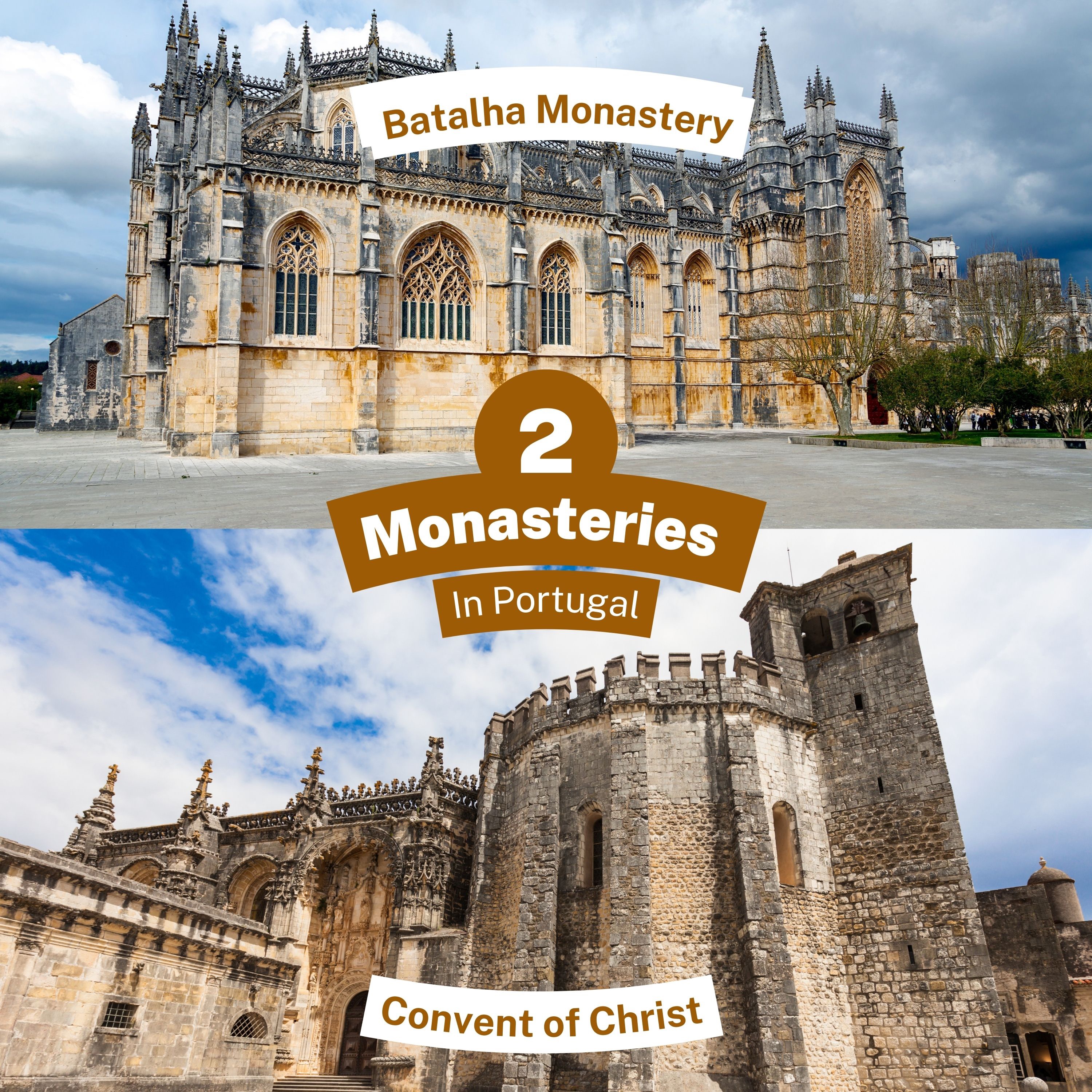
S2E6: 2 Monasteries-Batalha and Convent of Christ
Description
Wandering Works for Us Podcast
Today, we take you to the central part of Portugal to Batalha and the Convent of Christ in Tomar.
First up, the Monastery of Batalha, or Mosteiro da Batalha, is one of Portugal’s greatest Gothic masterpieces. Commissioned by King João I in 1386, it was built to honor the Virgin Mary in thanks for Portugal’s victory at the Battle of Aljubarrota (1385), a decisive moment that secured the country’s independence from Castile. Over more than a century of construction, master builders blended Gothic and Manueline styles, creating a monument of national pride. It also became the royal pantheon of the Aviz dynasty, housing the tombs of João I, Queen Philippa of Lancaster, and Prince Henry the Navigator.
Things not to miss when visiting:
- Founder's Chapel (Capela do Fundador): Burial place of King João I, Queen Philippa, and their famous sons.
- Unfinished Chapels (Capelas Imperfeitas): An extraordinary open-air architectural experiment, never completed but breathtaking in detail.
- Royal Cloister: Perfectly preserved Gothic cloisters with delicate stone tracery.
- High Altar & Nave: Imposing Gothic proportions and soaring vaults that inspire awe.
- Stained Glass Windows: Among the finest medieval stained glass in Portugal.
Batalha Monastery isn’t just a building—it’s a stone chronicle of independence, devotion, and the rise of Portugal as a global power.
Tomar and The Convent of Christ
The Convent of Christ in Tomar has just as rich a story as Batalha, but with a very different character. Here’s the essential background you could use for your next set of show notes:
- Who built it & why:
- The convent was originally founded in 1160 by the Knights Templar under Grand Master Gualdim Pais. After the Templars were dissolved in the early 14th century, the Portuguese branch was re-established as the Order of Christ, which inherited the convent.
- Why it matters:
- The convent became the headquarters of the Order of Christ, which played a central role in supporting Portugal’s Age of Discoveries — most famously under Prince Henry the Navigator, who was its governor.
- Architecture:
- It blends Romanesque, Gothic, Manueline, and Renaissance styles, thanks to centuries of expansions and renovations. Its centerpiece is the Charola, the original 12-sided Templar church, modeled after the Church of the Holy Sepulchre in Jerusalem.
- Highlights not to miss:
- Charola (Rotunda): The richly decorated, polygonal Templar church at the heart of the complex.
- Manueline Window of the Chapter House: One of Portugal’s most iconic Manueline artworks, covered in maritime and natural motifs.
- Cloisters: Especially the Cloister of John III, with Renaissance harmony and elegance.
- Aqueduct of Pegões: A massive 16th-century aqueduct that supplied the convent with water.
- Castle Walls & Towers: Remnants of th