Episode Details
Back to Episodes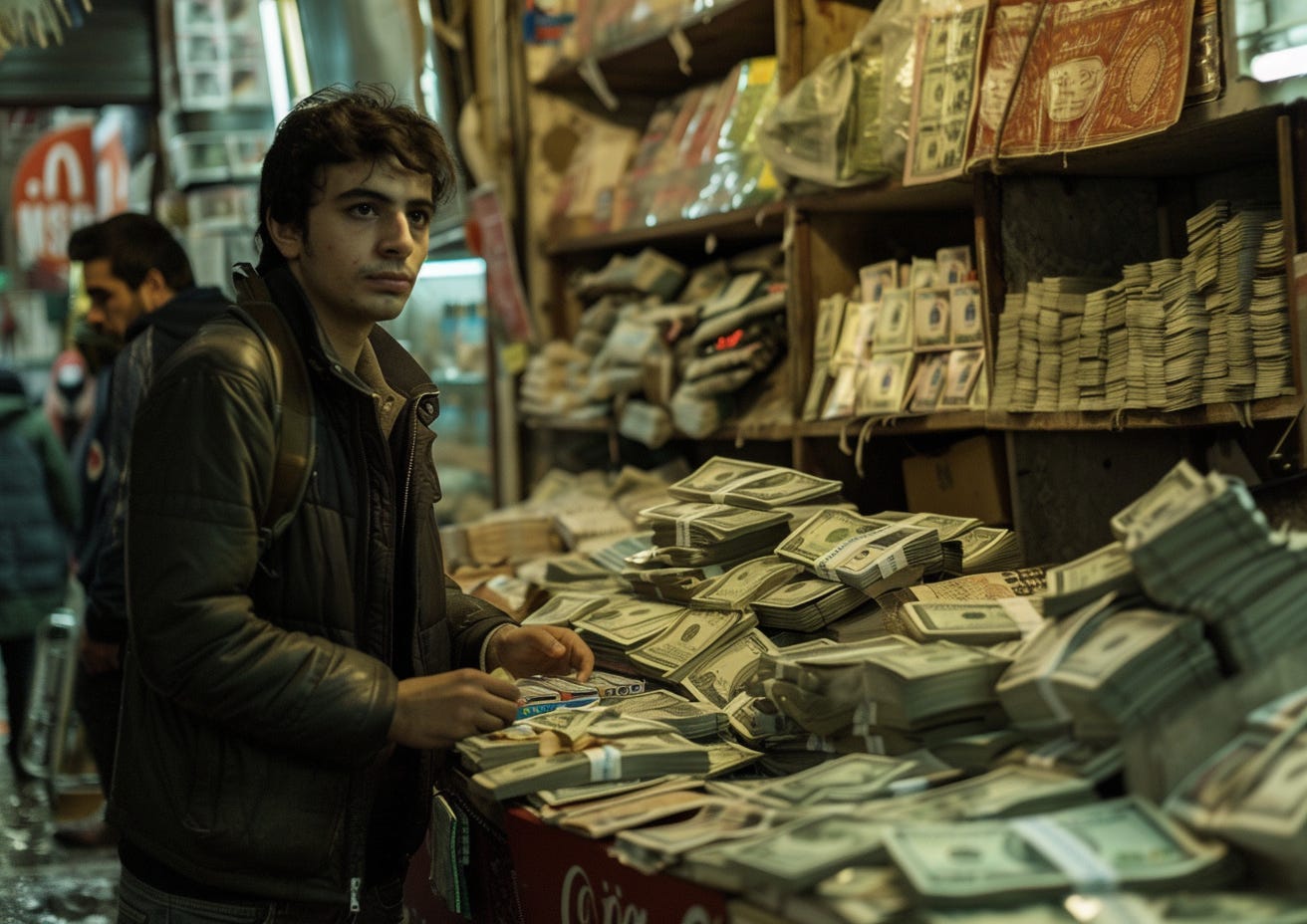
What Happens When You Destroy Money: The Challenges of Everyday Life in Turkey
Description
Over the last decade, the Turkish lira has seen declines of more than 95% against the US dollar. It took just ₺1.50 to buy it dollar ten years ago. Now it takes ₺33. The lira has been one of the world’s worst-performing currencies - and in a fiat world, that is saying something - rivalled only by the Venezuelan bolivar and the Argentinian peso.
While in Istanbul last week, I spoke to two young professionals, Emre, 25, and İlker, 27, about life under the lira. Both are bright, articulate, and empathetic young men who speak three languages fluently - English, German, and Turkish - as well as competent French.
Given that the currency has been so bad, I was expecting to see more widespread use of foreign money, but in fact, lira are changing hands everywhere - you see people all over the place with wads of them. “You have to use lira,” they explained. “It is the national currency.” Even with such dire inflation, there is still trade. The economy still functions, albeit badly. (That said everything in the airports was denominated in euros).
Food, energy, travel, housing, consumer goods - everything has gone up in price, but, surprise, surprise, wages have not gone up by nearly as much. The result is that ordinary people have been impoverished.
“The average wage in Istanbul is about £650 per month,” they told me. (One thing that impressed me was how immediately they could translate the lira into pounds, dollars, or euros).
“What about the receptionist in my hotel or a waiter?”
“Maybe £500. A taxi driver working all hours, maybe £800.”
With those kinds of earnings, it is hard to make ends meet.
“That’s why everybody wants to meet a tourist,” they smiled in reply.
“What do you do?” I asked. “Do you spend money as soon as you have it? Before it loses purchasing power?”
“Yes,” they said. “There is no point saving. When we were students a few years ago, you could save for maybe three years and buy a car. Now it would take you 20 years. There is no point saving in lira. We spend the money as soon as we have it.”
“Even on stupid things,” added Emre, pointing to his Casio watch. “You may as well.”
Everyone is the same, apparently. They spend as soon as they earn. There is no point saving a currency that will soon be worth less. The rates of interest paid do not compensate, especially given that you usually have to tie your money up for one, two, or three years to obtain decent rates, and the inflation risk of doing that is too great.
Interest rates have been quite the issue in Turkey, by the way. Mainstream Islamic finance prohibits interest, something they claimed Turkish President Recep Tayyip Erdoğan exploited. Until 2023 Erdoğan kept a lid on rates (they are now 50%), arguing that high rates cause inflation. He repeatedly replaced central bank governors who resisted low rates.
“How do people save?” I asked.
“Gold,” came the answer straight away. Everyone who can buys gold, even tiny amounts below a gram.
“Silver?” I asked.
“Not so much.”
I asked them if they use Revolut or similar to hold foreign currencies. They had no idea what Revolut was (probably a good thing, given what can happen), but it seems most banks also