Episode Details
Back to EpisodesThe Mesmerist
Description
Our understanding of hypnotism, once known as “mesmerism,” has radically evolved over the centuries. This episode looks at where it all began, examining the fascinating (and rather weird) story of the 18th-century German doctor, Franz Anton Mesmer, after whom “mesmerism” is named.
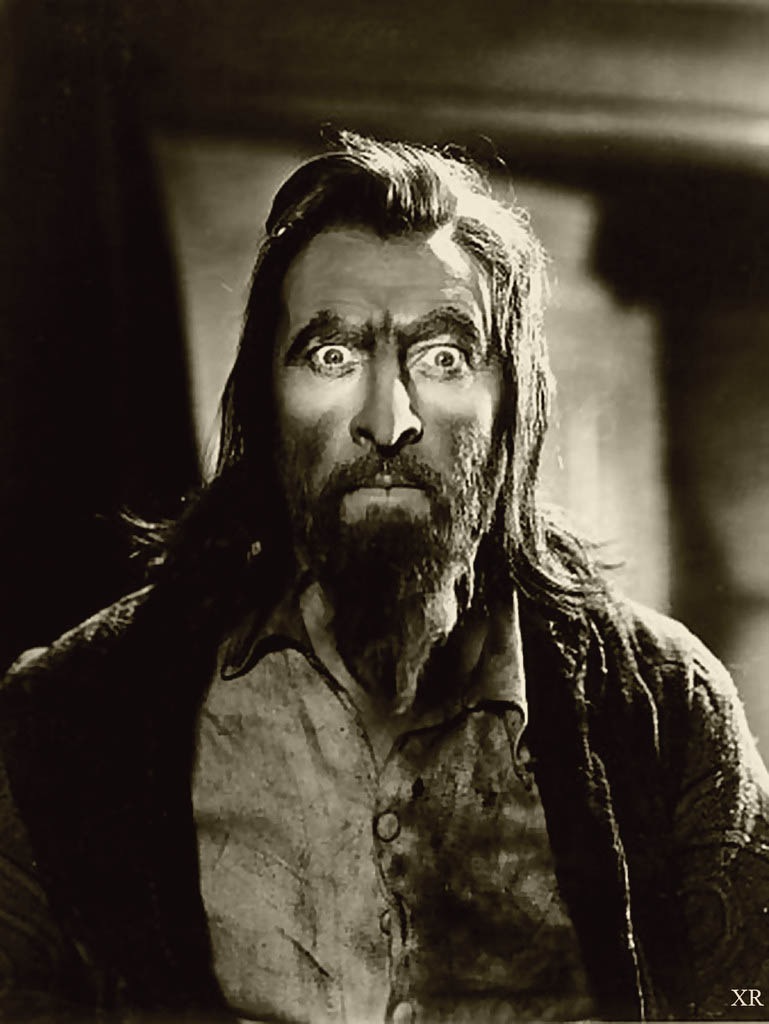
We begin, with a look at the mesmerist’s sinister reputation in the 19th century, as reflected in the British writer George du Maurier’s 1894 novel, Trilby. While the book’s named for its protagonist, Trilby O’Ferrall, an Irish girl working as a model in a British artist’s colony in Paris, her nemesis is better known, namely, her vocal instructor, Svengali, an Eastern European musician whose hypnotic powers not only propel the aspiring singer to stardom but also come to dominate and ruin her life. We look at the novel’s forgotten popularity in its day, the phenomenon of “Trilbyana,” and the book’s cinematic adaptations, including the 1931 film, Svengali, with John Barrymore in the title role. Along the way, we note some surprising parallels with more prominently gothic novels and films.
Beginning with Mesmer’s dubious scholarship at the University of Vienna, we make an attempt to untangle his concept of “animal magnetism,” describing an invisible, dynamic fluid, comparable to the “cosmic magnetism” that guides the planets, but particular to “animals” (i.e., creatures sharing an “animus” (L) or animating spirit.
We particularly focus on Mesmer’s experiences while in Hungary, where in 1775 he was summoned by a Baron Horeczky de Horka, who hoped the German doctor’s new form of therapy might succeeds where treatments of his condition by others had failed. We hear of several curious incidents occurring in the castle, which were documented in detail the family tutor and interpreter Herr Seifert, who had observed Mesmer with a skeptical fascination, expecting the man to be a charlatan.
We next look at Mesmer’s return to Vienna where he attempted the cure of Marie Paradies, a talented musician blind since the age of three who mingled with the musical elites of her city and was regarded with favor by the Imperial court.
As the results here were dubious at best, we then follow Mesmer on his escape to Paris, where he becomes a faddish celebrity. Mrs. Karswell reads for us a lengthy descriptions of his “magne