Episode Details
Back to EpisodesMermen and more Marvels of the Northern Seas
Description
In this episode, we continue our survey of supernatural sailors’ lore of the North with a look at mermen, Iceland’s “evil whales,” and sea-draugs.
After a brief audio tidbit recalling our previous discussion of the Norse World Serpent, Jörmungandr (courtesy of the TV show Vikings), we briefly reconsider the Kraken in the context of the 13th-century Norwegian text Kongsspegelen/Speculum Regale (“King’s Mirror”). In what is likely the earliest reference to the Kraken, the attributes described and context of the discussion suggest that at this early stage of the creature’s mythology, it may have been imagined not as a cephalopod but as a particularly large and monstrous whale.
This brings us to the topic of the “evil whales” or Illhveli of Icelandic lore, much of which is taken from Olaf Davidson’s article of 1900, “The Folk-Lore Of Icelandic Fishes.” Particularly dangerous and even malevolent toward seamen, these beasts are also enemies of benevolent species of whale that protect man. Their flesh is considered poisonous, and utterance of their name, we learn, can summon them and great misfortune.
The largest of these creatures (if we disregard the Kraken, which seems more to occupy a class unto itself) is the Lyngbakr or “heather-back,” often mistaken for a land-mass covered with heather or grass. The same motif occurs in tales of the Kraken or Hafgufa (not discussed in the show thanks to the thematic redundancy), but tales of the Lyngbakr characteristically describe sailors actually landing on the heather-covered mass, mistaking it for an island, and perhaps dwelling there for days on end — until the fish takes a dip.
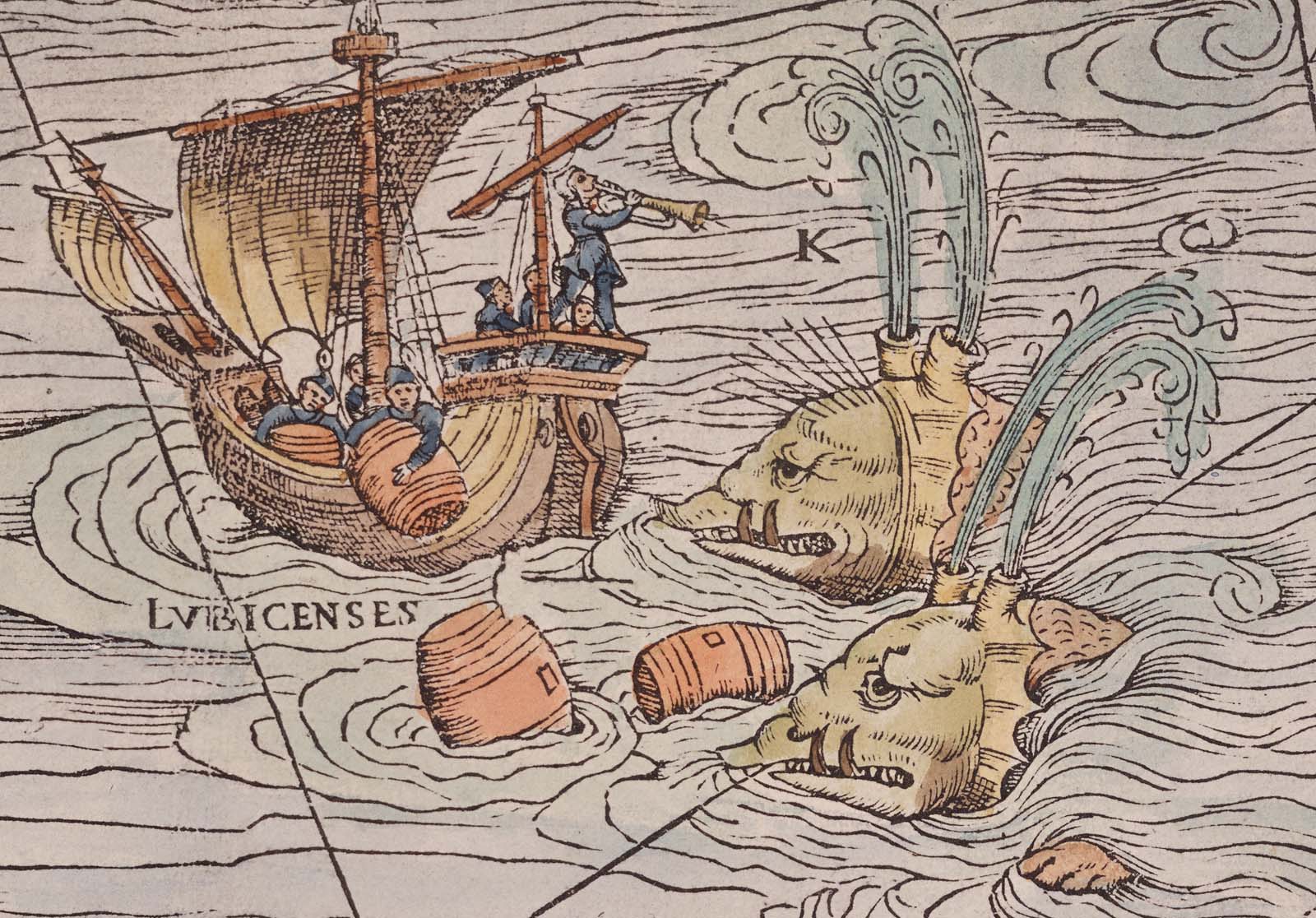
The most vicious member of the Illhveli, seems to be the Raudkembingur, or “red-crest,” named for its red color and/or the rooster-like comb it sports. Mrs. Karswell reads for us a selection of Davidson’s stories of the Raudkembingur’s attacks upon ships and rather emotional disposition.
We then hear about the Hrosshvalur or “horse-whale,” named for the neighing sound it produces. It was also sometimes called the blödku hval or “flap-whale” thanks to long eyelids or fl