Episode Details
Back to Episodes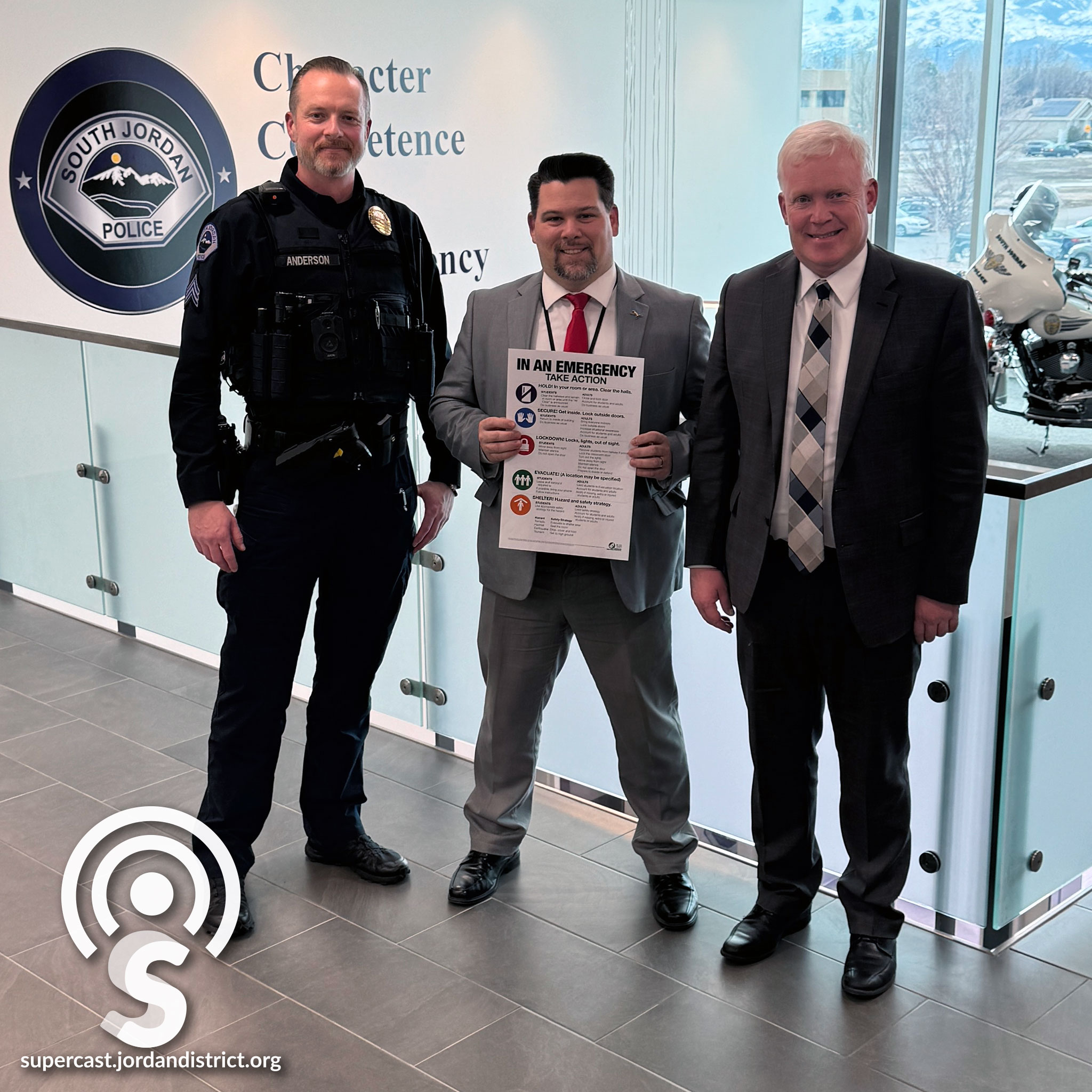
What You Need to Know About the New Standard Response Protocol During Emergency Situations in Our Schools
Description
It will help to keep everyone safe and informed in the event of an emergency in one of our schools or buildings. It’s called Standard Response Protocol or SRP and it provides consistent, clear, shared language, and actions for all students, staff, first responders, and parents. It is language that can be applied to any emergency situation.
On this episode of the Supercast, find out why state law now requires all school districts to adopt SRP and how knowing the language is essential to everyone for the sake of safety in our schools.
Audio Transcription
[Music]Anthony Godfrey:
Hello and welcome to the Supercast. I'm your host, Superintendent Anthony Godfrey. It will help keep everyone safe and informed in the event of an emergency in one of our schools. It's called Standard Response Protocol, or SRP, and it provides consistent and clear language and actions for all students, staff, first responders and parents. It is language that can be applied in any emergency situation.
On this episode of the Supercast, find out why SRP is now being used statewide and why knowing the language is essential to everyone to help keep our schools safe.
[Music]Today we are at the South Jordan City Public Safety Building to talk with School Safety Coordinator from Jordan School District, Matt Alvernaz, and Sergeant Eric Anderson, who oversees the school resource officers in our schools for South Jordan City. Gentlemen, thank you very much for taking time to talk with us about the new terminology and the new actions that are in place for schools to take in case of emergency.
One of the things that's exciting about this is that everyone in the state is on board now, and this is terminology that's going to mean the same action and means that we take the same action throughout the state, which is really going to help. But before we dive in, just give me a little introduction about yourself.
Matt Alvernaz:
So I'm Matt Alvernaz. I'm the School Safety Coordinator. Prior law enforcement of 14 years. Before that I did four years with the Army as a ranger in special operations, and now work with the Jordan School District. I was a school resource officer myself, so I do have experience in the schools as well, and it's been an enjoyable transition. And I'm now the trainer of trainers for the standard response protocols for Jordan School District.
Anthony Godfrey:
Okay, great.
Sergeant Eric Anderson:
As Anthony said, Sergeant Eric Anderson, I am with the South Jordan City Police Department. I've been with South Jordan for over 22 years. I actually joined in 2001 with every intention of leaving, and I never did.
Anthony Godfrey:
We're glad you didn’t.
Sergeant Eric Anderson:
Yes, no, it's been great here. I've worked in investigations- eight years in there, SWAT team 12 years. Like Anthony said, I now manage our SROs, and I'm a myriad of other things, but that's my primary responsibility.
Anthony Godfrey:
Tell me about the unique assignment, both of you, of being an SRO in a school as compared with being an officer in other roles.
Sergeant Eric Anderson:
There's a different mindset when you step into a school, mainly because you're working with the school staff, as opposed to just working as a law enforcement officer. What that typically means is when something happens in the school that requires police intervention, you really have to kind of put on the brakes before any decisions move forward.
And so an example I would give you is vapes. An officer walks into a bathroom, sees some kids using a vape, and they confiscate the vape, take the kids to the school administration, the principal, the VP, and they just discuss what to do with that. You know, does the kid have prior incidents involving the same crime, things of that nature, and then they make a determination on