Episode Details
Back to Episodes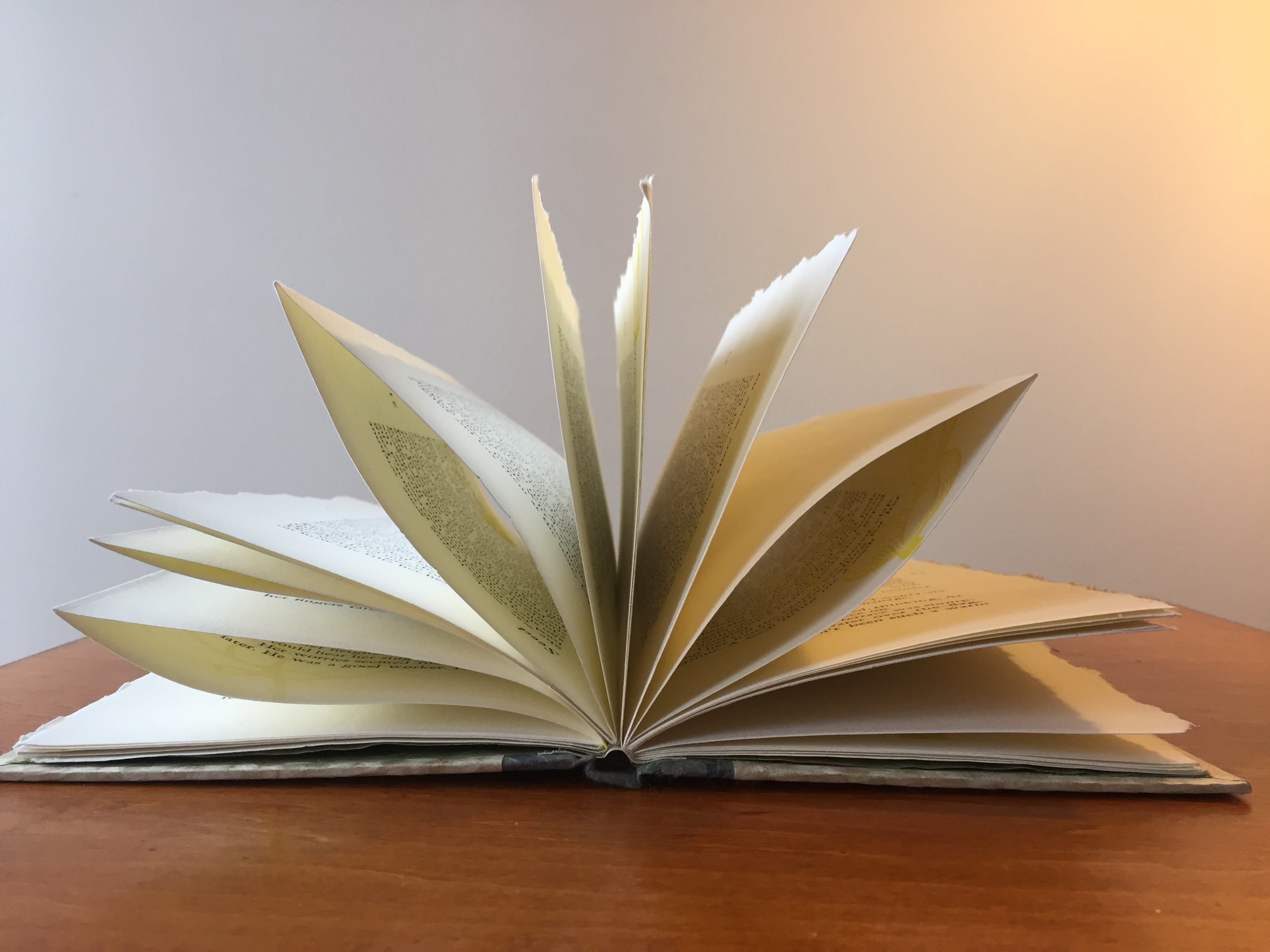
Uncut Book
Description
Lucas Folch took at random a book from the stack of copies, placed by reflex the reading glasses at the top of the nose, and without noticing it, began to move his lips, as if instead of reading perhaps was counting money. Every morning, he went to the book distributor to restock some backlist and widely-publicised frontlist titles as well, many of which were the repetition of the same old promises: you are going to be captivated by this and by that, even for what follows beyond the first page.
Those highfaluting promises were diluted pretty soon in a string of pathetic clichés and simple-minded screenwriting —with an eye to a never-ending streaming series— crammed with drivel and filler, disguised as dialogues with petty conflicts that didn’t even deserve an atmospheric reading. All the same, he still bore in mind what the hell was looking for. And the cardinal reasons why he was pouring such heart and soul into the thrill of the hunt
More than a diligent bookseller, Mr. Folch saw himself as a mere procurer, a pornographer in the proper sense of the word, whose job was to sell black-ink typeface printed over white-paper scroll, to be folded and bounded and cut as a copy, with the ultimate goal at stake, to wit: get the reader’s imagination run wild into a made-up paradise, although plausible but always forbidden, chased, hidden.
With his attention centered upon such capacity, he weighed up those first pages and ruled them out if he was not knocked out on the spot by well-aimed punches due to the narrator. Well-adjusted, and without further restraints, he eventually came to wonder about everything he read. By way of illustration, how could some historical fiction authors spend so long documenting about clothes and whatnot while at the same time, in a sex scene, they were unable to elicit a ripping boner from the reader. Not for nothing, Mr. Folch maintained, the prominent characters in which they concerned so much, passionately loved each other, did they?
All the bookseller wanted was to read for once a writer who was not the minor god of a corny garden, someone whose words would wake the colorful fantasy of hanging out with a buddy of many adventures, a true storyteller whose voice jumped from the pages, a Celtic ghost with unfinished business that in sleepless nights blew his mind beyond remedy. That was the real stuff. Otherwise, the bookseller was at risk of selling snake oil, a scam beautifully printed and so devoid of content that perhaps it found its utility as an inert decorative item, but not the required fiction by the willing suspension of disbelief.
The book that he had chosen at first sight seemed to him extremely odd, and he wanted to leaf through it; however, he could not do it since the page borders were not trimmed by the paper cutter, something usual in some poetry collections which it used an excellent paper of bone color. Although in this case, more than a poetry collection it was about an author who had ended up publishing his work, at his own risk, probably not getting the printing costs right, given that the cover —which graphic design was the map of a circular labyrinth with a clover in the center— did not credit any acknowledged imprint. That enigmatic copy went by the title The Uncut Book and the author preferred the anonymity, something unexpected in a self-publication. The bookseller Lucas Folch did without publications of this kind for many reasons: because they lacked an editor job, a proof-reader, a layout editor, and a competent printer that in the case that it came upon a mistake, immediately, he would get in touch with the publisher before starting the machinery.
That copy had a bit of particular. The bookseller certainly read for a living, but also he did it for fun, passion, and curiosity, reason enough to decide to open that book in his hands and get on with the job. The story begins openly, in some kind of aside with complicity’s ease. As if the narra