Podcast Episode Details
Back to Podcast Episodes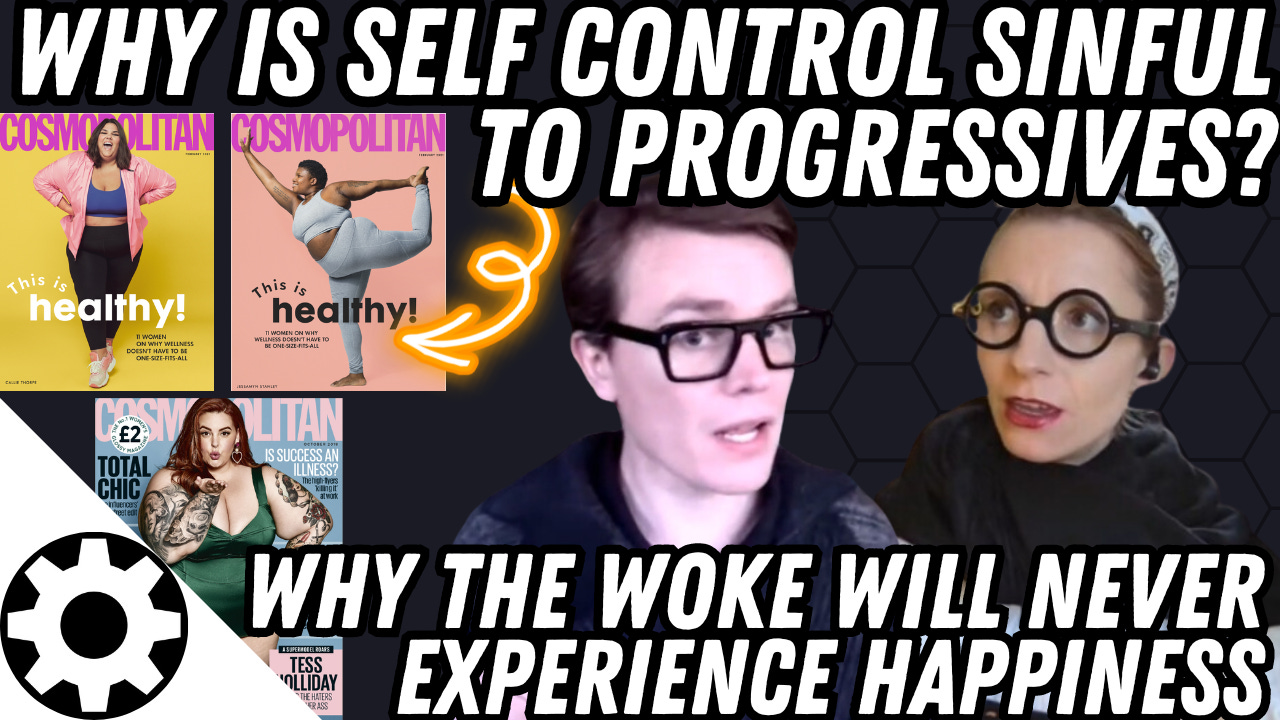
Why is Self Control Sinful to Progressives?
We discuss how modern progressive culture glorifies losing self-control, pursuing pleasure/happiness as the highest aim in life, and avoiding discomfort. We contrast this with historical and conservative values around self-mastery, overcoming fear/anxiety, and finding meaning by improving future generations. We argue the progressive view diminishes human potential and actual happiness.
Malcolm Collins: [00:00:00] humans don't actually feel that much happiness.
And so when you get out and you attempt to maximize your own personal pleasure, You have a deep realization of how trivial your life and existence is every single day. Yeah. Because you are experiencing everything good that you have brought to the world. And it's this
Simone Collins: fleeting, actually not terribly satisfying feeling.
Malcolm Collins: Life is about not cultivating positive emotional states, not the things that evolved into us, but intergenerational improvement, this expansion of human potentiality
in truth, doing whatever you want, whenever you feel like it does not cultivate human potential, it diminishes it.
It is sand on a fire. but what's really interesting is that an individual who lives for hedonism.
will always be less happy than an individual who lives for something else. the only real happiness you will ever experience is efficacious living your [00:01:00] values. Yeah. And if those values are happiness, then you'll never experience true happiness in your life.
And so many people was in this far progressive movement, never do.
Would you like to know more?
Malcolm Collins: This topic is an interesting one. Speaking of me losing self control right now, which is. Self control is seen in some ways as sinful within the urban monoculture in our society today, which some people identify with the progressive movement. I mean, that's largely what they're fighting for the urban monoculture.
To tell an individual you should not do that thing. When that thing that they are doing doesn't directly cause any negative impact on another person is seen as. A sinful thing to do. Now what's interesting is is it is even seen as sinful if that thing causes them negative consequences in the future So if I say something like do not eat that thing and and and because you'll get fat [00:02:00] and You will feel bad about that in the future that scene is a bad thing to to tell someone to notify them of that reality This is The haze movement and everything like that.
And I could go deep on the haze movement in an episode. It's really interesting for people aren't familiar as the healthy at every size movement. And it's the movement that's gotten really big around saying that
Simone Collins: no pun intended
Malcolm Collins: really big saying that being overweight is unhealthy. And one of the articles that, that was done on us when they were like researching us afterwards, they're like, oh, this whatever couple, well, you don't know this about them. . It was the best journalism ever done on us. They somehow found our Reddit history, which Oh, wasn't that
Simone Collins: a Vice article?
Malcolm Collins: And they were going through our internet history and they were like, these two, you would think like innocuous individuals.
Did you know he liked a post that was laughing at fat people having to go to the zoo to get an MRI? And I'm like, yeah, I did. I'd like, did you know that he follows like Kotaku in action [00:03:00] on Reddit? And I was like, wow. It's funny that they can't see. I used to follow Tumblr in action. Right. I mean,
Simone Collins: like if I.
If I had to, I mean, I feel like it's a beached whale right now because I'm so pregnant, like. I would laugh. I would laugh if I was obese
Published on 1 year, 10 months ago