Episode Details
Back to Episodes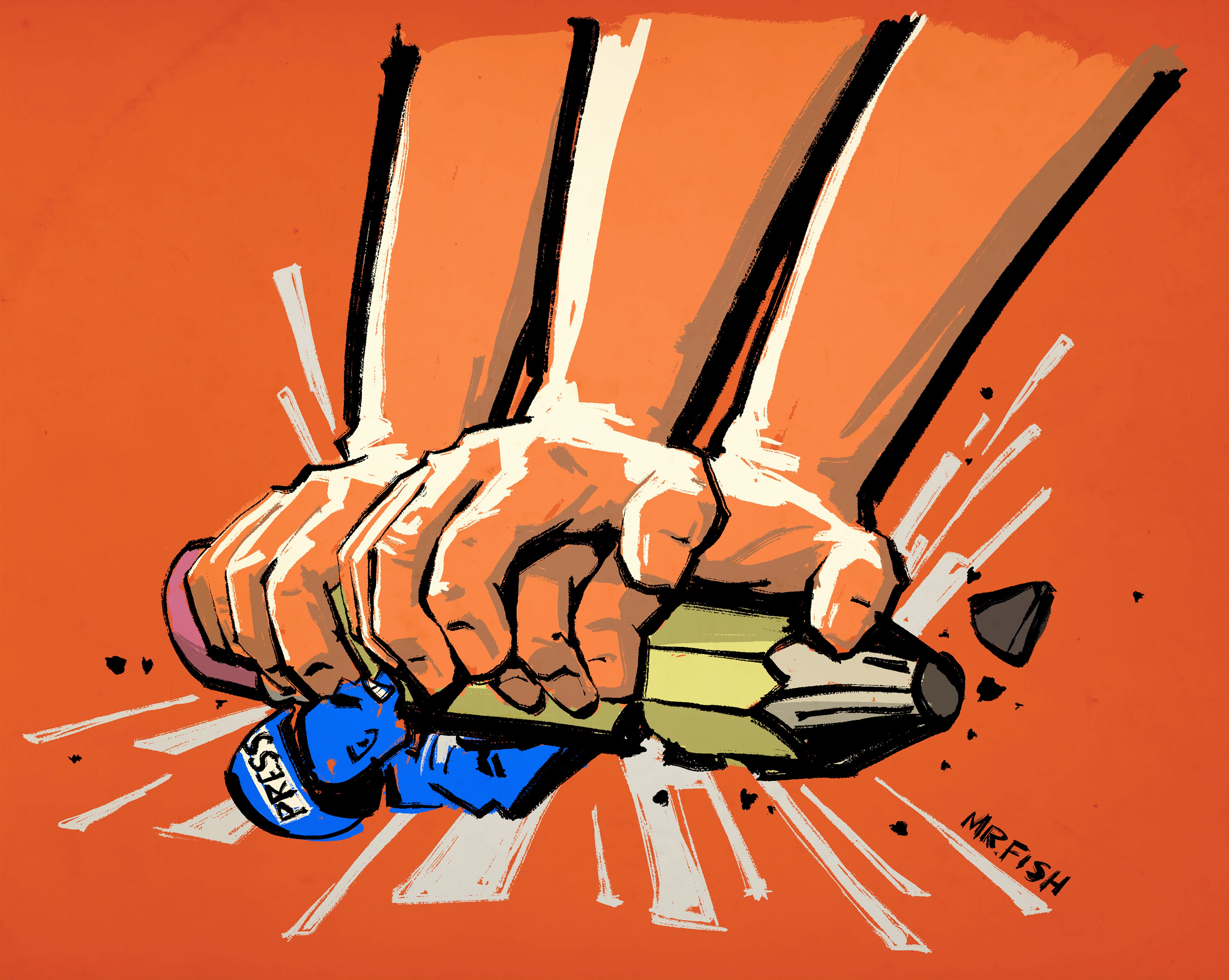
Listen to This Article: "The Israeli Execution of Al Jazeera reporter Shireen Abu Akleh"
Description
Narrated by Eunice Wong
Text originally published 05/15/2022
Shireen Abu Akleh, the Al Jazeera reporter with more than two decades of experience covering armed conflicts, knew the protocol. She and other reporters remained last Wednesday in the open, clearly visible to Israeli snipers about 650 feet away in a building. Her flak jacket and helmet were emblazoned with the word “PRESS.”
There were three shots fired in her direction. The second bullet hit the Al Jazeera producer Ali al-Samoudi in the back. The third shot, al-Samoudi remembered, hit Abu Akleh in the face below the rim of her helmet.
There were a few seconds when the Israeli sniper saw profiled in his scope Abu Akleh, one of the most recognizable faces in the Middle East. The 5.56 mm bullet from the M-16, designed to spin end over end upon impact, would have obliterated most of Abu Akleh’s head. The accuracy of the M-16, especially the M16A4s equipped with the Advanced Combat Optical Gunsight (ACOG), a prismatic telescopic sight, is very high. In the fighting in Fallujah so many dead insurgents were found with head wounds that observers at first thought they had been executed. The bullet that killed Abu Akleh was deftly placed between the very slim opening separating her helmet and the collar of her flak jacket.
I have been in combat, including in clashes between Israeli and Palestinian forces. Snipers are dreaded on a battlefield because each kill is calculated. The execution of Abu Akleh was not an accident. She was singled out for elimination. Whether this killing was ordered by commanding officers, or whether it was the whim of an Israeli sniper, I cannot answer. Israelis shoot so many Palestinians with impunity my guess is the sniper knew he or she could kill Abu Akleh and never face any consequences.
The shooting, Al Jazeera said in a statement, was “a blatant murder, violating international laws and norms.” Abu Akleh, the network added, was “assassinated in cold blood.”
Abu Akleh, who was 51 and a Palestinian-American, was a familiar and trusted presence on television screens throughout the region, revered for her courage and integrity and beloved for her careful and sensitive reporting on the intricacies of daily life under the occupation. Her reporting from the occupied territories routinely punctured Israeli narratives and exposed Israeli abuses and crimes, making her the bête noire of the Israeli government. She was a heroine for young Palestinian women, as Dalia Hatuqa, a Palestinian-American journalist and friend of Abu Akleh’s, related to The New York Times.
“I know of a lot of girls who grew up basically standing in front of a mirror and holding their hair brushes and pretending to be Shireen,” Hatuqa told the paper. “That’s how lasting and important her presence was.”
“I chose journalism to be close to the people,” Abu Akleh said in a clip shared by Al Jazeera after she was killed. “It might not be easy to change the reality, but at least I was able to bring their voice to the world.”
In a 2017 interview with the Palestinian television channel An-Najah NBC, she was asked if she was worried about being shot.
“Of course, I get scared,” she said. “In a spe