Episode Details
Back to Episodes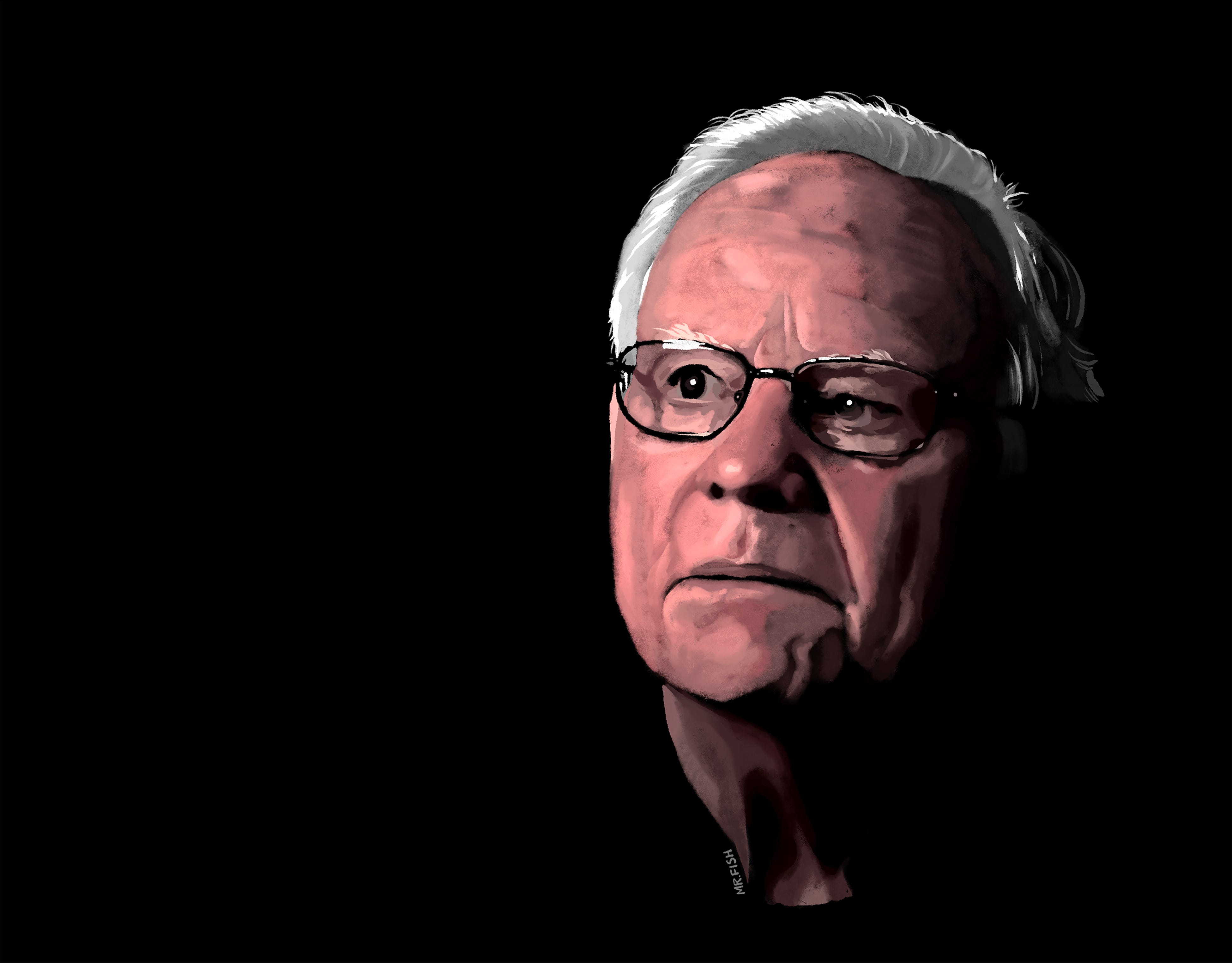
Listen to this Article: "The Good Priest"
Description
Narrated by Eunice Wong
Original Text published 11/13/2022
Father Michael Doyle - by Mr. Fish
During the two years the cartoonist Joe Sacco and I spent on our book Days of Destruction, Days of Revolt, written out of the poorest pockets of America, we invariably encountered heroic men and women who — against overwhelming odds — rose up to fight lonely and often losing battles on behalf of the oppressed. Bill Means, Charlie Abourezk and Leonard Crow Dog in Pine Ridge, South Dakota. Larry Gibson and Judy Bonds in the coal fields of West Virginia. Lucas Benitez, Laura Germano and Greg Abbot in the produce fields of Florida. The men and women in Zuccotti Park during the Occupy Wall Street movement.
When set against the crushing poverty, environmental degradation, corporate abuse and despair they opposed, the victories they amassed were often miniscule. And yet, to them, and to the people they were able to support, these victories were immense. They kept alive kindness, community, decency, hope and justice. They provided another way to speak about the world. They reminded us that our primary task in life is to care for others. These moral giants, by their very presence and steadfast refusal to surrender, damned the avarice, lust for power, hedonism and violence that define corporate culture.
Joe and I met Father Michael Doyle in Camden, New Jersey, one of the poorest cities and most dangerous in the United States. Father Doyle, an Irish priest and poet with ruddy cheeks and snow white hair, ran the Sacred Heart Church in one of the city’s bleakest corners. He died at the age of 88 on November 4th in the church’s parish house.
“I haven’t heard God speak in a burning bush, but I hear Him speak from the burning issues of the day, and they are all in Camden,” he told us.
Camden is desolate, with gutted and abandoned row houses, boarded-up storefronts, the empty shells of windowless brick factories and the skeletal remains of old gas stations. Weed-choked vacant lots are filled with garbage, old tires and rusted appliances. Cemeteries are overgrown. Open-air drug markets are divided up among gangs such as the Bloods, the Latin Kings, Los Nietos and MS-13 or Mara Salvatrucha. Knots of young Hispanic or African-American men dressed in black leather jackets and occasionally seen flipping through wads of cash, sell weed, dope and crack to clients, many of whom drive in from the suburbs. The drug trade is perhaps the city’s only thriving business. A weapon, usually stashed behind a trash can, in the grass or on a porch, is never more than a few feet away from the dealers. Camden is awash in guns.
Camden sits on the edge of the Delaware River facing the Philadelphia skyline, with scrap yards and a vast sewage treatment plant that fouls the air. An elevated multilane highway slices through the heart of the city allowing commuters to pass in and out of Philadelphia without seeing the misery below.
“At Ferry and Sixth, we stopped at one of Camden’s 150 open air drug markets,” Father Doyle wrote in one of his newsletters. “Then down Sixth to Viola where Kevin Walls was shot a few months ago. Where his mother bent beside her bleeding son and tried to say the 23rd Psalm in his ear. Though I walk in the valley of death, I fear not evil. There’s plenty of fear at 6th and Viola. There now the most pathetic of urban shrines. His name scrawled on an abandoned wall. Dozens of beer bottles arranged for the glint and glow of a burnt out candle. A teddy bear soiled and wet on an abandoned step. Soft wishes in a hard hearted-place.”
“Sometimes I see men and women hardened by time and all washed out like the hills of Appalachia and