Episode Details
Back to Episodes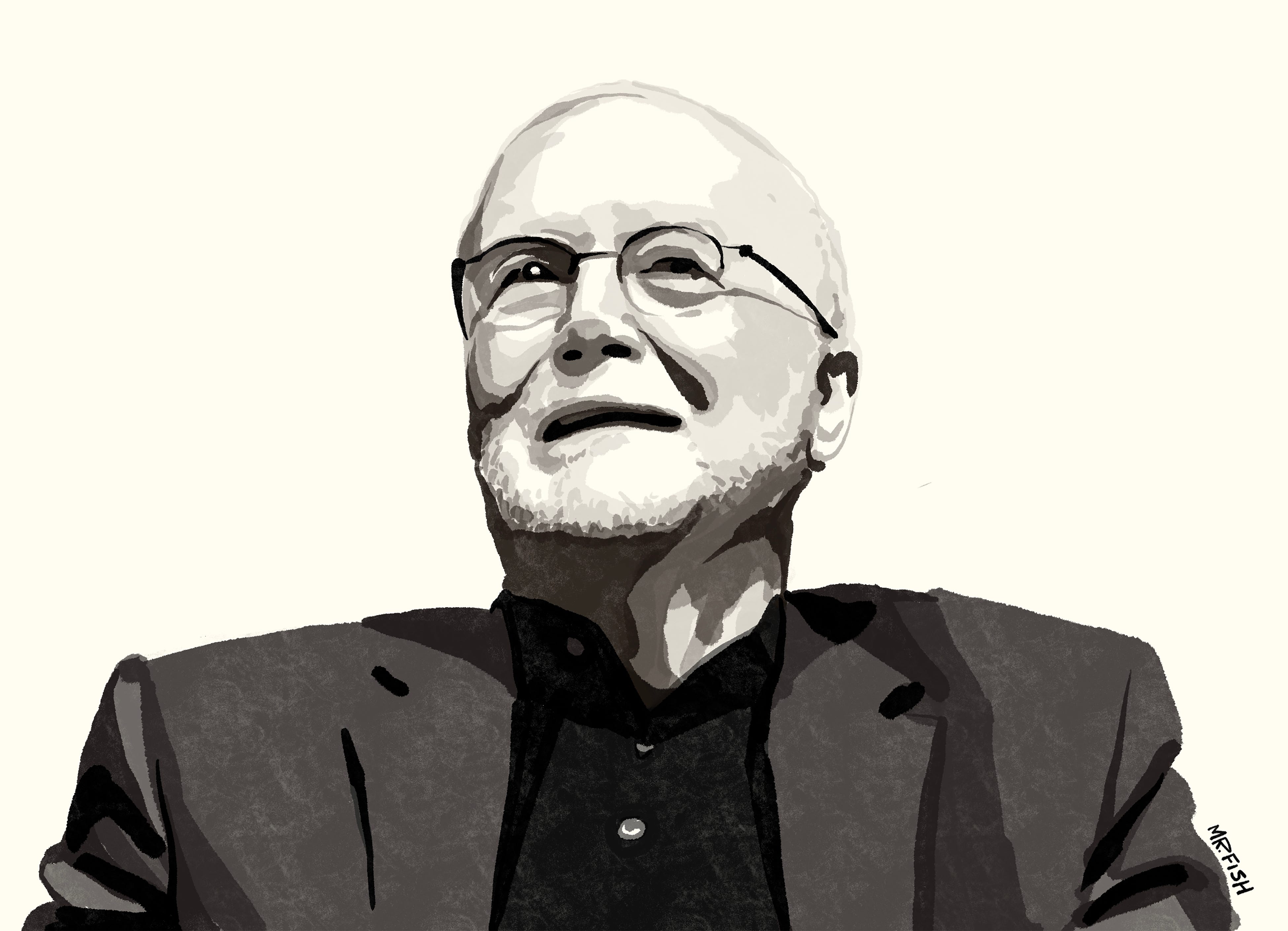
Listen to this Article: "Russell Banks, John Brown and the American Soul"
Description
Narrated by Eunice Wong
Original Text posted January 15, 2023
Russell Banks - by Mr. Fish
The deep malaise that defines American society — the rage, despair and widespread feelings of betrayal and loss — is rarely captured and almost never explained in the pages of newspapers or on screens. To grasp what has happened to the United States, the savage economic and emotional cost of deindustrialization; the destruction of our democratic institutions; the Neolithic violence that sees us beset with almost daily mass shootings in malls, offices, schools and movie theaters; the rise of the militarized state; and the consolidation of national wealth by a tiny cabal of corrupt bankers and corporations, we must turn to our artists, poets and writers. Foremost among writers who explored our peculiar American zeitgeist was the novelist Russell Banks, who died on January 7th at the age of 82.
His novel “Continental Drift” tells the story of Bob Dubois, a 30-year-old New Hampshire oil burner repairman who moves his family to Florida in a forlorn effort to strike it rich, and Vanise Dorinville, a Haitan immigrant, who flees Haiti in an overcrowded boat to the United States and endures rape, forced labor and the drowning of her child and nephew. With these two plot lines, Banks juxtaposes the glittering promise of America against its stark, indifferent callousness.
“The more a man trades off his known life, the one in front of him that came to him by birth and the accidents and happenstance of youth, the more of that he trades for dreams of a new life, the less power he has,” Banks writes. “Bob Dubois believes this now. But he’s fallen to a dark, cold place where the walls are sheer and slick, and all the exits have been sealed. He’s alone. He’s going to have to live here, if he’s going to live at all. This is how a good man loses his goodness.”
The novel is a savage indictment of the divides erected by globalization, racism, class and political systems. It was written, as Banks noted in the last line of the book, to “destroy the world as it is.” In “Affliction” the main character, Wade Whitehouse, lives in a dilapidated trailer and works odd jobs. In “The Sweet Hereafter,” a rural community is convulsed by a fatal school bus accident that kills 14 children. And in two other novels, “The Lost Memory of Skin,” the story of a 22 -year-old living with other sex offenders under a south Florida causeway, and “Rule of the Bone,” about a sexually abused homeless 14-year-old boy, Banks employs the plight of disaffected youths to expose the hypocrisy, mendacity and banality of the adult world.
Banks also turned his fierce and uncompromising gaze on artists, as he did in his novel “Foregone” where sections of the book are scathingly autobiographical. It is written through the eyes of a renowned documentary filmmaker who is dying of cancer, the disease that took Bank’s life. It delves into the often selfish motivations of artists, the tricks of memory, the myths we use to build our fictional personas, the ways wealth can suffocate and corrupt us, the mutations of self that estrange us from those we love, the deep fear of being unloved and the heady idealism that is at once the charm and curse of youth.
“Time, like cancer, is the devourer of our lives,” he writes in “Foregone.”