Episode Details
Back to Episodes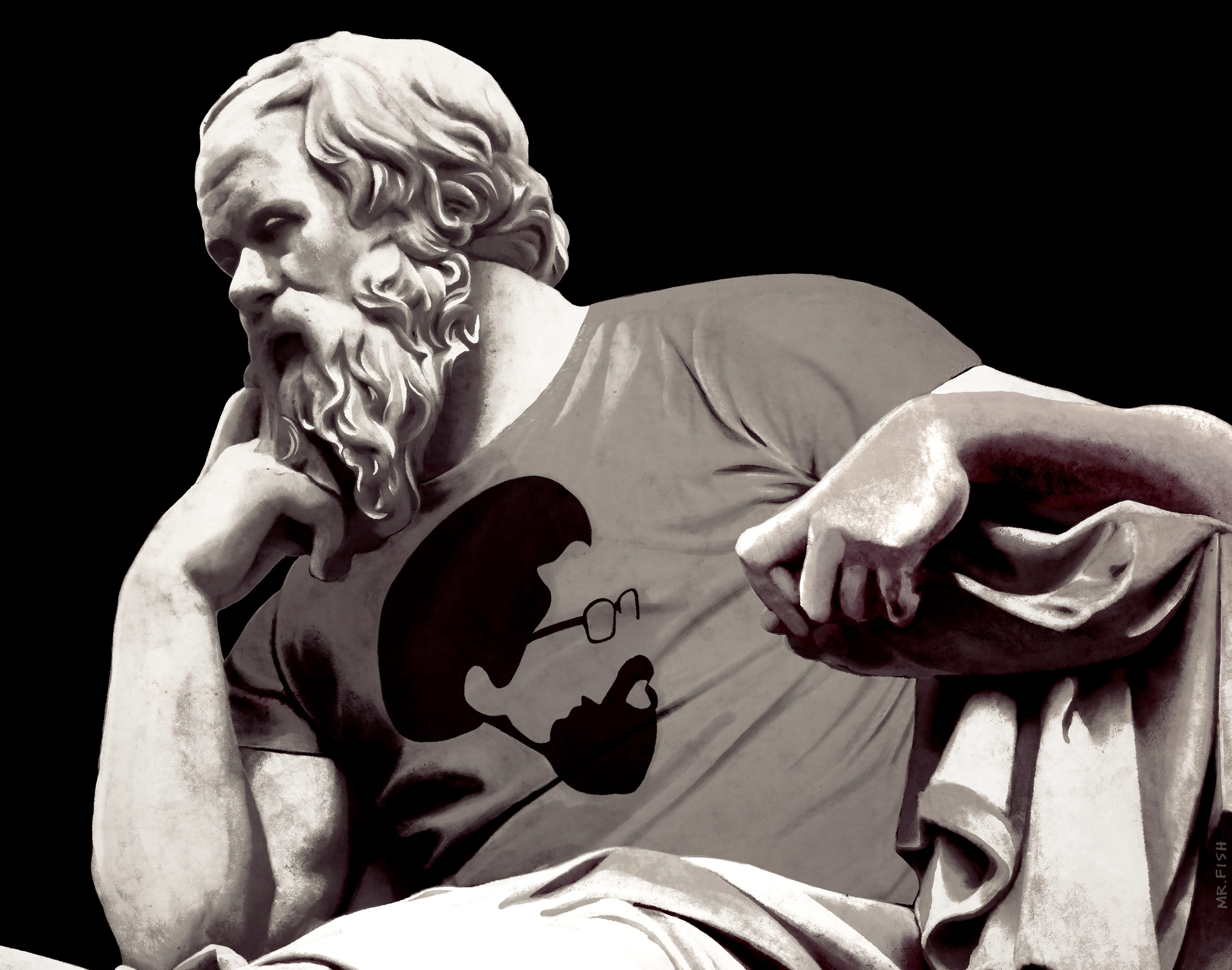
Listen to this Article: "The Pedagogy of Power"
Description
Narrated by Eunice Wong
Test Originally Published Sept. 10, 2023
The Enlightenment - by Mr. Fish
I am standing in a classroom in a maximum security prison. It is the first class of the semester. I am facing 20 students. They have spent years, sometimes decades, incarcerated. They come from some of the poorest cities and communities in the country. Most of them are people of color.
During the next four months they will study political philosophers such as Plato, Aristotle, Thomas Hobbes, Niccolò Machiavelli, Friedrich Nietzsche, Karl Marx and John Locke, those often dismissed as anachronistic by the cultural left.
It is not that the criticisms leveled against these philosophers are incorrect. They were blinded by their prejudices, as we are blinded by our prejudices. They had a habit of elevating their own cultures above others. They often defended patriarchy, could be racist and in the case of Plato and Aristotle, endorsed a slave society.
What can these philosophers say to the issues we face — global corporate domination, the climate crisis, nuclear war and a digital universe where information, often manipulated and sometimes false, travels around the globe instantly? Are these thinkers antiquated relics? No one in medical school is reading 19th century medical texts. Psychoanalysis has moved beyond Sigmund Freud. Physicists have advanced from Isaac Newton’s law of motion to general relativity and quantum mechanics. Economists are no longer rooted in John Stuart Mill.
But the study of political philosophy, as well as ethics, is different. Not for the answers, but for the questions. The questions have not changed since Plato wrote “The Republic.” What is justice? Do all societies inevitably decay? Are we the authors of our lives? Or is our fate determined by forces beyond our control, a series of fortuitous or unfortunate accidents? How should power be distributed? Is the good statesman, as Plato argued, a philosopher king — a thinly disguised version of Plato — who puts truth and learning above greed and lust and who understands reality? Or, as Aristotle believed, is the good statesman skilled in the exercise of power and endowed with thoughtful deliberation? What qualities are needed to wield power? Machiavelli says these include immorality, deception and violence. Hobbes writes that in war, violence and fraud become virtues. What forces can be organized to pit the power of the demos, the populace, against the rulers, to ensure justice? What are our roles and duties as citizens? How should we educate the young? When is it permissible to break the law? How is tyranny prevented or overthrown? Can human nature, as the Jacobins and communists believed, be transformed? How do we protect our dignity and freedom? What is friendship? What constitutes virtue? What is evil? What is love? How do we define a good life? Is there a God? If God does not exist, should we abide by a moral code?
These questions thunder down through the ages, asked d