Episode Details
Back to Episodes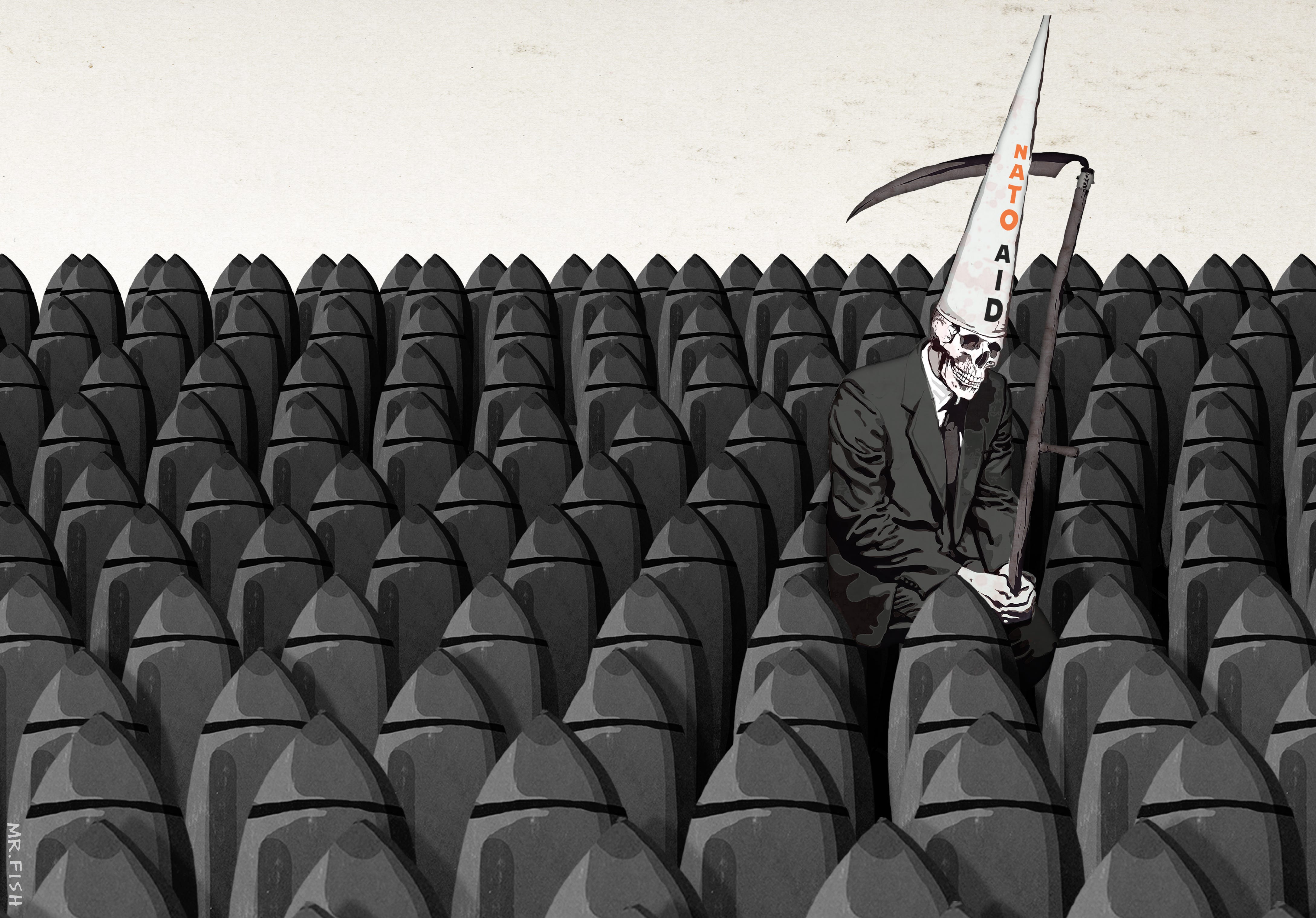
Listen to this Article: "Humanitarian Imperialism Created the Libyan Nightmare."
Description
Narrated by Eunice Wong
Text originally posted Sept. 16, 2023
Business is Booming - by Mr. Fish
“We came, we saw, he died,” Hillary Clinton famously quipped when Muammar Gaddafi, after seven months of U.S. and NATO bombing, was overthrown in 2011 and killed by a mob who sodomized him with a bayonet. But Gaddafi would not be the only one to die. Libya, once the most prosperous and one of the most stable countries in Africa, a country with free healthcare and education, the right for all citizens to a home, subsidized electricity, water and gasoline, along with the lowest infant mortality rate and highest life expectancy on the continent, along with one of the highest literacy rates, swiftly fragmented into warring factions. There are currently two rival regimes battling for control in Libya, along with an array of rogue militias.
The chaos that followed Western intervention saw weapons from the country’s arsenals flood the black market, with many snatched up by groups such as the Islamic State. Civil society ceased to function. Journalists captured images of migrants from Nigeria, Senegal and Eritrea being beaten and sold as slaves to work in fields or on construction sites. Libya’s infrastructure, including its electrical grids, aquifers, oil fields and dams, fell into disrepair. And when the torrential rains from Storm Daniel — the climate crisis being another gift to Africa from the industrialized world — overwhelmed two decrepit dams, walls of water 20 feet high raced down to flood the port of Derna and Benghazi, leaving up to 20,000 dead according to Abdulmenam Al-Gaiti, Mayor of Derna, and some 10,000 missing.
“The fragmentation of the country’s disaster management and disaster response mechanisms, as well as deteriorating infrastructure, exacerbated the enormity of the challenges. The political situation is a driver of risk,” said Professor Petteri Taalas, Secretary General of the World Meteorological Organization.
Taalas told reporters last Thursday that “most of the human casualties” would have been avoided if there had been a “normally operating meteorological service” which “would have issued the [necessary] warnings and also the emergency management of this would have been able to carry out evacuations of the people.”
Western regime-change, carried out in the name of human rights under the doctrine of R2P (Responsibility to Protect), destroyed Libya - as it did Iraq - as a unified and stable nation. The flood victims are part of the tens of thousands of Libyan dead resulting from our “humanitarian intervention,” which rendered disaster relief non-existent. We bear responsibility for Libya’s prolonged suffering. But once we