Episode Details
Back to Episodes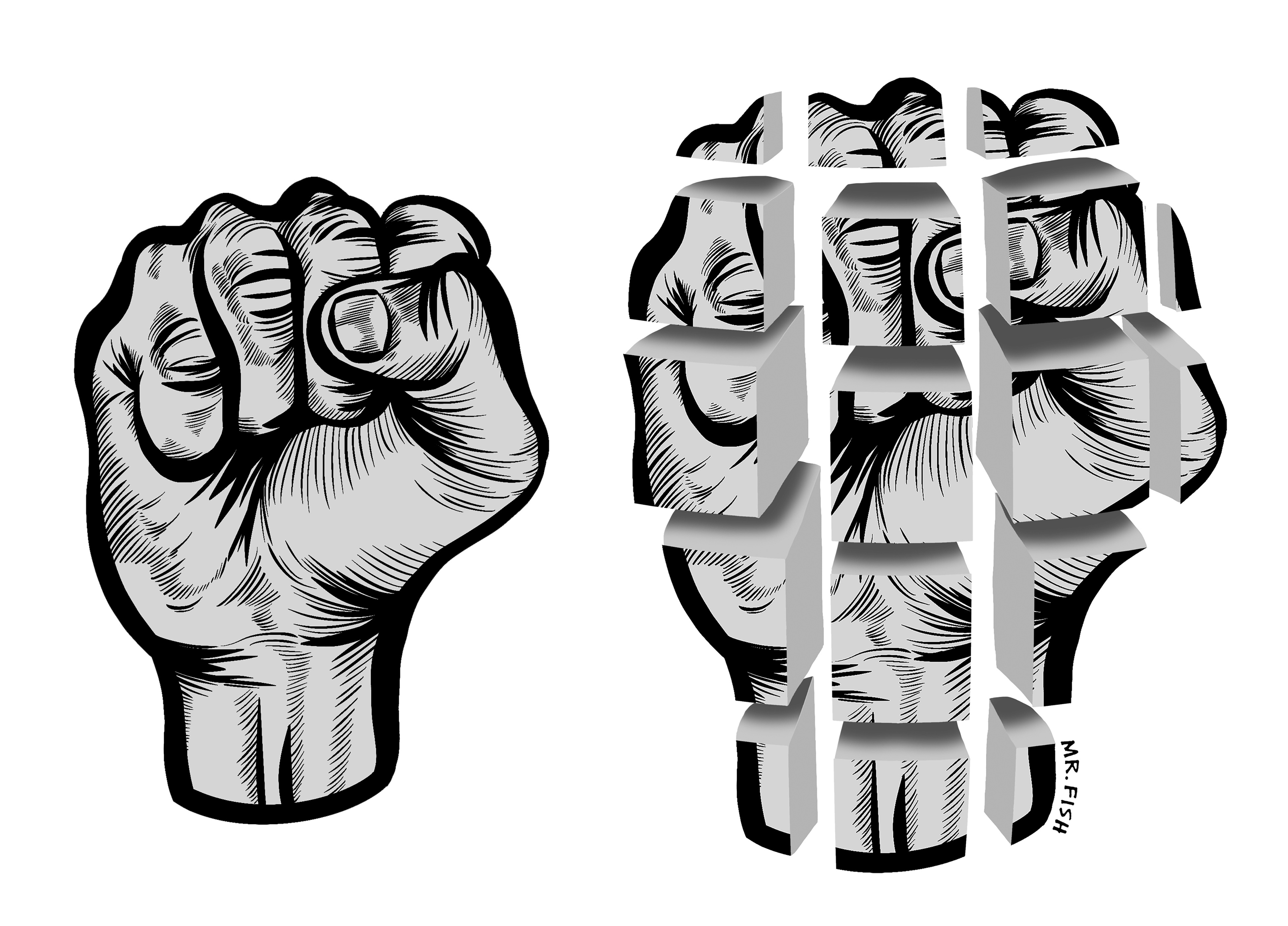
Listen to this Article: "Why Our Popular Mass Movements Fail"
Description
Narrated by Eunice Wong
Text Originally published Oct. 1, 2023
Protest (Assemby Required) - by Mr. Fish
There was a decade of popular uprisings from 2010 until the global pandemic in 2020. These uprisings shook the foundations of the global order. They denounced corporate domination, austerity cuts and demanded economic justice and civil rights. There were nationwide protests in the United States centered around the 59-day Occupy encampments. There were popular eruptions in Greece, Spain, Tunisia, Egypt, Bahrain, Yemen, Syria, Libya, Turkey, Brazil, Ukraine, Hong Kong, Chile and during South Korea’s Candlelight Light Revolution. Discredited politicians were driven from office in Greece, Spain, Ukraine, South Korea, Egypt, Chile and Tunisia. Reform, or at least the promise of it, dominated public discourse. It seemed to herald a new era.
Then the backlash. The aspirations of the popular movements were crushed. State control and social inequality expanded. There was no significant change. In most cases, things got worse. The far-right emerged triumphant.
What happened? How did a decade of mass protests that seemed to herald democratic openness, an end to state repression, a weakening of the domination of global corporations and financial institutions and an era of freedom sputter to an ignominious failure? What went wrong? How did the hated bankers and politicians maintain or regain control? What are the effective tools to rid ourselves of corporate domination?
Vincent Bevins in his new book“If We Burn: The Mass Protest Decade and the Missing Revolution” chronicles how we failed on several fronts.
The “techno-optimists” who preached that new digital media was a revolutionary and democratizing force did not foresee that authoritarian governments, corporations and internal security services could harness these digital platforms and turn them into engines of wholesale surveillance, censorship and vehicles for propaganda and disinformation. The social media platforms that made popular protests possible were turned against us.
Many mass movements, because they failed to implement hierarchical, disciplined, and coherent organizational structures, were unable to defend themselves. In the few cases when organized movements achieved power, as in Greece and Honduras, the international financiers and corporations conspired to ruthlessly wrest power back. In most cases, the ruling class swiftly filled the power vacuums created by these protests. They offered new brands to repackage the old system. This is the reason the 2008 Obama campaign was named Advertising Age’s Marketer of the Year. It won the vote of hundreds of marketers, agency heads and marketing-services vendors gathered at the Association of National Advertisers’ annual conference. It beat out runners-up Apple and Zappos.com. The professionals knew. Brand Obama was a marketer’s dream.
Too often the protests resembled flash mobs, with people pouring into public spaces and creating a media spectacle, rather than engaging in a sustained, organized and prolonged disruption of power. Guy Debord captures the futility of these spectacles/protests in his book “Society of the Spectacle,” noting that the age of the spectacle means those entrance