Episode Details
Back to Episodes26. How Do We Defeat the Top Seven Myths about The Chronicles of Narnia? Part 2
Description
Does the wardrobe equal the Bible, the White Witch equal Satan, and Peter equal—well, Peter? Some people read C. S. Lewis’s Chronicles of Narnia series as if only its “allegories” matter. Should you? That’s one of our four myths we explore in this episode to conclude our Narnia’s Top Seven Myths series.
4. Queen Susan “fell away” and will never return to Narnia again.
- This myth arises near The Last Battle‘s end, when Aslan is making all things new.
- Much virtual and real ink has been spilled asking what happened to Susan?
- Some feminists and many atheists really hate this part.
Phillip Pullman says (source):
This seems to me on the part of Lewis to reveal very weird unconscious feelings about sexuality. … It’s a filthy thing to do. Susan is shut out from salvation because she is doing what every other child who has ever been born has done – she is beginning to sense the developing changes in her body and its effect on the opposite sex.
Emily Wilson in the New Republic says:
poor Susan cannot get into heaven because she starts wearing lipstick …
- “I don’t know, therefore aliens,” seems to become, “I don’t know, therefore, sex.”
- From reading the text, we actually see it’s not really about makeup or sex.
- How absurd. Lewis is all about the original goodness of God’s created gifts.
- It’s not about “growing up.” It’s about the vanity we claim is “growing up.”
- Only if you assume one is “grown up” at this age would you reject Lewis here.
Lewis himself answered the question. In 1960 a reader named Pauline Bannister asked Lewis about Susan. He replied:
Dear Pauline Bannister
I could not write that story [about Susan’s future?] myself. Not that I have no hope of Susan’s ever getting to Aslan’s country, but because I have a feeling that the story of her journey would be longer and more like a grown-up novel than I wanted to write. But I may be mistaken. Why not try it yourself?
—from The Collected Letters of C. S. Lewis, Volume 3: Narnia, Cambridge, and Joy, pages 1,135–1,136
- Lewis literally asks his reader to consider fanfiction. “Why not try it yourself?”
- Of course, he suggests this long before fanfiction became a huge “industry.”
- But it’s very clear Lewis believes Susan will someday return to true Narnia.
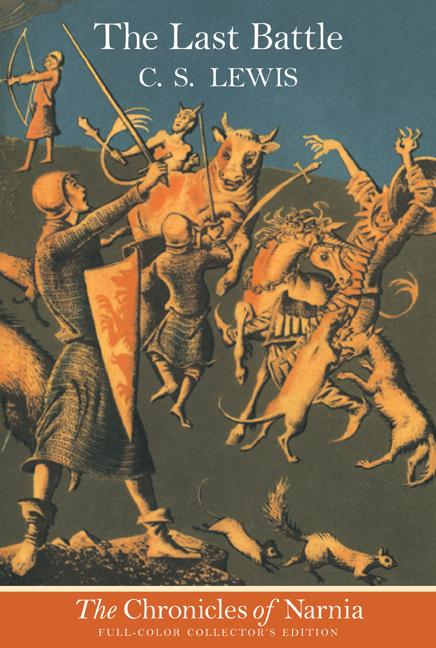 3. Emeth in The Last Battle reveals that C. S. Lewis was a universalist.
This one gets complex. Again, we could have a whole episode here.
- It deals with Emeth, a Calormene (not a Narnian) in The Last Battle.
- Near Narnia’s end, Emeth enters a stable and a kind of in-between afterlife.
- Emeth served a false god all his life, but then Aslan welcomed him and his services.
- Some Christians say, “This means C. S. Lewis was a universalist.”
- This is refuted by comparing this with Lew