Episode Details
Back to EpisodesGallows Lore
Description
We examine the lore of the gallows, focusing on the British Isles, encountering hangmen as figures straddling history and myth, strange histories and folk-tales, as well as superstitions and magical practice associated with the hanged man’s rope and body.
We begin, of course, with a bit of gallows humor, provided in the sea shantey, “Hanging Johnny,” from a 2004 Smithsonian Folkways recording.
Then it’s on to meet Jack Ketch, the 17th-century hangman who so fascinated the British public that he was memorialized in various turns of phrase, i.e, “to dance Jack Ketch’s jig” (the death spasms at the end of the rope). Emblematic of all who follow his trade, he was even adopted into the traditional Punch and Judy show.
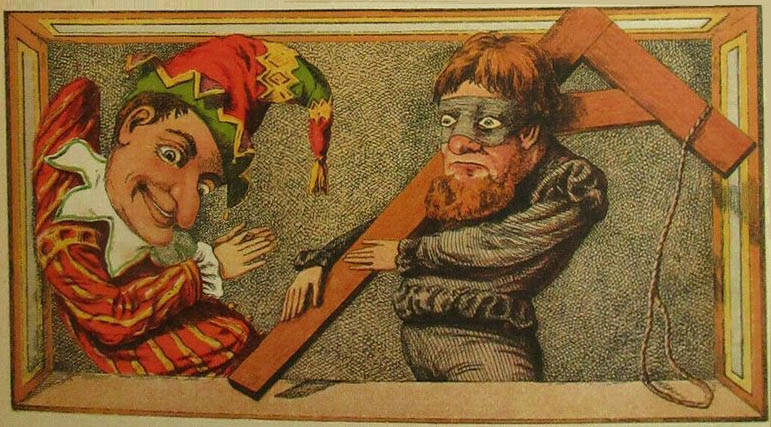
Much of his reputation is based on grim incidents reflecting poorly on his skill — not with the noose but with the sword with which he was less practiced. We hear of two particularly grisly incidents in this arena: the executions of William, Lord Russell, and the Duke of Monmouth.
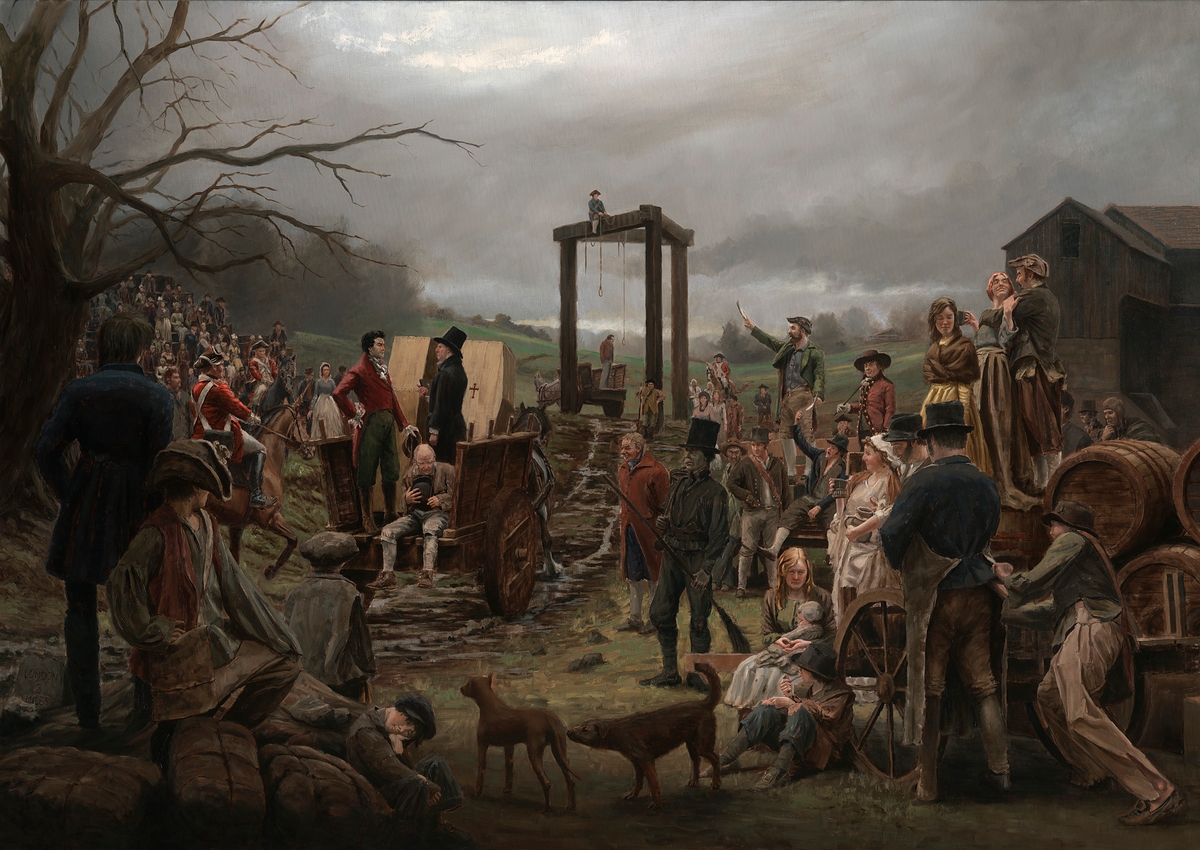
The Irish song “The Night Before Larry Was Stretched” opens a further discussion of the language of execution by hanging. “Stretched,” here is borrowed from the underworld dialect known as “criminal cant,” and of course means “hanged.” “Stretched at Tyburn” is another usage referring to the gallows of Tyburn, where the London’s hangings took place from the 12th century up to 1782. We hear a bit more about Tyburn’s strange configuration of scaffolding, (“The Tyburn Tree”) and of the “Execution Dock” on the Thames, reserved exclusively for pirates and smugglers.
Taking a quick side-trip to the technological side of things, we learn that throughout the Tyburn era, death by hanging occurred not through the long drop and broken neck, but a short drop and a dreadfully slow process of strangulation. This less decisive process occasionally resulsted in certain convicts being revived, such as the case of “Half Hanged Smith” in 1705. Mrs. Karswell reads for us Smith’s unhappy remarks on being thus revived.
Listen Now
Love PodBriefly?
If you like Podbriefly.com, please consider donating to support the ongoing development.
Support Us