Episode Details
Back to Episodes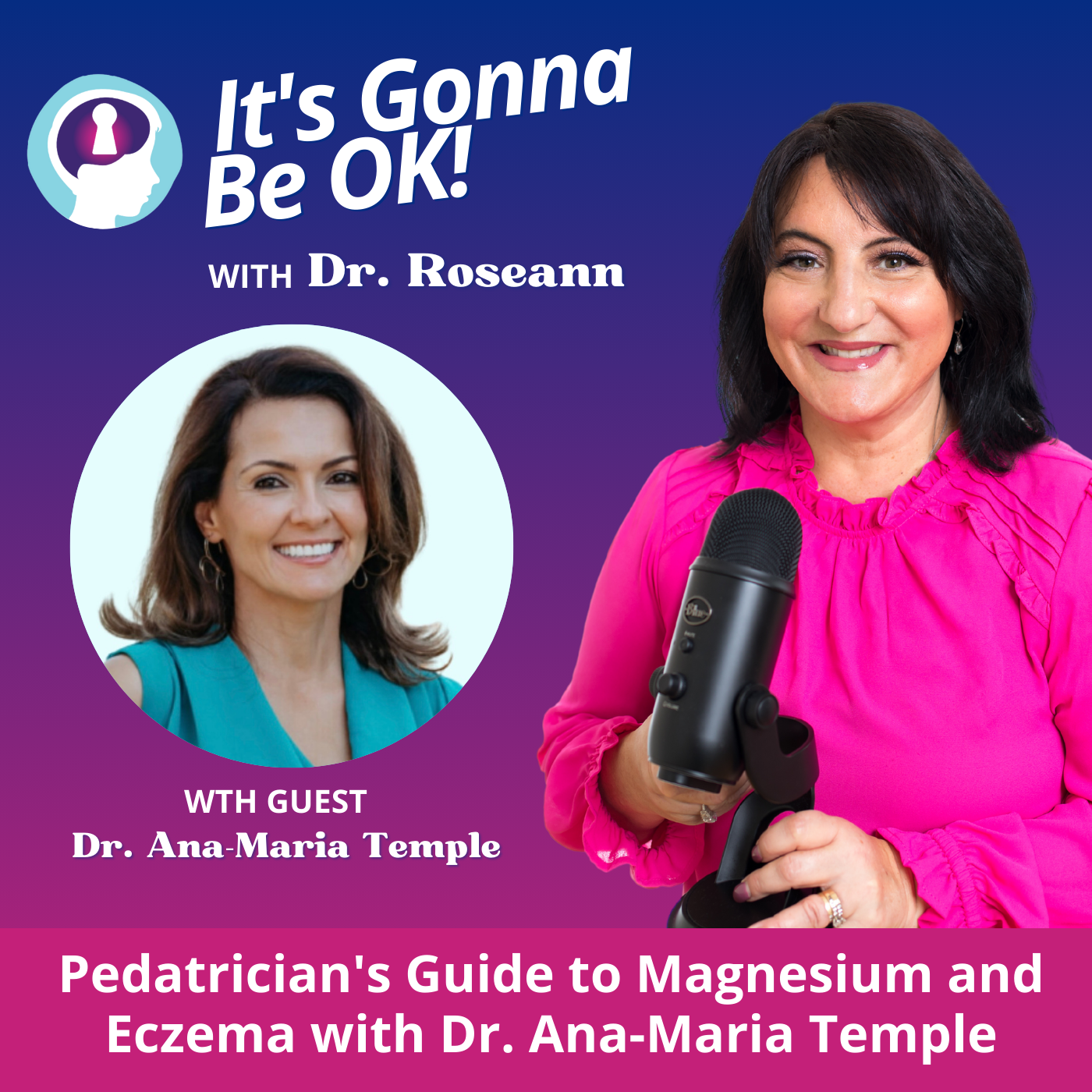
Pediatrician's Guide to Magnesium and Eczema with Dr. Ana-Marie Temple | Nervous System Strategies | E136
Description
If your child is scratching nonstop, waking at night, or stuck in an endless eczema flare, you’re probably exhausted and wondering what you’re missing. You’re not alone.
In this episode, I sit down with eczema expert Dr. Ana-Maria Temple to unpack why eczema is never “just a skin issue” and how magnesium, gut health, and stress play a powerful role in calming the brain and healing the body.
You’ll learn why lotions alone don’t fix eczema, how inflammation shows up early on the skin, and what you can do, starting today—to support your child’s nervous system, immune system, and overall health.
Why does my child’s eczema keep coming back no matter what cream we use?
Eczema isn’t a surface problem—it’s full-body inflammation showing up on the skin. Topical steroids and creams may quiet symptoms temporarily, but they don’t address what’s driving the inflammation underneath.
Key takeaways:
- Eczema is an early warning sign, often appearing before asthma, allergies, anxiety, ADHD, or autoimmune issues
- Creams are band-aids, not root-cause solutions
- Healing requires looking at the gut, immune system, and nervous system
Real-Life Example
A toddler’s eczema improves briefly with steroids, only to flare again weeks later—because the inflammation inside the body was never addressed.
Is eczema connected to gut health, stress, and early life factors?
Yes—and this is where parents often feel blindsided. Eczema commonly starts between 3–6 months of age, when the gut and immune system are still developing.
Contributing factors discussed in the episode include:
- Antibiotic exposure (parent or child)
- Pregnancy stress, medications, and diet
- C-section birth and altered microbiome exposure
- Recurrent infections and microbiome disruption
Behavior is communication. When the gut is inflamed and the nervous system is stressed, the skin speaks up first.
Yelling less and staying calm isn’t about being perfect—it’s about having the right tools.
Join the Dysregulation Insider VIP list and get your FREE Regulation Rescue Kit, designed to help you handle oppositional behaviors without losing it. Download it now atwww.drroseann.com/newsletter
Can magnesium deficiency really make eczema worse?
Absolutely. Magnesium is one of the most overlooked nutrients in kids with eczema—and it affects far more than skin.
Dr. Ana-Maria explains that magnesium:
- Stabilizes mast cells, reducing histamine release
- Supports GABA, helping calm an overactive brain
- Improves sleep, bowel movements, and stress response
Signs of low magnesium can include:
- Itching, scratching, oozing skin
- Trouble sleeping
- Constipation
- Heightened anxiety or irritability
When we calm the brain first, everything follows—including the skin.
How does stress make eczema and itching worse?
Love PodBriefly?
If you like Podbriefly.com, please consider donating to support the ongoing development.
Support Us