Podcast Episode Details
Back to Podcast EpisodesThe Chris Voss Show Podcast – The Soul of Civility: Timeless Principles to Heal Society and Ourselves by Alexandra Hudson
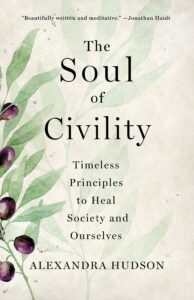
The Soul of Civility: Timeless Principles to Heal Society and Ourselves by Alexandra Hudson
Alexandra Hudson, daughter of the “Manners Lady,” was raised to respect others. But as she grew up, Hudson discovered a difference between politeness―a superficial appearance of good manners―and true civility. In this timely book, Hudson sheds light on how civility can help bridge our political divide.
From classical philosophers like Epictetus, to great twentieth-century thinkers like Martin Luther King Jr., to her own experience working in the federal government during one of the most politically fraught eras in our nation’s history, Hudson examines how civility―a respect for the personhood and dignity of others―transcends political disagreements. Respecting someone means valuing them enough to tell them when you think they are wrong.
It’s easy to look at the divided state of the world and blame our leaders, the media, or our education system. Instead, we should focus on what we can control: ourselves. The Soul of Civility empowers readers to live tolerantly with others despite deep differences, and to rigorously protest wrongs and debate issues rather than silencing disagreements. A robust public discourse is essential to a truly civil society, and respecting others means telling hard truths. If enough of us decide to change ourselves, we might be able to change the world we live in, too.
Provocative, personal, and acutely relevant, The Soul of Civility is an essential book for our era.
Here are some key points from the podcast transcript:
Guest Alexandra Hudson has a new book called “The Soul of Civility: Timeless Principles to Heal Society and Ourselves” about restoring civil discourse.
Civility is about seeing others as moral equals and respecting their humanity, which can sometimes require breaking politeness norms.
Incivility is a timeless human problem going back to ancient Egyptian teachings. We have a natural tension between self-interest and community.
We need to move beyond surface-level politeness to have the hard, honest conversations required in a democracy. But with respect, not aggression.
Local efforts like porching (sitting on porches together) can help rebuild community and trust across differences. Shared spaces and meals are powerful.
Technology and busyness have made us more isolated. We need to rediscover the value of spontaneous interactions and getting to know our neighbors.
Small everyday decisions to see the humanity in each person we encounter helps support human flourishing and civilization.
Feelings of helplessness globally should inspire us to be more gracious locally. We have the power to be part of the solution through our daily actions.
In summary, we can all contribute to healing society’s divisions by focusing on t
Published on 2 years, 2 months ago