Episode Details
Back to Episodes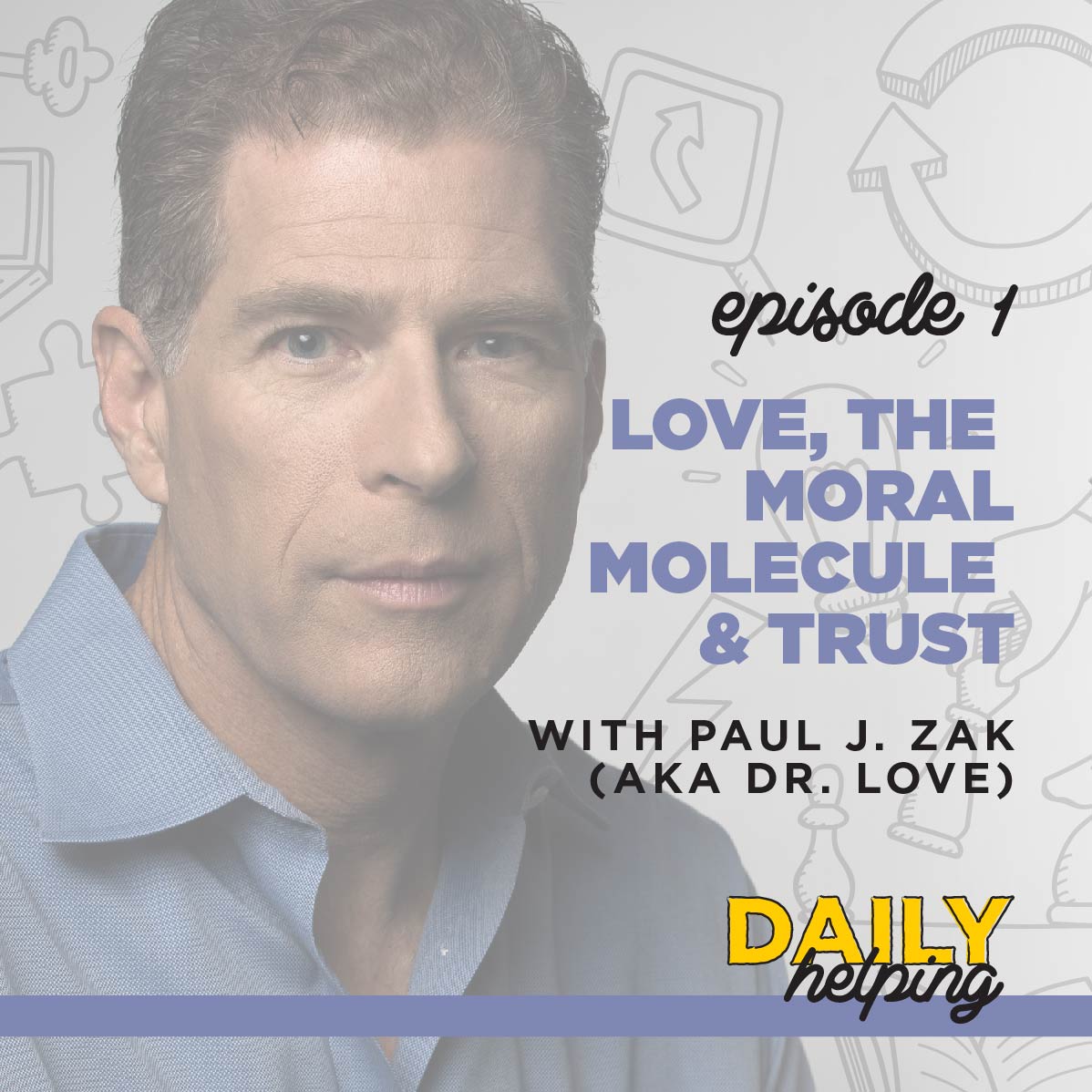
Ep. 1: Love, The Moral Molecule & Trust | with Paul J. Zak (AKA Dr. Love)
Description
Today our expert guest is Paul J. Zak. He is on a quest to understand the neuroscience of human connection, human happiness, and effective teamwork. His latest book, Trust Factor, uses neuroscience to measure and manage organizational cultures to inspire teamwork and accelerate business outcomes.
His quest has taken him from the Pentagon to Fortune 50 boardrooms to the rainforest of New Guinea and, finally, to The Daily Helping.
The Moral Molecule & Humanity
In The Moral Molecule, Paul recounts his unlikely discovery that the neurochemical oxytocin is the key driver in trust, love, and morality that distinguishes our humanity.
All animals make oxytocin, but humans seem to thrive on it. About 200,000 years ago, humans started living in groups more often, and individuals with more oxytocin receptors in their brain produced more offspring. Now, our species has far more oxytocin receptors than our closest genetic relatives.
Psychologically, oxytocin increases our sense of empathy for others. Empathy is an incredibly adaptive tool because it helps us understand other people's emotions and why they perform certain actions.
Oxytocin & Human Development
Are we born with all of our oxytocin receptors and innate social skills, or are we built?
- The answer is both (as it often is with nature vs nurture discussions), but there are genetic variations in the number and function of oxytocin receptors in humans.
- Bad News: You have to have nature and nurture for a system to flourish. Because nature is very conservative with resources, children who are neglected simply don’t develop all parts of the system. About half of the people who are sexually abused or abandoned as children don’t have functionally intact oxytocin connection systems in their brain.
- Good News: Because oxytocin is so evolutionarily old, the receptors are connected in most people who do not face severe neglect, abuse, or abandonment. It’s very difficult to kill all of the receptors. Additionally, it is likely possible that sufficient social support later in life can help individuals regain functionality in their oxytocin connection systems.
Applying Our Knowledge: Tactics for Improving Your Relationships
Tactic #1: Embrace your emotional nature. If you focus on the emotions you see in others, you will gain a lot of valuable information.
- When you say hello to someone, take a moment to look at them, feel the emotion on their face, and start a more intimate conversation. Don’t just say hello. Say, “Hello, you look ______.” You will learn more about how that person is doing, connect better to the individuals around you, and make them feel more valued.
Tactic #2: Acceptance. You don’t always need to fix things. Sometimes it’s just about listening and acceptance. This is especially true for parents! Focus on seeing other people for who they are, and don’t try to force them into the box you want them to be in.
Trust Factor: Enhancing Trust in the Workplace
In Trust Factor, Paul details the eight building blocks of trust and identifies ways that organization leaders can create a culture of trust