Episode Details
Back to Episodes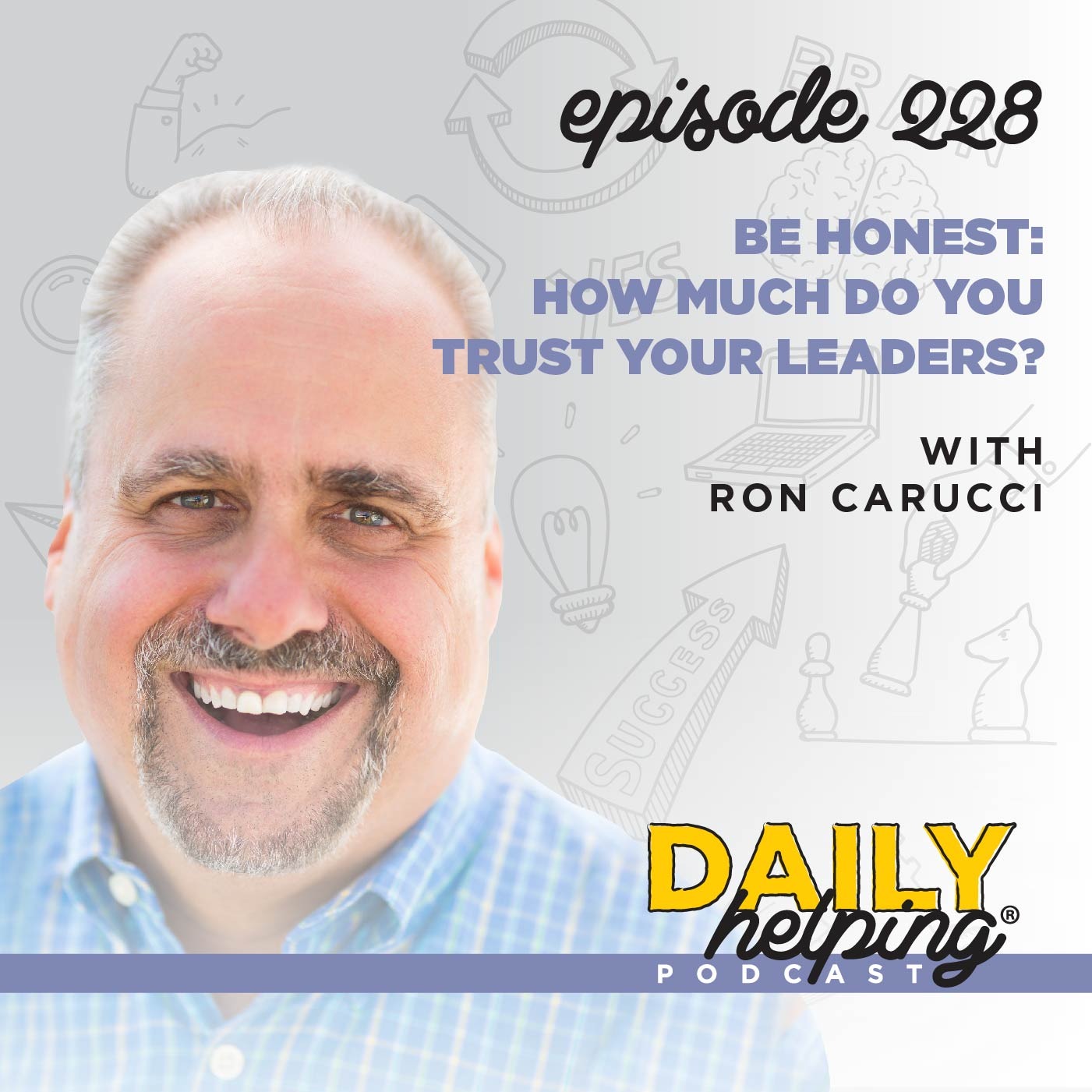
228. Be Honest: How Much Do You Trust Your Leaders? with Ron Carucci
Description
Today, our expert guest is the returning Ron Carucci, a two-time TedX speaker, bestselling author of nine books (including his most recent, To Be Honest), and a popular contributor at Harvard Business Review and Forbes.
Ron Carucci is also the co-founder and managing partner at Navalent, working with CEOs and executives pursuing transformational change for their organizations, leaders, and industries. He has a thirty year track record helping some of the world’s most influential executives tackle challenges of strategy, organization, and leadership.
In addition to his regular contributions at Harvard Business Review and Forbes, Ron has also been featured in Fortune, CEO Magazine, Business Insider, MSNBC, Business Week, Smart Business, and Thought Leaders. We feel incredibly lucky to have him here with us today, teaching us unbelievably valuable and inspiring ways to succeed in leadership.
In the last few years, our trust in leaders has been in freefall. Whether in the corporate, nonprofit, or political space, we’re all starved for truth and honesty in the people that lead us. We’re growing increasingly dissatisfied with dishonesty – and the explanations given when that dishonesty is uncovered. How can we do better?
Ron set out to study and see if we can predict under what conditions people would tell the truth, behave fairly, and serve the greater good, and what conditions would lead to people lying, cheating, and serving their own interests. If we can predict that, we can create environments where people can be their true selves, thrive, and do their best work. And he found that we can.
There are four predictors within an organization that will accurately predict whether or not people will behave:
- Honesty in your identity: Are you who you say you are? We all make statements about ourselves, and if those statements match our actions and remain consistent, then those around us are up to three times more likely to tell the truth and behave honestly. If there’s a mismatch, or the statements are just words but don’t seem to be reflected in reality, then you are three times more likely to have people lie, cheat, and serve their own interests first.
- Accountability: If your accountability systems are grounded in justice and dignity, you are up to four times more likely to have people tell the truth or behave fairly. But if your workplace feels demeaning, degrading, or categorically unfair, you are four times as likely to see people lie and cheat.
- Decision-Making: If there is transparency about the information and data that’s being presented to the company, trust that it is honest, and that all voices are welcome, then you are three and a half times as likely to see people behaving honestly. If it is more about collusion or orchestrative theater to get people to agree with a specific idea, then you are three and a half times more likely to see people lie.
- Border Wars: If, at the seams of your organization, there is a great relationship of collaboration and healthy conflict resolution and collaboration, you are six times more likely to see people tell the truth and behave fairly. If there are unresolved border wars where people are pointing fingers, where there are unresolved conflicts, you are fragmenting the truth of the organization and are six times as likely to have people lie and cheat.
Establishing trust within an organization is paramount to its success. It starts with the leader and it goes down to the individual employees. Each of these predictors can create a halo effect which boosts the others, so start by figuring out where you stand, sit down with your mission statement, and ask yourself and