Episode Details
Back to Episodes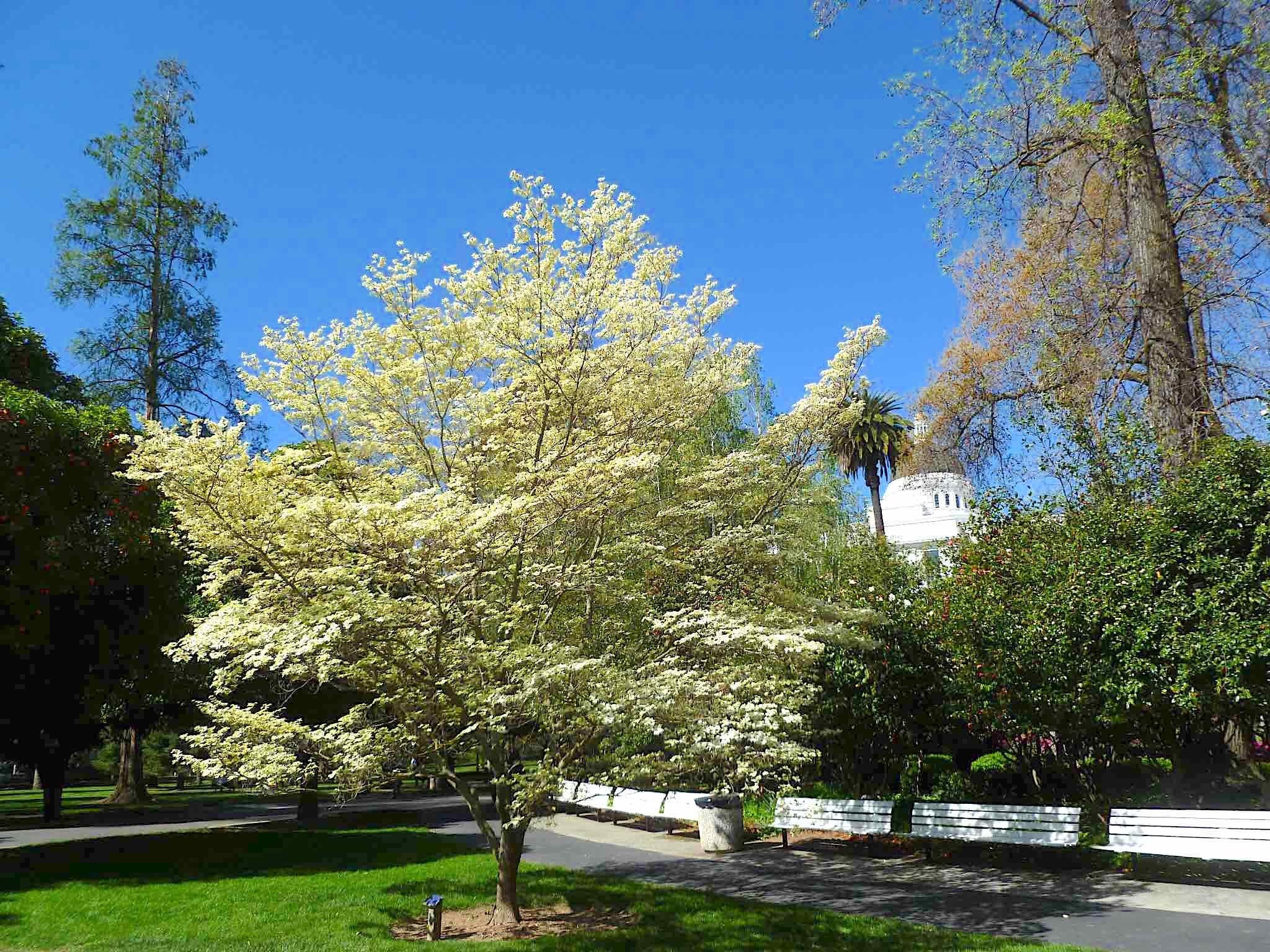
What's Stressing Your Dogwood Tree? It Could Be You.
Description
A dogwood tree is easy to love: flowers in the spring, beautiful orange/pink/red fall leaf color; a small to medium height tree, perfect for a patio area.
The University of Florida lists the dogwood tree’s strengths and weaknesses:
“The state tree of Virginia, the flowering dogwood grows 20 to 30 feet tall and spreads 25 to 30 feet. It can be trained with one central trunk or as a picturesque multi-trunked tree. The flowers consist of four bracts which subtend the small head of yellow flowers. The bracts may be pink or red depending on cultivar but the species color is white. The fall color depends on site and seed source but on most sun grown plants will be red to maroon. The bright red fruits are often eaten by birds. Fall color is more vivid in USDA hardiness zones 5 to 8a. Branches on the lower half of the crown grow horizontally, those in the upper half are more upright. In time, this can lend a strikingly horizontal impact to the landscape, particularly if some branches are thinned to open up the crown. Lower branches left on the trunk will droop to the ground, creating a wonderful landscape feature.
“The tree is not suited for parking lot planting but can be grown in a wide street median, if provided with less than full-day sun and irrigation. Dogwood is a standard tree in many gardens where it is used by the patio for light shade, in the shrub border to add spring and fall color or as a specimen in the lawn or groundcover bed. It can be grown in sun or shade but shaded trees will be less dense, grow more quickly and taller, have poor fall color, and less flowers. Trees prefer part shade (preferably in the afternoon) in the southern end of its range. Many nurseries grow the trees in full sun, but they are irrigated regularly. Flowering dogwood prefers a deep, rich, well-drained, sandy, or clay soil and has a moderately long life. It is not recommended in the New Orleans area and other heavy, wet soils unless it is grown on a raised bed to keep roots on the dry side. The roots will rot in soils without adequate drainage.
Several of the cultivars listed are not readily available. Pink-flowering cultivars grow poorly in USDA hardiness zones 8 and 9. 'Apple Blossom'—pink bracts; 'Cherokee Chief'—red bracts; 'Cherokee Princess'—white bracts; 'Cloud 9'—white bracts, many blooms, flowers at early age; 'Fastigiata'—upright growth while young, spreading with age; 'First Lady'—leaves variegated with yellow turning red and maroon in the fall; 'Gigantea'—bracts 6-inches from tip of one bract to tip of opposite bract; 'Magnifica'—bracts rounded, 4-inch diameter pairs of bracts; 'Multibracteata'—double flowers; 'New Hampshire'—flower buds cold hardy; 'Pendula'—weeping or drooping branches; 'Plena'—double flowers; var. rubra—pink bracts; 'Spring Song'—bracts rose red; 'Springtime'—bracts white, large, blooms at an early age; 'Sunset'—supposedly resistant to anthracnose; 'Sweetwater Red'—bracts red; 'Weaver's White'—large white flowers, adapted to the south; 'Welchii'—leaves variegated with yellow and red; 'White Cloud'—flowers more numerous, bracts white; 'Xanthocarpa'—fruit yellow.
“Aphids may be controlled by spraying them with a strong stream of water from the garden hose.
Several borers will attack dogwood. Try to keep the trees healthy with regular fertilization, and irrigation during dry weather. Indications of borer problems are holes in the trunk, leaves smaller than normal, and dieback of the crown.
Dogwood club gall midge causes galls at the branch tips. The leaves on affected branch tips may be distorted and the branch may fail to form a flower bud. Prune out the galls as soon as they are seen.
Leaf miners cause brown blister-like mines on the undersides of leaves. The adult leaf miner skeletonizes the leaves.
Scales can build up to large numbers before being detected. Horticultu