Episode Details
Back to Episodes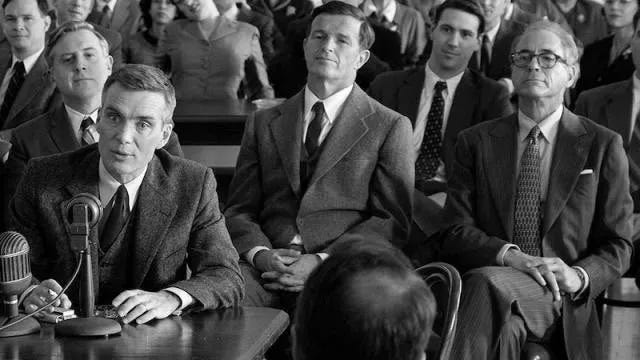
Of Communism and Oppenheimer
Description
This is a supplement to the piece I posted yesterday that needs clarification. It is all too easy to see both Barbie and Oppenheimer as two sides of the same coin - Barbie as the ultimate “woke” movie and Oppenheimer as a movie that attempts to vindicate or sympathize with Communism.
But that would be a mistake. Barbie reflects our society now, a society not unlike what the Communist hunters most feared: ideological capture of our major institutions, our culture, our schools, and our government.
I enjoyed Barbie because laughing at a silly movie was fun, but it is important to put it in context of what we’re living through now.
As Critical Drinker explains:
Barbie is light-hearted and not intended as propaganda, but it makes assumptions about our shared reality that really only has meaning for those on the Left who go along with it. Men are bad, women are good, but gender is not a binary, etc.
Oppenheimer is about the America before the war and the America after the war. Everything changed dramatically in the wake of Hitler, Stalin, and the bombs dropping on Hiroshima and Nagasaki, which would eventually take us to the Cold War.
Oppenheimer was never a Communist. The film Oppenheimer is not about Communism. It isn’t even really a Left vs. Right film. There isn’t much politics involved at all. Some might react to the movie without seeing it, falsely believing it’s Communist propaganda — understandably, because of Hollywood’s reputation of late. But that would be unfair and a misread of what Oppenheimer is about.
In the 1930s, amid the Great Depression, Hooverville, and the New Deal, it was a “Great Awokoning” of a kind. Those on the Left who cared about social justice started organizations to help those left behind. FDR’s New Deal, for instance, left behind Black Americans.
In the book about Oppenheimer, he was so well-read, compassionate, and worldly that he understood it was an unequal society, just like Orwell or any decent person who lived back then would. That is what drew him, and Orwell, at one point, to Communism. And both would eventually abandon it once they saw where it led.
Oppenheimer and Orwell were free thinkers. They valued freedom of the mind more than anything, just as I do. That is why Orwell wrote 1984, and it’s why Oppenheimer’s quote about science is such a good one:
Does anyone think today’s Left still believes that? They do not. They don’t believe in freedom of the mind at all. They believe in forced conformity and ideological compliance in art, science, education, and even relationships between people, language, comedy, and everything else they control, which is almost everything.
Oppenheimer’s first girlfriend, Jean Tatlock, was a card-carrying member of the Communist Party. Many of Oppenheimer’s friends were also Communists. They continued to try to recruit him, but he always refused to join — he was a singular thinker and did not want to belong to any group or have any allegiances.
He also, and I want to be clear here, BUILT THE ATOM BOMB THAT ENDED THE WAR. Anyone who wants to dump on Oppenheimer has to understand his place in history, and if you are applying his suspected ties to Communism as being more important than BUILDING THE ATOM BOMB THAT ENDED THE WAR, then you are no different from the screeching fanatics on the Left.
Whether you think he should have built the bomb is beside the point. He helped end World War II, full stop. He was hailed as a hero for doing so. Our government wanted to build what President Ike warned against in his farewell address, the Military Industrial Complex:
Oppenheimer did everything he could to prevent the arms race, which put him at odds with the government and the military.
Oppenheimer was Jewish, which meant he was already an outsider and felt like one his entire life. But playing such an important part in history — with the caveat that they dropped the bomb