Episode Details
Back to Episodes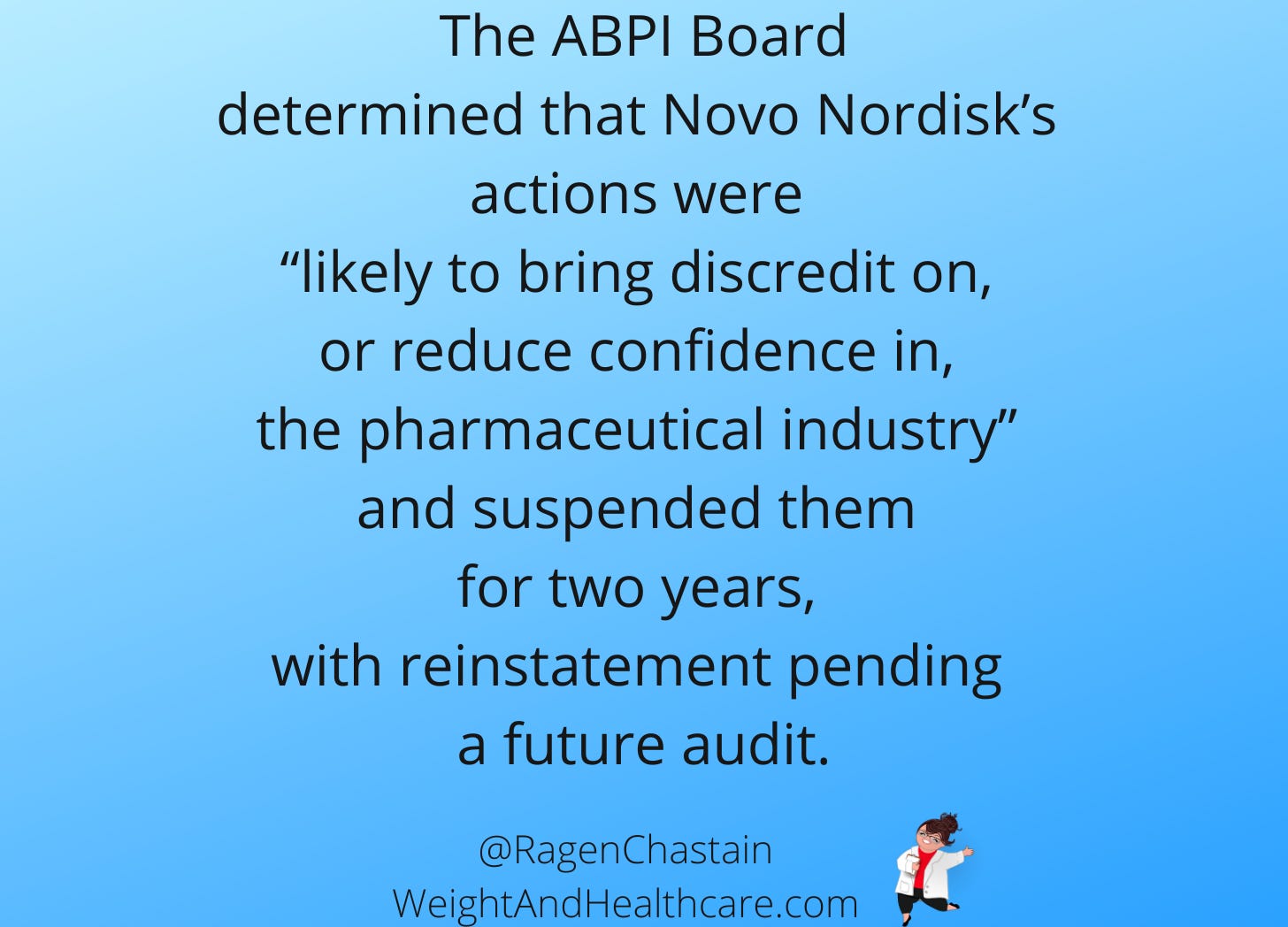
Novo Nordisk (Finally) Faces Some Consequences for Their Deceptive Marketing Tactics - Part 1
Description
This is the Weight and Healthcare newsletter! If you like what you are reading, please consider subscribing and/or sharing!
If you have read this newsletter for any period of time, you’ve read my accounts of how pharmaceutical company Novo Nordisk has been using extremely shady marketing practices (many taken from the playbook that Purdue Pharma used to push oxycontin) to promote their drugs for weight loss. Things like
Marketing their drug through Grand Rounds presentations
And I’m far from the only person talking about this.
Mikey Mercedes has publicly called this out.
Louise Adams from Untrapped has been all over it (I had the chance to join Louise Adams and Fiona Willer on Louise’s Podcast All Fired Up to talk about this)
Asher Larmie, The Fat Doctor, has also been talking about this
And there are plenty of others.
Part of the issue is that in the United States pharma companies are allowed to market direct-to-consumers , and the rules and regulations that exist are often loosely enforced. That’s why I was thrilled to learn that The Association of the British Pharmaceutical Industry (ABPI,) a trade association that works in England, Scotland, Wales, and Northern Ireland in partnership with the government and the NHS on behalf of their members, had suspended Novo Nordisk for being in breach of the ABPI code of practice.
Interestingly, just a month ago, the president of ABPI was Novo Nordisk UK General Manager and Corporate Vice-President Pinder Sahota. Sahota stepped down from the board in February “to avoid an ongoing process around a Novo Nordisk ABPI Code of Practice breach becoming a distraction from the vital work of the ABPI.”
The complaint was made to The Prescription Medicines Code of Practice Authority (PMCPA) which is “the self-regulatory body which administers the Association of the British Pharmaceutical Industry (ABPI) Code of Practice for the Pharmaceutical Industry, independently of the ABPI. It was established by the ABPI on 1 January 1993.”
The complaint centers around a LinkedIn post offering practitioners a free “weight management” course. The only “weight management” treatment covered in the course was GLP1-RA drugs.