Episode Details
Back to Episodes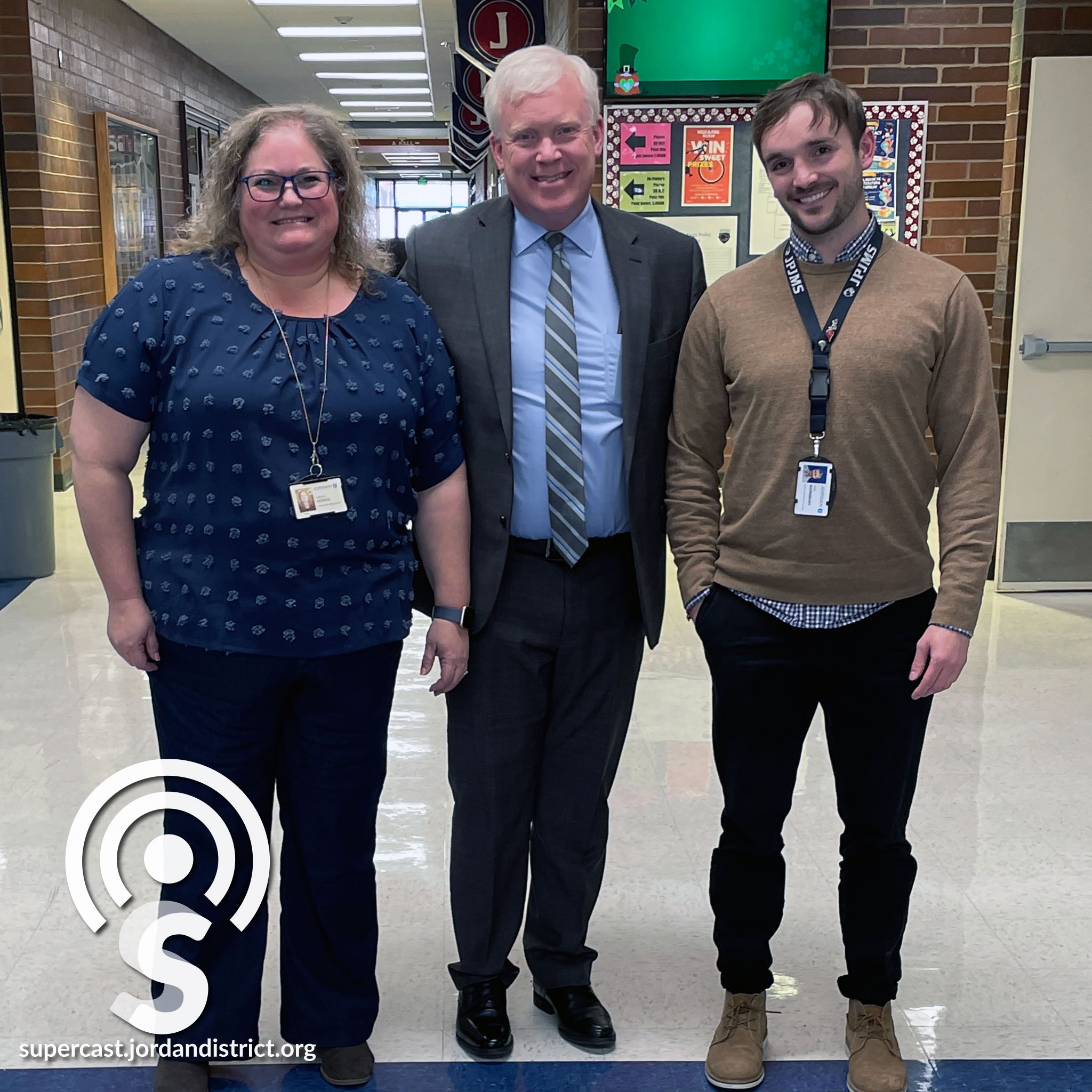
Students Benefit Working with JSD Speech-Language Pathologists
Description
They are considered experts in communication; evaluating, diagnosing, treating and preventing speech and communication disorders.
On this episode of the Supercast, we talk to several Jordan School District Speech-Language Pathologists about the important work they do helping students of all ages who may be experiencing challenges in some aspect of speech and communication. Find out how they are making a huge difference in the lives of students, in and outside the classroom.
Audio Transcription
Anthony Godfrey:
Hello and welcome to the Supercast. I'm your host, Superintendent Anthony Godfrey. They are experts in communication, evaluating, diagnosing, and treating speech and communication disorders. On this episode of the Supercast, we talk to Jordan School District's speech language pathologists about the important work they do, helping students of all ages who may be experiencing challenges in some aspect of speech or communication. Find out how they are making a huge difference in the lives of students in and outside the classroom.
We're here today at Joel P. Jensen talking with Ryan Sainsbury, who is a speech language pathologist at Joel P. Jensen and Kristin Norris, the speech language pathologist and audiologist coordinator for the District. Thank you very much for taking the time.
Ryan Sainsbury:
Thank you. It's exciting to be here.
Kristin Norris:
Yeah, it's great to talk with you today.
Anthony Godfrey:
So Ryan, let's just talk to you first about being an SLP. That's our first acronym of the show. There might be a lot more. Talk to me about being a speech language pathologist. What does that involve? Because I think a lot of people may not understand exactly what the job entails.
Ryan Sainsbury:
Yeah. definitely I think as far as like being an SLP, it's so like vast and vague, a lot of it that sometimes it's confusing and hard for people to grasp because we can and do do so much. So there's usually like a medical side that we won't really get into where we help people from strokes and different brain injuries recover and things like that. And then we have the school-based side, which we are in right now. And within this side there's lots of things we kind of treat and diagnose. Speech and language disorders and communication disorders that people have. So whether it's because of various diagnoses that they were born with or maybe different delays and things that they have we help them try to learn to communicate and we try to give everybody a voice.
Anthony Godfrey:
And Kristin, tell me about the difference from level to level. I know that we have SLPs working with students of all ages, so what are the different areas of focus at at different ages?
Kristin Norris:
So it's really individualized by the student, but in general we have SLPs that are working in our early intervention program. We have SLPs that are working in our preschool program. And then we have elementary, we have secondary, we even have in our post high program. A lot of times I think people really feel like what we work on is speech sounds, and that is a big part of what we do. And you particularly see that at that elementary level. You see a lot of work on either individual speech sounds, they're what we call phonological processes, which are groups of patterns of speech that students have.
But there's a whole other piece, and that's the language piece. The language piece covers everything from social language to vocabulary to understanding and comprehending tests. It’s tied into phonemic awareness and the skills that they're learning in 1st and 2nd. So there's this tie into literacy and reading. And it just is any way that a student communicates, we can help facilitate if they have a disability in that. As we get into the secondary level, we probably see a lot more of the language piece