Episode Details
Back to Episodes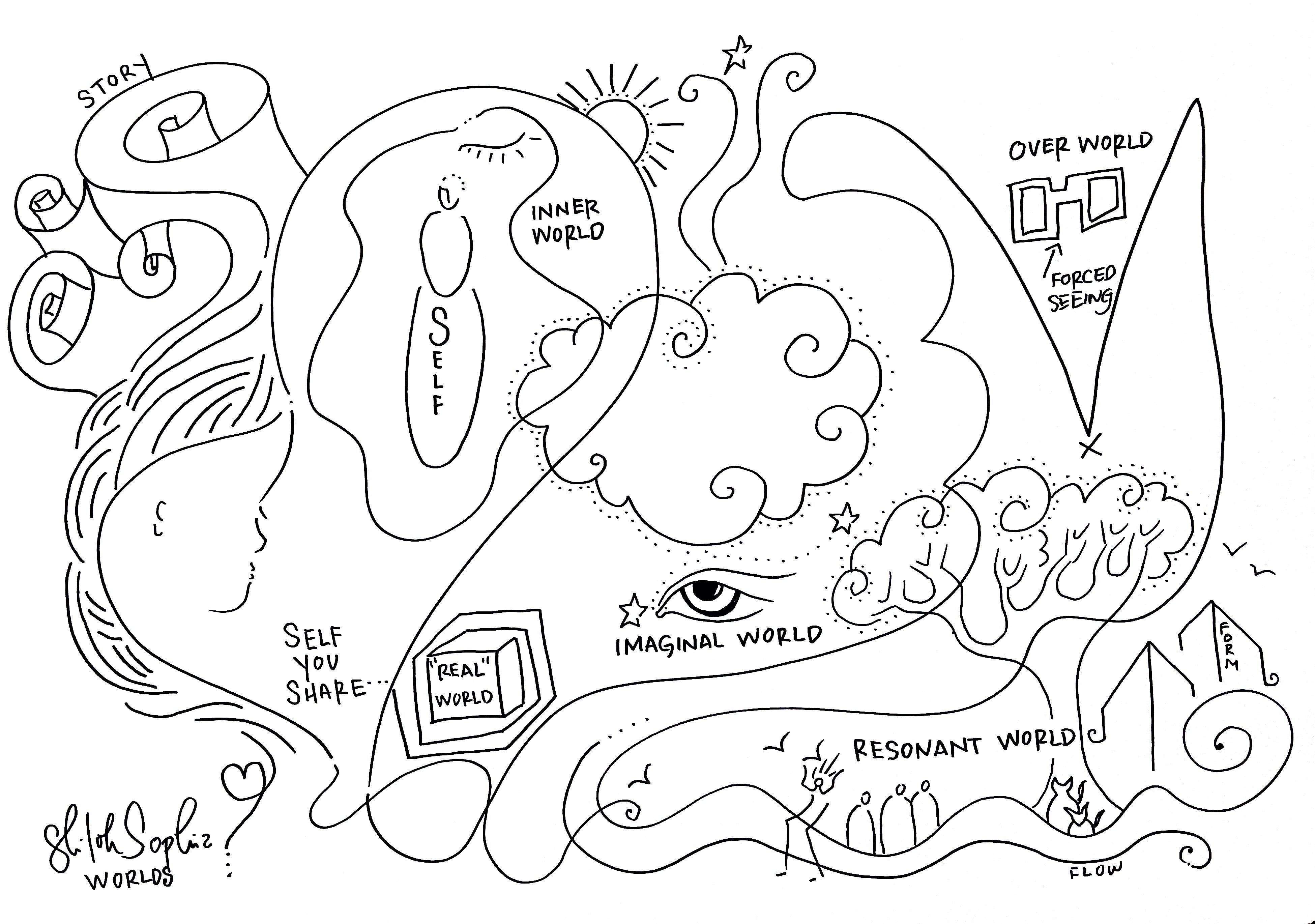
What worlds do you live in and how?
Description
Here is the audio transcript if you wish to read with a cuppa instead ❤️
Dear Ones,
I wonder if you find yourself thinking about the different worlds that we seem to inhabit as a self, but largely unconsciously. It's almost like we become aware of worlds as we become adults because we've lost some connection to it somewhere between childhood and adulthood. We stopped seeing and dreaming in the way that we used to when we used to have imaginary friends and imaginary worlds.
I can't help but wonder if we wouldn't have a different world at large if children were truly taught to keep their imaginal world front and center as a way of thinking and being. We're not very old, eight to 12 depending on the culture that we're living in, sometimes even younger than that, before we start to create a disconnect, whether that's conscious by adults in our space, I think largely unconscious, or just in a desire to sit into being inside of a structure.
If we don't act like we're present and participating in culture, we sometimes are told we're daydreamers. We're told to stop making things up and stop pretending. We're told to grow up and use our adult voice. We're taught not to use our outside voice inside. But while all this is happening and has a relative level of logic to it, something else is being lost. We don't even know enough about it to talk about it.
Many people have to become adults and be able to afford education in order to start thinking about the imaginal world they left behind as a child. So many people we work with in our intentional creativity community can remember the moment they put down a crayon. That's how significant that moment is. If I ask them what was happening in that day, or even what they wearing or who was there, they often have this almost supernatural vision of themselves in that moment.
We're yet to determine why that image is so absolutely looming and huge in our lives. Why that moment would be so big that we would actually stop creating, sometimes until we're adult. I have different theories about why I think that moment is so significant.
One of them is that, until that moment, we are largely connected with our imaginal world, and move freely and easily between imagination and what others around us perceive as a kind of reality. When someone becomes critical of our creativity, which in many cases is an externalized version of our internal world, whether that's drawing, singing, dancing, playing, make-believe, when that in any way gets criticized, when it had been largely encouraged before, but nobody told us when we were going to stop being encouraged to be imaginative. There was no warning. We get surprised.
In that moment, something happens, a rupture, that it could take the rest of someone's life to repair, if we even know to do it. It's almost like we're caught in the act of somehow not being connected, somehow not being connected to the reality that the adults around us have been enforcing. It's a moment, it's a flash, it's a rupture, and we start to, in a way for many of us, become concerned about ourselves.
It could be a moment where self-trust is lessened and where we recognize a stark reality between what we think of as our imagination and what we are now crashing into as the reality in which everyone else is living and somehow we weren't. My mother, Karen, used to think of this moment as a time when many people would start to think they were just a little bit crazy and had to hide and pretend to behave in order to fit in.
Over days, months, or years of trying to fit in and not invite that imaginary friend to the lunch table anymore, because now there's real friends to behave and act normal with, we actually start to lose trust with that internal world. And then later, as we go on in education, we're criticized if we're not connected to our creativity and our imagination. We're criticized if we're too structured, too A type, too left br