Episode Details
Back to Episodes
The Accidental Ecosystem w/ Peter Alagona
Description
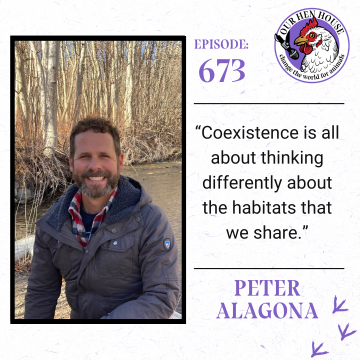
Author Peter Alagona, PhD, joins us on the podcast this week for an illuminating conversation about the wild creatures that coexist alongside humans as part of the fabric of city life, as well as the habitat the city itself creates for these animals. Since World War II, populations of wild animals have increased in urban areas largely due to, as Peter explains, the vast amount of resources cities provide, including food, water, and shelter. We also delve into some of the animal stories he covers in his book The Accidental Ecosystem, such as the shocking revelation that, once upon a time, squirrels actually had to be reintroduced to urban areas! We discuss the wildlife found in and around our cities today—think mountain lions, bears, and gray squirrels—and Peter offers solutions to help humans peacefully live alongside urban wild creatures.
*We are thrilled to expand the accessibility of our podcast by offering written transcripts of the interviews! Click here to read Mariann’s interview with Peter Alagona.*
Peter Alagona is a professor of environmental studies at the University of California, Santa Barbara (UCSB). He is the recipient of several awards, including a National Science Foundation CAREER grant, and is the author of more than three-dozen publications in the areas of environmental history, geography, philosophy, and policy—including After the Grizzly: Endangered Species and the Politics of Place in California, and, most recently, The Accidental Ecosystem: People and Wildlife in American Cities. Prior to arriving at UCSB, Peter received his Ph.D. at UCLA and completed fellowships at Harvard and Stanford Universities.
“Coexistence is all about thinking differently about the habitats that we share.” – Peter Alagona
Highlights for Episode 673:
- Peter’s thoughts on urban wildlife and how views have changed overtime
- Why squirrels disappeared from cities for so long, why they came back, and why this particular story resonates with readers of his book
- The reason so many animals, including deer, wolves, and bears, were driven to such low population levels
- How urban planners didn’t plan for animals and how animals themselves decided cities were actually a good place to be
- How cities create environments that allow animals to reproduce at a greater rate
- Ongoing research into why urban creatures experience a much greater risk of disease or death at a young age
-
Listen Now
Love PodBriefly?
If you like Podbriefly.com, please consider donating to support the ongoing development.
Support Us