Episode Details
Back to Episodes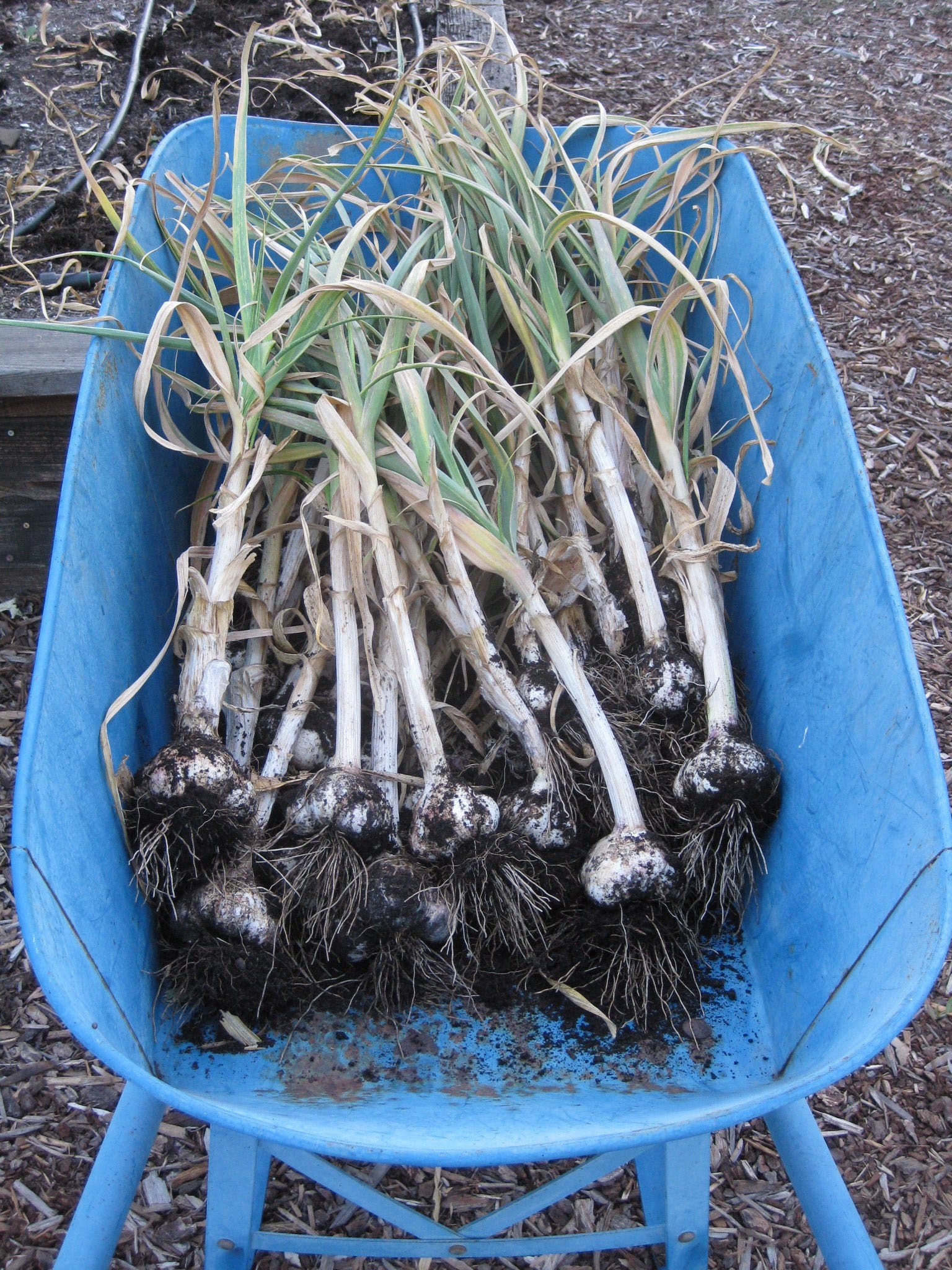
Garlic Growing Tips
Description
Want to grow garlic?
In milder climates (where the ground doesn’t freeze), now is the time to visit your favorite nursery, garden center or garden catalog company to choose the garlic varieties you want. Note I said, “varieties.” Grocery store garlic is primarily one or two varieties. Around here, it is usually California Early or California Late. And these two softneck, Artichoke varieties of garlic do grow well in USDA Zone 9. They take our late spring heat, are very productive, and can be stored (in a cool, dark room, in netted bags) for up to ten months. However, if you want a variety that has a deeper, full-bodied flavor, choose a hardneck variety, such as one of the Rocambole varieties, many of which do well in colder climates, where garlic is best planted two to four weeks before the ground freezes. In the past, I have had good luck with Killarney Red and German Red. Purple Stripe varieties are also quite flavorful, especially when used in baked dishes. Chesnok Red and FerganskiJ are two Purple Stripes that have done well here. Storage life for these varieties is much shorter, usually four to six months. The longest storing varieties – up to a year – are the Silverskins and Creoles, which include two of my favorites: Nootka Rose and Burgundy. Increasing in popularity because of their large size and tangy flavors are the Porcelain garlics, especially “Music”, with cloves as large as a Brazil nut.
A well-stocked garden center or independent nursery may have a better supply right now than many garlic catalogs, which sell out of their stock quickly. For more information about garlic – including longer definitions than what is supplied here – check out online garlic company Filaree Farm in Washington State (filareefarm.com). Their site can answer many of your garlic questions. A very good book on the subject is “Growing Great Garlic” by Ron Engeland. A harder to find, out-of-print book, “The Complete Book of Garlic” by Ted Jordan, is a prized reference for garlic aficionados.
University of California Cooperative Extension Master Gardener Advisor Emeritus Michelle Le Strange offers these garlic growing tips:
• The first time you plant garlic you should buy planting cloves from your local nursery or garden center. Their heads (bulbs) are typically larger than those in the grocery store and more reliable to grow.
• The best garlic grows in loose, reasonably fertile, well-drained soil.
• Planting a single clove will yield a whole bulb. Break the bulbs apart and remove the very smallest cloves and any that are discolored, moldy, or missing their protective papery jackets.
• Push the cloves, pointed end up, into the soil about two inches deep. Space the cloves about six inches apart, in rows eight to twelve inches apart.
• Let the plants grow all winter, spring and into summer. Some attention to weeding, irrigation, and an occasional fertilizer feeding (in late winter/early spring) is all that is required.
• A clump of shoots will grow about a foot tall. Irrigate until tops begin to brown, and then withhold water to let the plant dry naturally.
• One indication to start harvesting is when the leaves fall over and about half of the lower leaves turn brown. You can also just dig up a few bulbs and cut them in half; if the cloves fill the skins, then the bulbs are ready to harvest.
• Use a garden fork to lift the plants out of the ground with shoots and bulbs attached. Knock off clumps of dirt and then let the plants air dry for a few weeks. The cloves should be firm to the touch. After curing, the shoots can be cut a little above the bulb and the roots can