Episode Details
Back to EpisodesThe Hellish Harlequin: Phantom Hordes to Father Christmas
Description
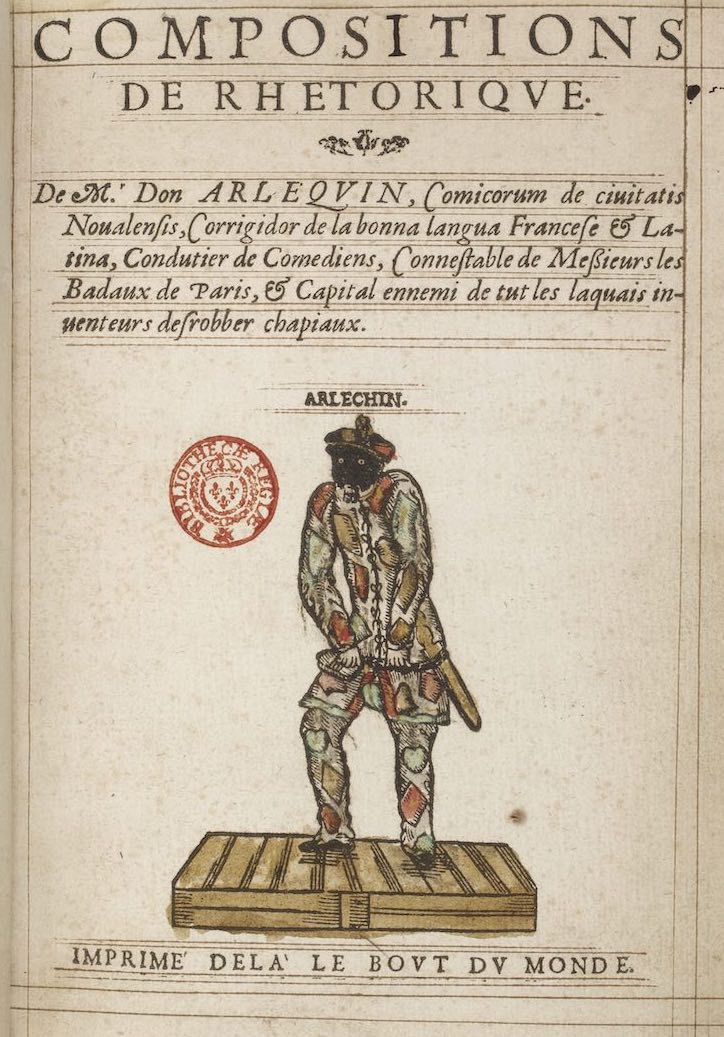
Harlequin is an enigmatic figure with roots in dark folklore of France, specifically that of the Wild Hunt (Chasse Sauvage) a nocturnal procession of ghosts or devils, particularly associated with the time around Christmas and New Year. The myth is also common to England and examined more closely in its Germanic manifestation in Episode 16, “The Haunted Season.” We open with a snippet from an album dedicated to Hellequin’s folkore by a Belgian band called Maisnée d’Hellequin.
In the show, we trace a thread leading from medieval stories of Hellequin (Harleqin’s ancestor in France) and King Herla (the English equivalent) to the more recent theatrical figure of Harlequin, along the way examining a link with the traditional English Christmas play (mummers’ play) and its role in the evolution of the figure of Father Christmas.
Our first story comes from the French-Norman monk Oderic Vitalis, from volume two of his Ecclesiastical History. It was written in about 1140, making it not only the first account mentioning Hellequin (“Herlequin” in his text) but also the first European ghost story, one Vitalis relates as a true event transpiring on New Year’s Eve 1091, and told to him by an eyewitness, a priest, by the name of Vauquilin (Walkelin).
While returning from a visit to an ailing member of his parish, Vauquilin, hears the thunder of what sounds like an approaching army and is met by a giant with a club, whom he recognizes as Hellequin and who in this case serves as a sort of herald of the ghostly crew that follows. It’s a richly detailed and extravagantly ghoulish tale, splendidly read by our own Mrs. Karswell.
Without giving away too much, suffice it to say, that the spirits Vauquilin sees passing are enduring a sort of purgatorial torment for past sins, an apparently temporary but unenviable state of earthbound damnation. (For more on medival tales of ghosts visiting mortals from purgatory, see our “Ghosts from Purgatory” episode.) In the procession, these sinners are accompanied by devils who torture them, chief among these, apparently Hellequin.
Our next story, from around 1190 paints a more detailed picture of the English version of Hellequin, King Herla. It was written in Wales by the courtier Walter Map and contained in his eccentric collection of myths and pseudo-historical anecdotes called De Nugis Curialium, or “trifles for the court.” This one’s more of an