Episode Details
Back to Episodes
After Meat w/ Karthik Sekar
Description
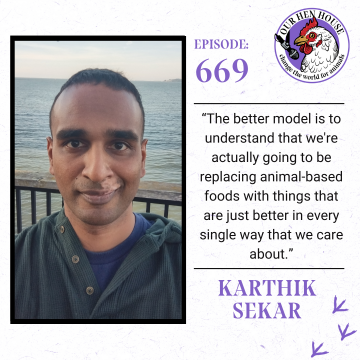
Karthik Sekar, PhD wants to see the world move beyond an unsustainable, inefficient animal-based food system. He joins us on the podcast this week for a conversation about his recent book, After Meat, which details why animals are an outdated “production technology,” as the agricultural industry calls them. We discuss why plant- and microbial-based foods are far superior to their animal counterparts in terms of taste, nutrition, and affordability. Karthik, a data scientist focused on innovating the future of food, also explores the argument for why governments worldwide should invest in replacing animal agriculture with a viable alternative. Plus, he explains why he’s not necessarily choosing to champion cultivated meat.
*We are thrilled to expand the accessibility of our podcast by offering written transcripts of the interviews! Click here to read Mariann’s interview with Karthik Sekar.*
Karthik Sekar has a doctorate in Chemical Engineering from Northwestern University. His research career has spanned many topics related to the future of food, such as bioreactors, quantitative biology, biochemical engineering, and metabolism. He currently works as a senior data scientist in the alternative food space in Berkeley, California, and has written a non-fiction science/technology book, After Meat, to explain why animals are awful technologically, and why humanity will move on and do better.
“The better model is to understand that we’re actually going to be replacing animal-based foods with things that are just better in every single way that we care about.” – Karthik Sekar
Highlights for Episode 669:
- Why animals are fundamentally limited and outdated as a “production technology” and what that means in practical terms
- What the term fermented means when talking about meat alternatives
- How products like Quorn are created and why they’re not always vegan
- Why it’s easier to innovate with biomass fermentation in terms of taste, nutrition, and efficiency
- What Karthik means when he says that he doesn’t just plan to replicate meat; he plans to improve and reinvent what we eat
- Why he feels that anti-GMO sentiments are standing in the way of transitioning out of animal agriculture
- Regulatory issues Karthik anticipates for biomass fermented foods
- What Karthik would do to change the way the alternative, animal-friendly food movement is working
Connect with Karthik Sekar:
Listen Now
Love PodBriefly?
If you like Podbriefly.com, please consider donating to support the ongoing development.
Support Us