Episode Details
Back to Episodes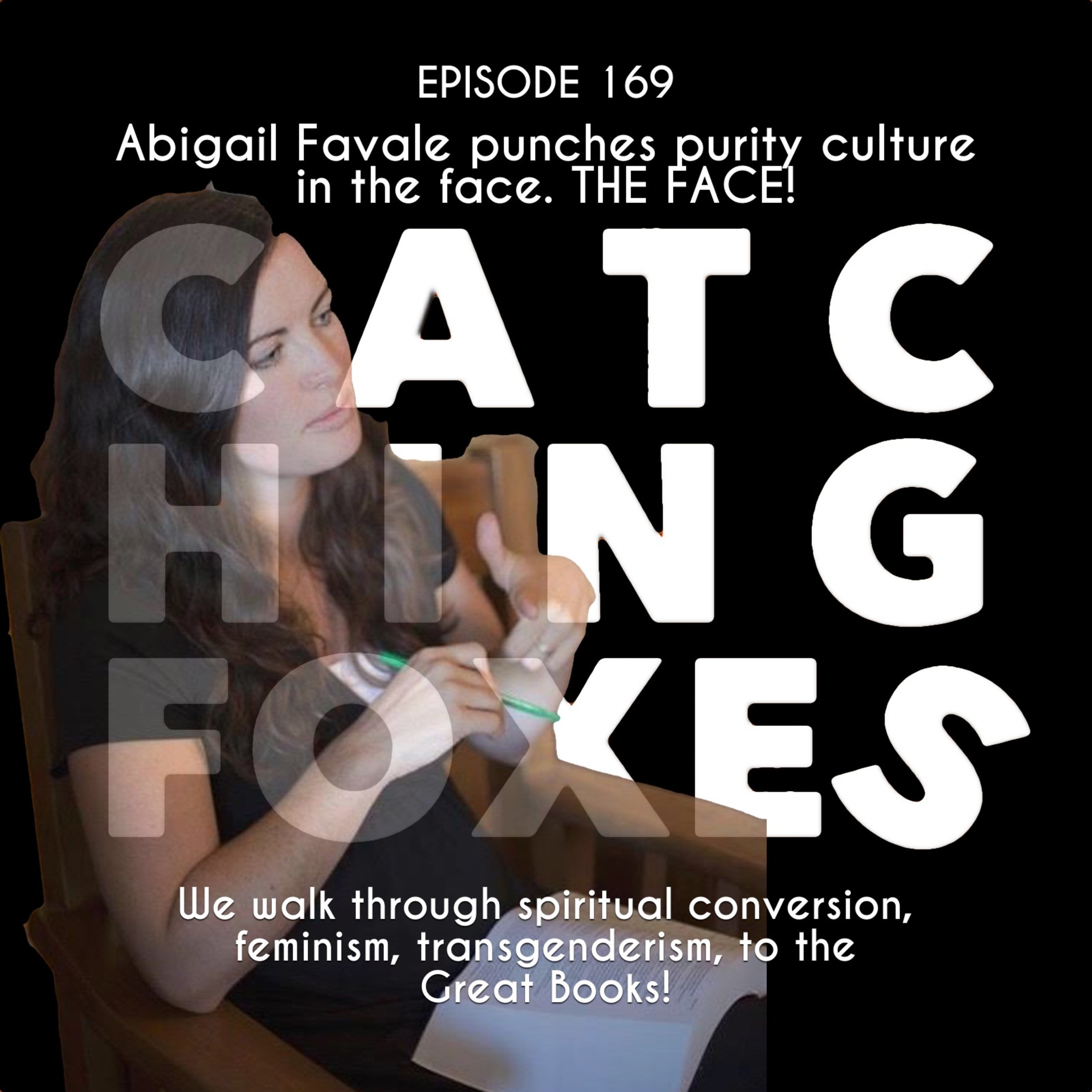
Abigail Punches 'Purity Culture' in the Face. THE FACE!
Published 7 years, 8 months ago
Description
We talk to Abigail Rine Favale, who directs and teaches in the William Penn Honors Program, a great books program at George Fox University. She is the author of 'Into the Deep: An Unlikely Catholic Conversion.'
We discuss her conversion, evangelical purity culture, the book I Kissed Dating Goodbye, Consent and 3 Paradigms, Transgenderism and Feminism, Waves of Feminism and her work at George Fox.
Thank you CURO Catholic Healthcare for sponsoring this show!
Special Guest: Abigail Rine Favale.
Sponsored By:
- CMF CURO: You don’t have to compromise your faith to get great health care. Finally, there is an option that respects and engages your Catholic faith, with a Catholic community that supports you in living your Health Care Fully Alive. CMF Curo!
Links:
- Into the Deep: An Unlikely Catholic Conversion — Into the Deep traces one woman's spiritual odyssey from birthright evangelicalism through postmodern feminism and, ultimately, into the Roman Catholic Church. As a college student, Abigail Favale experienced a feminist awakening that reshaped her life and faith. A decade later, on the verge of atheism, she found herself entering the oldest male-helmed institution on the planet--the last place she expected to be. With humor and insight, the author describes her gradual exodus from Christian orthodoxy and surprising swerve into Catholicism. She writes candidly about grappling with wounds from her past, Catholic sexual morality, the male priesthood, and an interfaith marriage. Her vivid prose brings to life the wrenching tumult of conversion--a conversion that began after she entered the Church and began to pry open its mysteries. There, she discovered the startling beauty of a sacramental cosmos, a vision of reality that upended her notions of gender, sexuality, identity, and authority. Into the Deep is a thoroughly twenty-first-century conversion, a compelling account of recovering an ancient faith after a decade of doubt.
- Kissing Purity Culture Goodbye — Foremost among these is the reductive notion of “purity” itself, which becomes more or less synonymous with virginity. In this understanding, a person exists in a default state of purity, which can then be corrupted or lost through sexual activity. The implied trajectory is from purity into corruption, from which only partial redemption is possible. Virginity, once lost, can never truly be regained. This inverts the arc of the Christian life, in which one moves from original corruption into purification by grace. While the biblical understanding of purity includes sexual activity, it is hardly reducible to it. Rather, purity concerns conversion of the whole self to Christ, a continual and lifelong process. The Evangelical purity paradigm also ignores the question of how to faithfully live out one’s sexuality after getting married—especially after one has been taught to associate sex with shame and sin. This is a major flaw in Harris’s approach, which he acknowledges in his statement of retraction: “The book also gave some the impression that a certain methodology of relationships would deliver a happy ever-after ending—a great marriage, a great sex life—even though this is not promised by scripture.”
- Evangelical Gnosticism — My studen