Episode Details
Back to Episodes
Black, Brown, and Diverse Plant-Based People for Equity w/ Lisa Dumas
Description
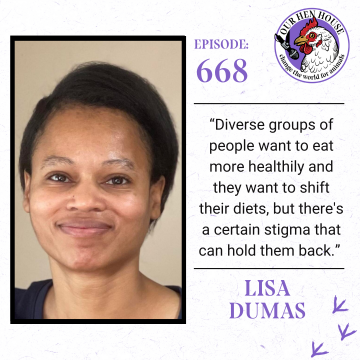
Lisa Dumas is on a mission to make the world a better place. This week she joins us on the podcast for a conversation about how she’s working toward expanding access to plant-based food options to those in need. Not only is she increasing accessibility for healthy alternatives, Lisa is also helping underserved communities access critical educational information on making informed choices when it comes to health and well being. Lisa—the founder of Black, Brown, and Diverse Plant-Based People for Equity Inc.—discusses why some communities may associate plant-based diets with cultural stigmas and whether she believes this will change in the near future. She also tells us why she was inspired to launch the non-profit, shares the group’s vision of community support, and discusses their ideas for future programs to achieve their goals.
*We are thrilled to expand the accessibility of our podcast by offering written transcripts of the interviews! Click here to read Jasmin’s interview with Lisa Dumas.*
Lisa Dumas began her career in marketing and communications for the diversity consulting firm The Winters Group. She is presently a freelance journalist and editor. She graduated from SUNY Brockport with a B.S. in journalism and is currently working on a Master’s in Communications at the Rochester Institute of Technology. In June of this year, Lisa created Black, Brown, and Diverse Plant-Based People for Equity Inc., and she is the founder of the Facebook group Black, Brown, and Diverse Vegans, which has over 700 national and global members. Lisa also founded the local Facebook group Black, Brown, and Diverse Vegans in Rochester.
“Diverse groups of people want to eat more healthily and they want to shift their diets, but there’s a certain stigma that can hold them back.” – Lisa Dumas
Highlights for Episode 668:
- Some of the barriers underserved communities face in accessing healthy plant-based foods
- Why there is a cultural stigma for some communities about making the switch to plant-based foods
- Examples of what cities can do to make it easier for people to eat healthily on a budget
- The program Lisa is starting in Rochester that she plans to take nationwide
- What dietary racism is, and how major supermarkets can do more to improve access to healthy vegan food options
- The Food That Slaps program, how it works, and the plan to appeal to marginalized communities with events such as free grocery giveaways and health-related pop-up events
- Lisa’s ongoing community projects, including the Food Pantry, the Restaurant Re-Education Program, and the Small Business Development Loan initiative
- Why Lisa is focusing on people’s immediate needs and hoping that environmental and animal rights