Episode Details
Back to Episodes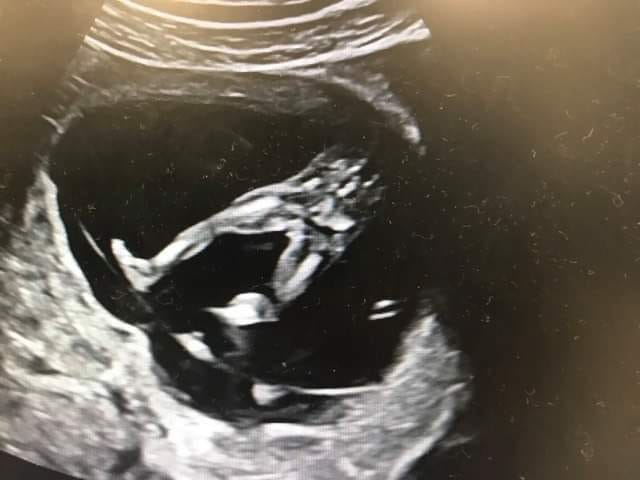
You knitted me together
Description
We have another grandson on the way. We’re still a few months away from meeting him, but his parents have already decided what he’ll be called, and have even let the rest of the family in on the choice.
And so Little Nick has become a someone in our family already. We talk about how well-defined his leg muscles are in the ultrasound (‘bound to be a good rugby player!’), and we joke about whether his personality will end up being like his name-sake (another Nick in our family).
In a very real way, Little Nick is already part of the crew. We know him and love him, even though we haven’t yet met him.
This is perfectly normal, but also a bit strange when you think about it. Little Nick has none of the normal faculties or properties of a human being that we could relate to. Apart from the miracle of ultrasound he is entirely absent to us. We can’t see, hear, touch or speak to him. Nor he us. And yet we joke about him already, include him in the conversation, and make preparations for his arrival—as if he is a long-lost relative soon to arrive from overseas.
God of course knows Little Nick far better than we do. He is knitting him together in his mother’s womb, in the famous words of Psalm 139. In fact, Psalm 139 goes quite some way further in its description of God’s knowledge of us before our birth. His eyes see us when we are hidden from everyone else, when our ‘substance’ is as yet ‘unformed’. Every one of our days is already written in his book, before any of them have to come to be.
The conclusion that we often draw from Ps 139 is that the life of the unborn child is clearly a human life, and thus valuable, even sacred. It is hidden and still in formation, and yet it is a real life all the same—a life that God knows and loves, and that we should also love and protect.
All the same, when we talk about abortion with non-Christian friends or in social debates, we feel that quoting Psalm 139 might not cut much ice. And it probably won’t.
Accordingly, we often find ourselves drawn into arguments about what constitutes pre-natal human life, and whether the unborn baby has enough of the required characteristics or properties to qualify. Does his possession of the complete human DNA package render Little Nick definitely a human being? Or is more required before we treat him as an independent life in his own right (and not simply part of his mother’s body)? Is it the point at which his heart begins to beat? Or the development of his brain stem? Or his ability to feel pain?
At 38 weeks, when Little Nick is fully grown in the womb and ready for the short agonising journey down the birth canal, it seems absurd and arbitrary to suggest that he is not a human life worthy of all our protection. But at the other end of the process, when he is just a microscopic clump of cells, he looks much less like a human life and more like a piece of tissue. And many everyday people find it easy to persuade themselves that this clump of cells is not enough of a ‘human being’ to be worthy of protection.
Arguments about what properties or faculties need to be present in order for a life to be recognized as ‘human’ don’t tend to get very far. Who gets to set the standard or draw the line? We want to be able to say that there is something essentially human about unborn Little Nick, regardless of whether he does or doesn’t yet possess certain abilities or properties.
But that only gets us to another conundrum. What is that human ‘essence’? How would you define it? Is it a ‘soul’?
Psalm 139 may help us get past this, even if we don’t always feel able to quote it in conversation.
When the psalmist refers to God’s knowledge of the unborn child, it is not unborn human life in general that he refers to, but his own. You knitted me together; you saw my frame when I was being made; your eyes saw my unformed substance; and so on.
Listen Now
Love PodBriefly?
If you like Podbriefly.com, please consider donating to support the ongoing development.
Support Us