Episode Details
Back to Episodes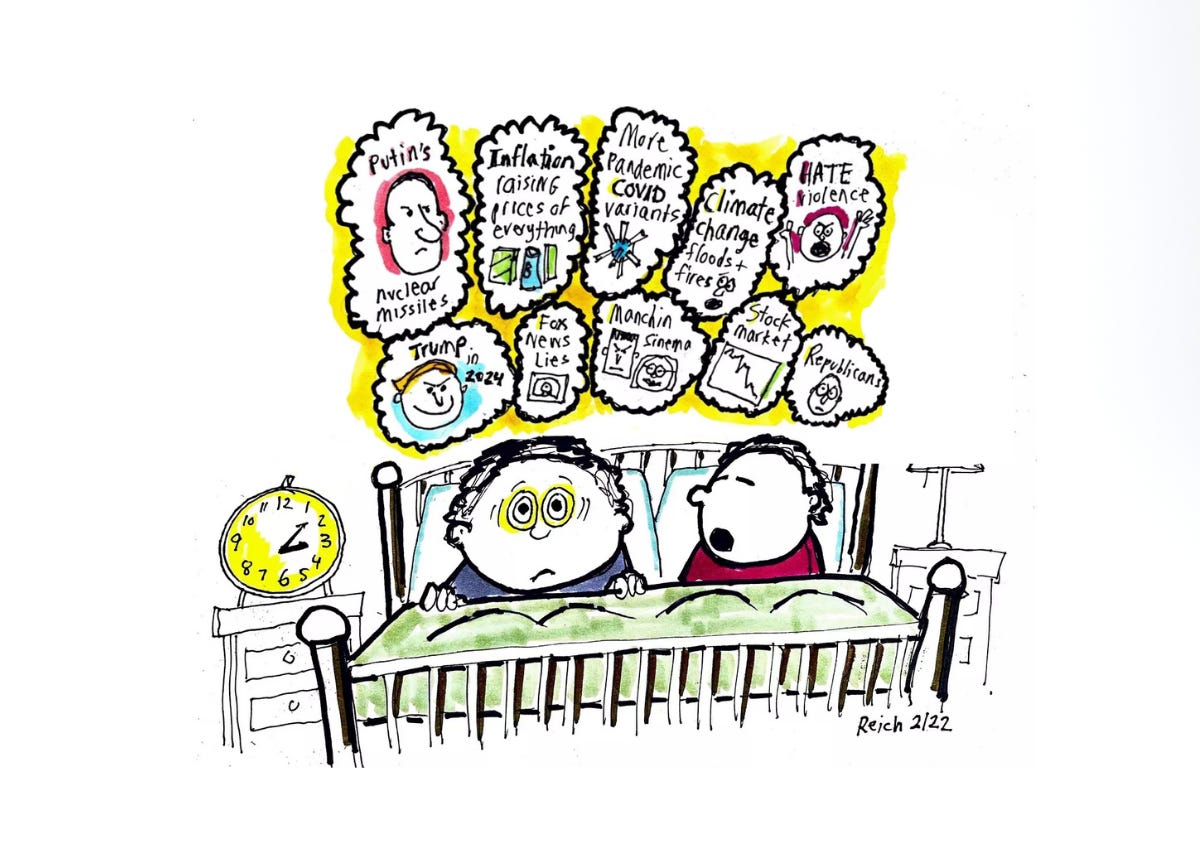
Are record levels of stress inside us — or outside us?
Description
Last week, a panel of medical experts recommended for the first time that doctors screen all adult patients under 65 for anxiety disorders. The advisory group, called the U.S. Preventive Services Task Force, said the guidance was intended to help prevent mental health disorders from going undetected and untreated for years or even decades. It made a similar recommendation for children and teenagers earlier this year.
Appointed by an arm of the federal Department of Health and Human Services, the panel has been preparing the guidance since before the pandemic. Its recommendation highlights the extraordinary stress levels that have plagued the United States in recent years. Lori Pbert, a clinical psychologist and professor at the University of Massachusetts Chan Medical School, who serves on the task force, calls mental health disorders “a crisis in this country.”
What’s the answer to this extraordinary rise in stress, anxiety, and depression?
Some say we need more psychiatrists, psychologists, and therapists.
America is “short on mental health resources on all levels,” says Dr. Jeffrey Staab, a psychiatrist and chair of the department of psychiatry and psychology at Mayo Clinic in Rochester, Minnesota.
But … wait.
Maybe what people feel are valid descriptions of personal experience rather than symptoms of mental illness. Maybe we need to stop thinking about anxiety and depression as “disorders” and start regarding them as rational responses to a society that’s become ever more gruesomely disordered.
Who has not feared illness and loss of loved ones from Covid-19? Who isn’t concerned by the soaring costs of living and the growing insecurity of jobs and incomes? Who isn’t terrified by Trump’s and his followers’ attacks on democracy? Who doesn’t worry about mass shootings at their children’s or grandchildren’s schools? Who isn’t affected by the climate crisis?
Add in increasingly brutal racism; attacks on Asian-Americans, Hispanic-Americans, and Jews; mounting misogyny and anti-abortion laws; homophobia and transphobia; and the growing coarseness and ugliness of what we see and read in social media — and you’d be nuts if you weren’t stressed.
Studies show that women have nearly double the risk of depression as men. Black people also have higher stress levels — from 2014 to 2019, the suicide rate among Black Americans increased by 30 percent.
Are women and Black people suffering from a “disorder,” or are they responding to reality? Or both?
White men without college degrees are particularly vulnerable to “deaths of despair” from suicide, overdoses, and alcoholic liver diseases, with contributions from the cardiovascular effects of rising obesity, according to the American Council on Science and Health.
Are they suffering from a “disorder,” or are they responding to a fundamental change in American society? Or both?
In their book, Deaths of Despair and the Future of Capitalism, economists Anne Case and Angus Deaton argue that “the deaths of despair among whites would not have happened, or would n