Episode Details
Back to Episodes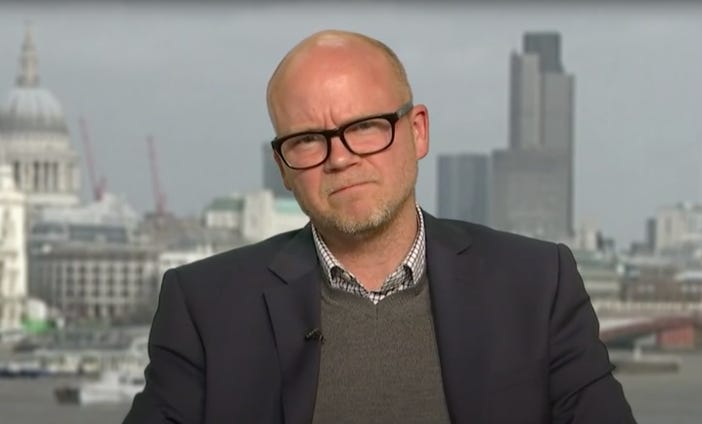
On PayPal, Toby Young, Bitcoin, Culture Wars and the Separation of Money and State
Description
Bitcoin was built in reaction to all the money printing that went on in the wake of the financial crisis.
The Times’ headline “Chancellor on Brink of Second Bailout for Banks” was even embedded into the very first block in the blockchain – the genesis block.
Here was a money system that nobody, whether government or hacker, could print or debase. The rules were set in code. The inflation rate was clearly laid out. And the system, rather than rely on trust – whether in banks, central banks, payment providers or governments – was based on mathematical proof and computer power.
So here is an apolitical, censorship-resistant, trust-less, hard money.
And we saw a very good use case for it this week.
PayPal plays the cancel game
Journalist Toby Young, who is associate editor of The Spectator, has, for as long as I’ve known him, been setting up organisations to try and improve people’s lives.
Disappointed with the lowering of standards in schools, he was one of the founders of the first Free School in West London. In 2020 he set up the Free Speech Union to help defend people threatened with cancellation. And his news and commentary website the Daily Sceptic was born in reaction to all the misinformation and censorship, especially by big tech, that emerged during Covid.
Young’s views are actually pretty moderate. He’s a centre right, old school Conservative. But his ideological enemies do not like him at all and they work tirelessly to bring him down. He has lost something like five jobs because of what he calls the “offence archaeologists” digging up things he said decades ago, quoting them out of context and then being offended.
Last week, PayPal, out of the blue, closed down his personal account for “breaching its Acceptable Use Policy”. Then, barely a few minutes later, it shut down the account for his news and commentary website the Daily Sceptic. Then a few minutes after that it closed down the accounts for the Free Speech Union.
This is no small disruption, and it undoes the many hours, days, months and years of hard work his team have put in building up their subscriber bases. About a quarter of the Daily Sceptic’s donor revenue arrives via PayPal and a third of the Free Speech Union’s 9,500 members pay their dues via PayPal, Young says.
Young says, “I did some Googling and discovered that numerous organisations and individuals with dissident political views have had their accounts closed by PayPal recently, particularly on the three issues you’re not allowed to be sceptical about: the lockdown policy and other Covid restrictions, the mRNA vaccines, and the ‘climate emergency.
The Daily Sceptic frequently publishes articles on those subjects and the Free Speech Union may have fallen foul of another taboo – defending people who’ve got into trouble with HR departments for expressing their gender critical views.”
How is PayPal able to do this without warning? Because it can.
Young is by no means the first. It did the same thing to Wikileaks in 2010, probably under pressure from the US government about whom Wikileaks was disclosing unwanted information. (Unfortunately, this backfired as donors began using bitcoin and the bitcoin Wikileaks received rocketed in value to make Wikileaks a potentially very rich organisation (assuming it managed to hold on to some of them).
It did the same to Alex Jones. Earlier in the year it cancelled academic and biologist Colin Wright for articulating his criticisms of the view that sex is a social construct. Just yesterday Us For Them, the parent group which campaigned to keep schools open during Covid lost their account, and so did another group Gays Against Groomers.
PayPal founder Peter Thiel is an outspoken libertarian and probably on the same philosophical side of the argument as Young, but he is also a businessman.
Paypal will do whatever is asked of it in order to survive. You can b