Episode Details
Back to Episodes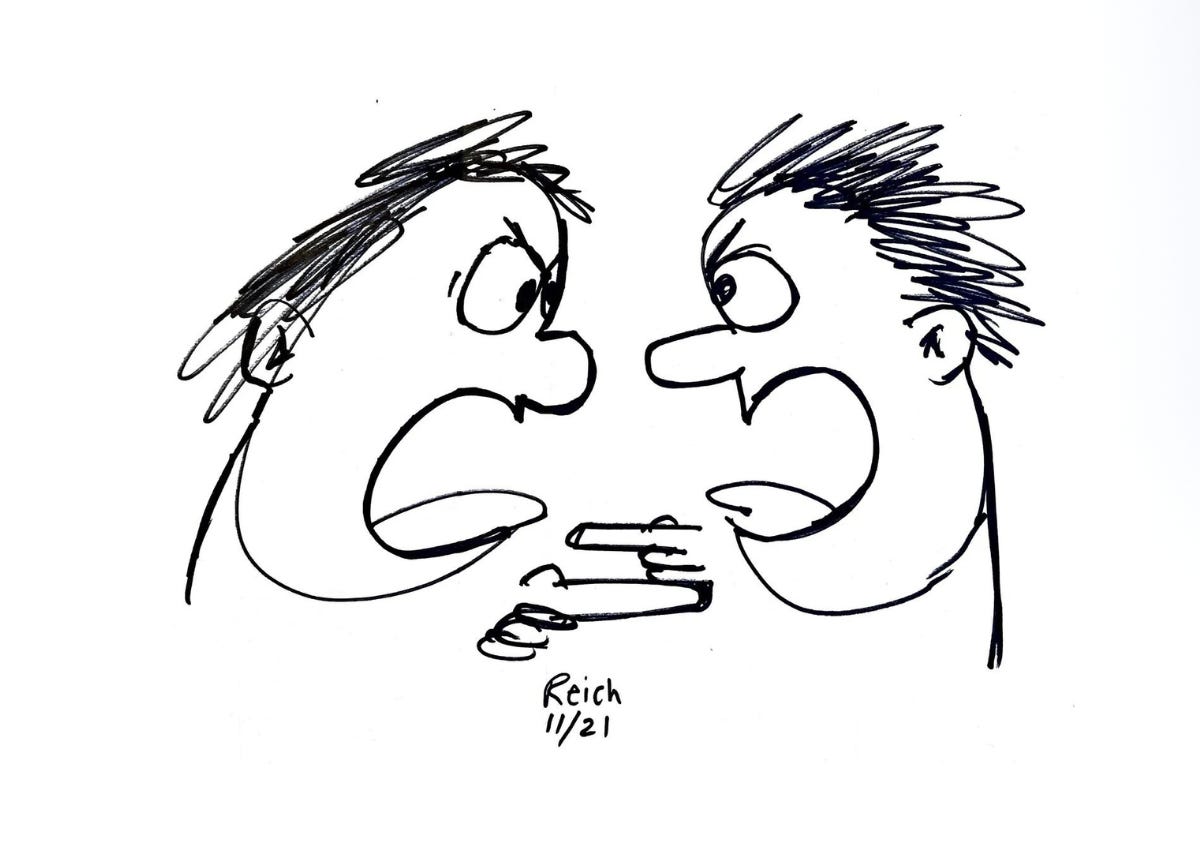
What Dr. Phil wants me to do
Description
A few days ago, I received an email from an associate producer at the Dr. Phil Show. They recently came across my film “Inequality for All” and wanted to know “if I’d be interested in joining Dr. Phil as an expert guest for an upcoming episode.”
Hey, why not? The Dr. Phil Show is the number 1 rated daytime TV talk show in America. It has over 2 million viewers. I have lots to say to those viewers about the perils of widening inequality.
Then I read the rest of the email.
“For this conversation we will be asking questions like do college admissions enroll minorities over prospective Caucasian students? Are Caucasian teachers and professors being laid off to ‘make up for past discriminations’ against minority educators, as seen in Minneapolis?”
These were the only questions included in the email. In other words, it will be a show about favoritism to Black people over white people.
What’s going on here? The Dr. Phil Show isn’t on Fox News. It’s carried by CBS.
Phil McGraw himself isn’t a rabid right-winger. At least not that I know of.
(He did appear on Fox News soon after the start of the pandemic to argue against temporarily closing down the economy — claiming that the likelihood of dying from COVID was no greater than likelihood of dying in a car accident or drowning in a swimming pool. By that time 3,000 people had died of the infection. Two years later, it had taken the lives of 1 million.)
But the point I want to make isn’t solely about Dr. Phil. It’s about the people who produce popular TV talk shows.
They decide two hugely important things: (1) the topics to be discussed, and (2) how those topics are framed.
These two decisions determine what issues the the public focuses on (out of an almost infinite number bubbling up each day) and what’s debatable about them (out of an almost infinite number of possibilities).
And these two determinations in turn fuel public emotions — ranging from anger, indignation, and outrage, to hope, pride, and confidence. They affect our daily conversations. They shape our politics. They divide or connect Americans. They help set the national agenda.
Take the recent contract agreement between the Minneapolis teachers union and the Minneapolis school district — the issue Dr. Phil’s associate producer wants me to talk about.
That contract says that if school budgets must be cut, white teachers will be laid off before those from “underrepresented” populations, regardless of seniority. If school budgets then expand, “underrepresented” teachers will be reinstated before white teachers, regardless of seniority.
MAGA outlets, blogs, and social media sites have gone nuts over this. Racial preferences for Black people have become a hot-button issue, especially among struggling working-class whites.
Viewed this way, this issue lends itself to the rightwing argument that “coastal elites” have rigged the economic game against white working people in favor of “less-deserving” people of color. Naturally, this infuriates a lot of working-class whites.
Presumably, this is the debate Dr. Phil’s producer has in mind. But it’s the wrong issue and the wrong debate.
Go a bit deeper and you’ll see why. The goal of the Minneapolis school board is to remedy continuing effects of past discrimination, by supporting “the recruitment and retention of teachers from underrepresented groups” [emphasis added].
This is a particularly important goal in Minnesota’s schools, where 5.6 percent of licensed teachers identify as a teacher of color or American Indian, compared to
Listen Now
Love PodBriefly?
If you like Podbriefly.com, please consider donating to support the ongoing development.
Support Us